
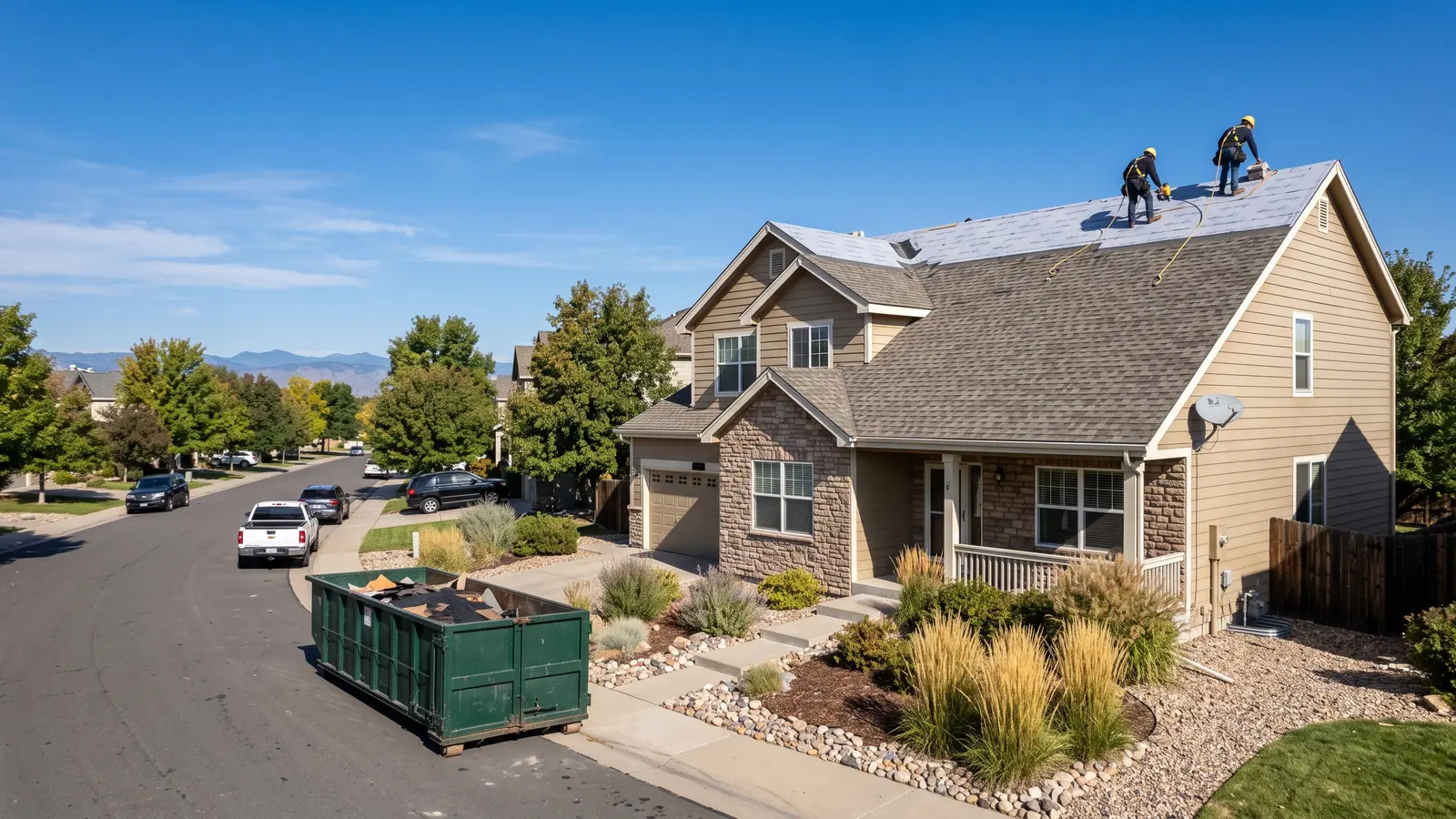
Chimney Flashing Components and Where Each Fails
Chimney leaks show up as stains on the ceiling or wall beside the fireplace, damp drywall around the chase, or drips inside the firebox. Each part of the flashing has its own failure. To tell which one, a roofer can run a hose test: wetting the chimney in sections, starting low on the roof and working up, while someone watches inside for the first drip. It's slow, but it points to the layer that failed instead of a guess that replaces everything.
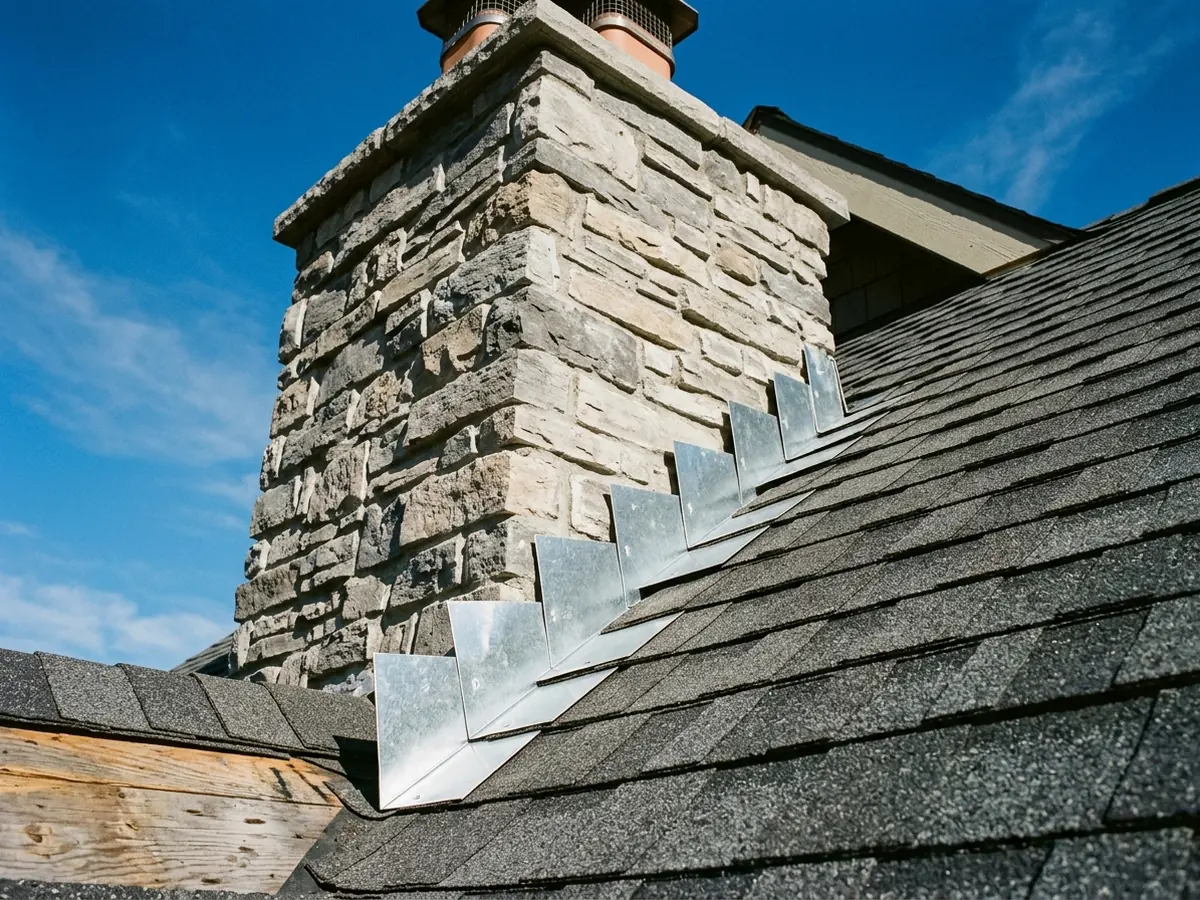
Step Flashing Woven Into Each Course
Step flashing is a run of short L-shaped pieces, one per shingle course, each lapping the one below. One leg lies on the roof under the shingle; the other turns up the chimney side. The 2024 IRC, which Thornton uses for permits submitted from July 1, 2026, calls for base flashing at least 4 inches high and 4 inches wide that sends water onto the roof, and metal flashing no thinner than 0.019 inch (26-gauge galvanized). The usual failures are a single long piece in place of separate steps, so water that gets behind one shingle runs the whole length, or steps that rusted through at the bend. Replacing step flashing means lifting the shingles alongside the chimney, so expect some new shingles in the repair.
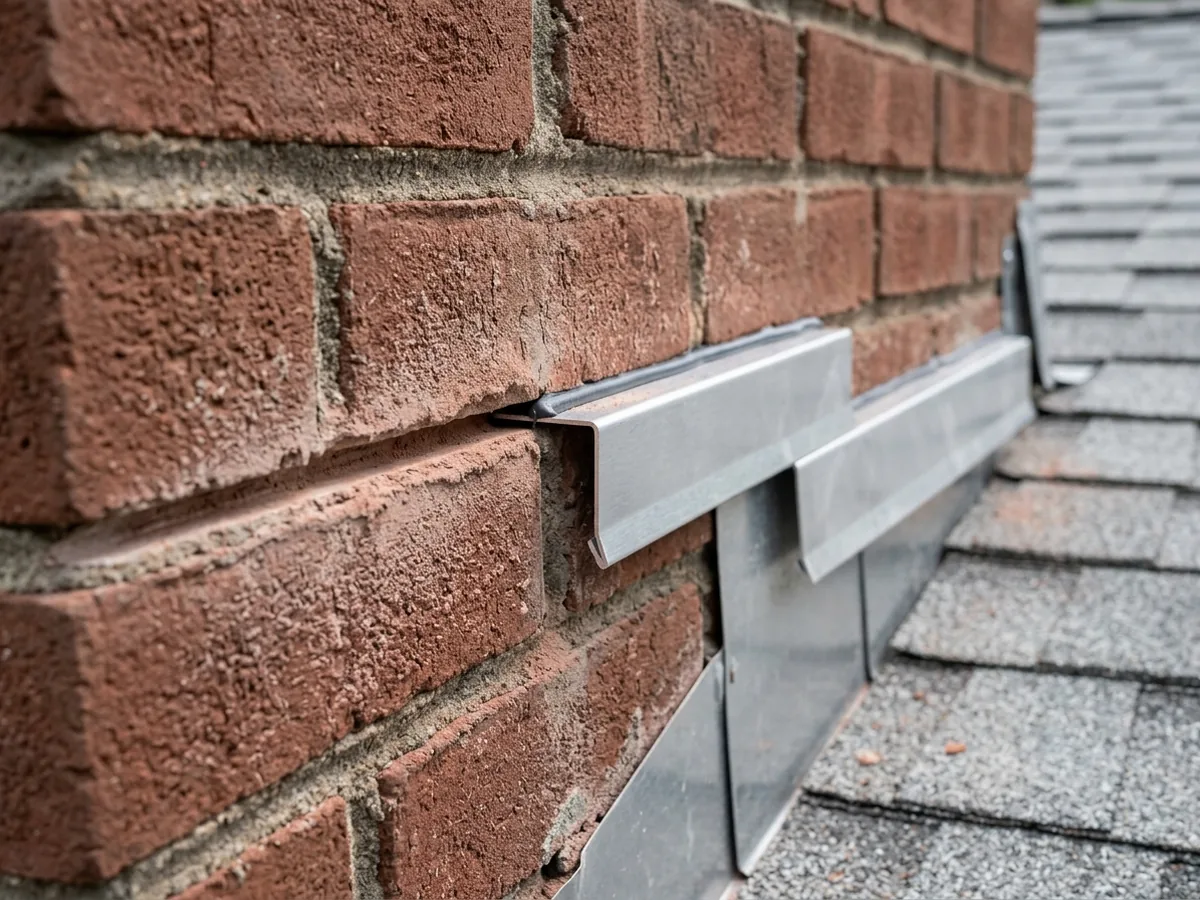
Counter Flashing and Reglets
Counter flashing covers the top edge of the step flashing so water running down the chimney face can't get behind it. On brick, the right way is a reglet: a groove sawn into a mortar joint, with the flashing's top edge bent into it and sealed. On stone or brick veneer the code points to the wall-cladding sections (R703.8.2.2 for anchored masonry, R703.7.3 for adhered veneer and stucco) for how that cover layer is built. The common shortcut is counter flashing face-nailed to the brick with caulk along the top. It works until the caulk dries out and pulls away from the brick. Ask for a reglet and new counter flashing, not another bead of sealant.
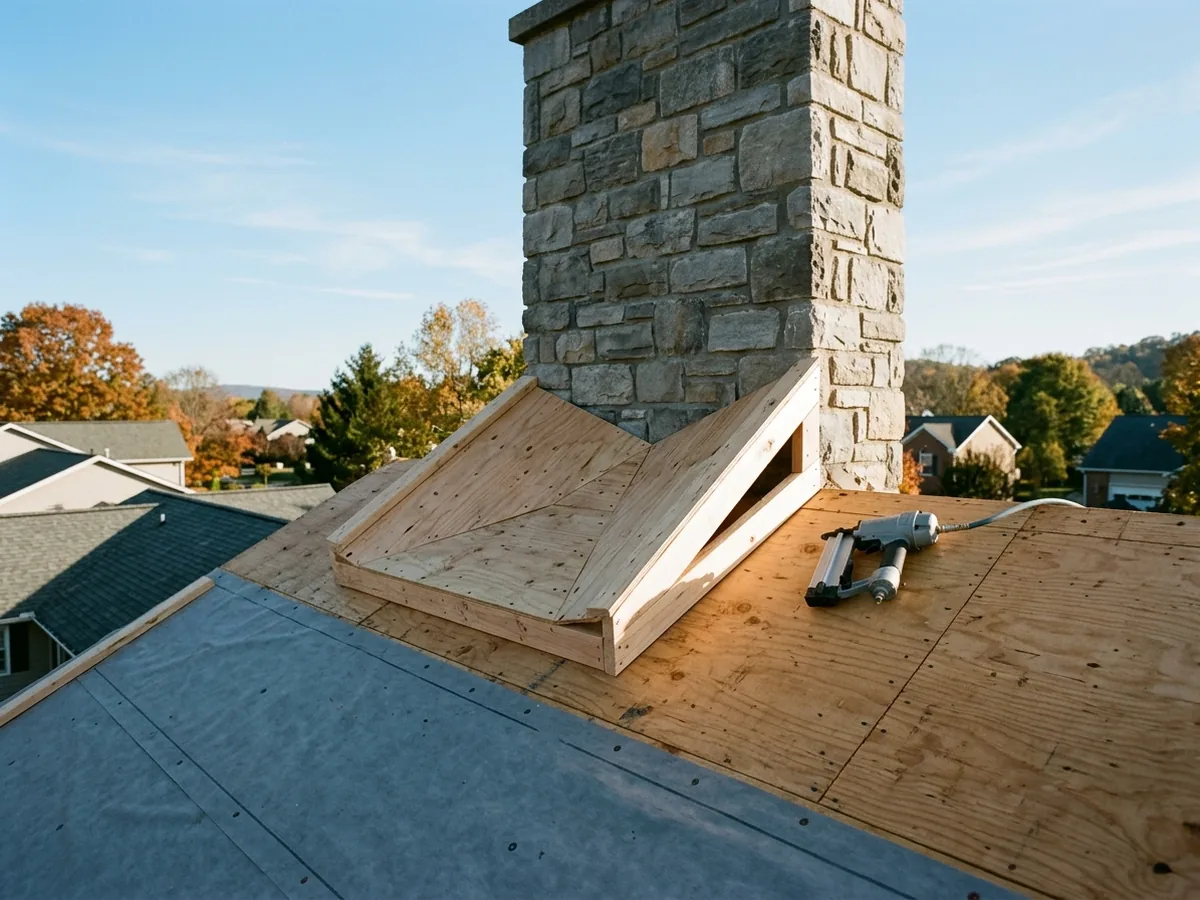
Chimney Crickets Behind Wide Chimneys
On the uphill side of a chimney, water and snow pile against a flat wall. A cricket (also called a saddle) is a small gable framed on the deck that sheds both around the sides. The 2024 IRC requires one where a chimney is more than 30 inches wide parallel to the ridge and doesn't meet the ridge (Section R1003.20), and the roofing chapter (R903.2.2) says the cricket's covering must be sheet metal or the same material as the roof. Its joint with the chimney gets flashed and counter-flashed like the rest. A wide chimney with no cricket is a fair explanation for a leak that only shows up after snow sits for a few days.
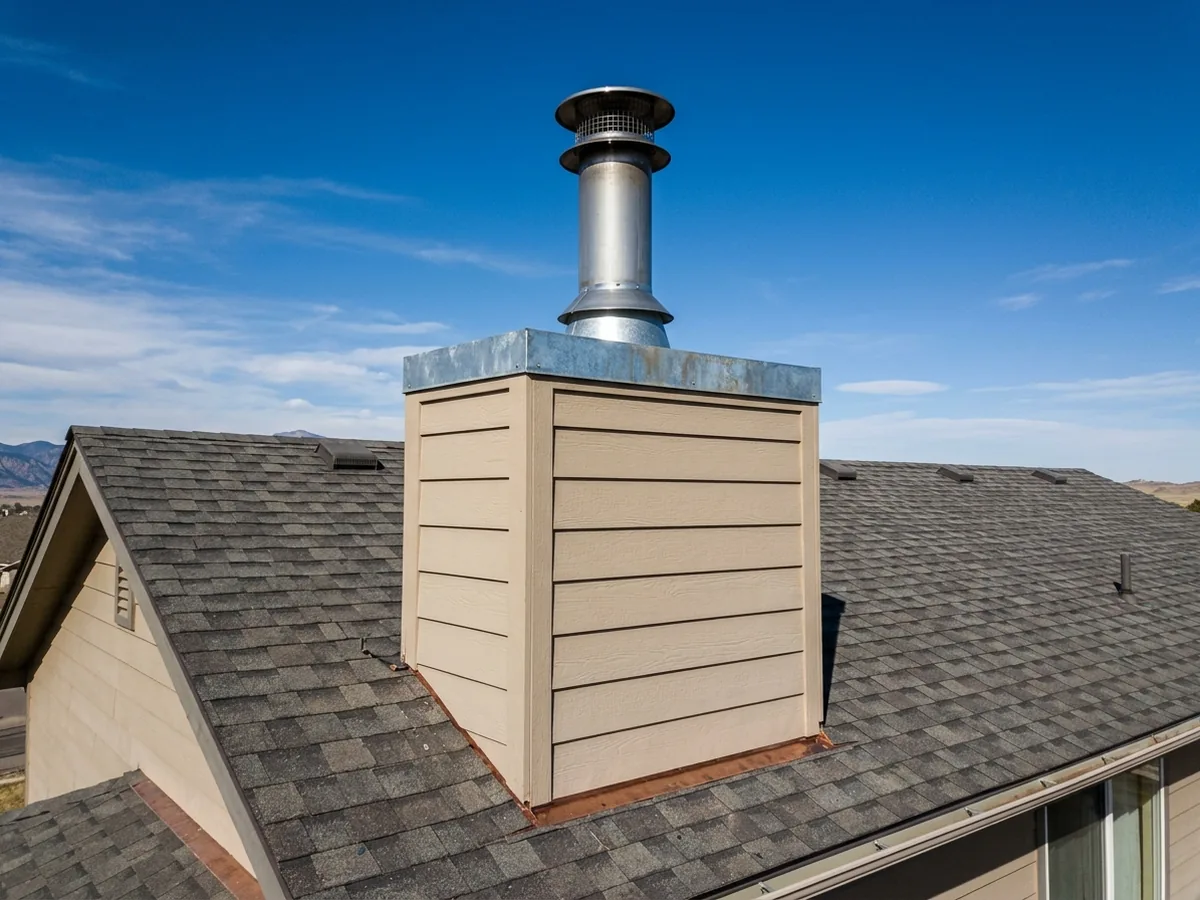
Framed Chase and Flue Collars
Not every chimney is masonry. Some gas and factory-built fireplaces vent through a metal flue inside a wood-framed chase clad in siding. The flashing at the roof works like a wall: step flashing under the shingles, with the vertical legs running under the siding wrap. At the top, a sheet-metal chase pan covers the box and a storm collar seals the flue where it comes through. Pans that sag and hold water rust through, and collars loosen. Both leak down inside the chase, where nobody sees it until the drywall stains. Replacing the fireplace unit or the flue itself is a separate job: Thornton lists fireplaces (wood, pellet or gas) among the projects that need their own permit.
Why Thornton homeowners call Thornton Expert Roofing
- Free written estimate, no obligation
- One independent local contractor per request, not a call list
- A written contract with the price and materials before any work, as Colorado law requires
- Nothing charged to homeowners for the referral
Chimney Flashing Repair Prices From Published Estimates
HomeGuide's published estimates put a flashing repair at $200 to $500 and a full flashing replacement at $400 to $1,000. Those are national ranges, not Thornton quotes. What moves a chimney job inside them:
How many layers come off
Resealing a counter flashing is the low end. New step flashing means pulling and replacing the shingles alongside, which pushes it up.Reglet cutting
Sawing new grooves in brick takes time and a masonry blade, and old caulk has to be ground off first.A missing cricket
Framing and flashing a new one adds carpentry and sheet metal.Chimney size and roof pitch
A tall chimney on a steep slope needs more pieces and more care with footing.The roof covering
Lifting and relaying concrete tile or working around standing seam panels takes longer than shingles, and the flashing pieces are shaped differently.
If the chimney's crown or mortar is cracked, that's masonry work, often by a different trade. Ask the roofer to say so rather than flashing around a crumbling chimney.
Chimney Flashing at Re-Roof Time
A re-roof is the cheapest time to fix chimney flashing. The shingles alongside are coming off anyway, so the step flashing and cricket can be rebuilt without extra tear-off. The 2024 IRC's re-roofing section says flashings are to be reconstructed to the manufacturer's installation instructions, and reusing rusted or bent step flashing is a poor bet against a new roof meant to last decades. In a Thornton re-roof, the city's mid-roof photos have to show metal flashing in place (the inspection steps are set out on roof inspection).
Ask the estimate to list chimney flashing as its own line: new step flashing, new counter flashing and how it's attached, and the cricket if the chimney is wide enough to need one. Without that line, "flashing" can mean anything from new metal to a tube of caulk. Other places where the roof meets a wall or a hole leak in similar ways; see roof leak repair for sidewall and kickout flashing and skylight installation for skylight curbs.