
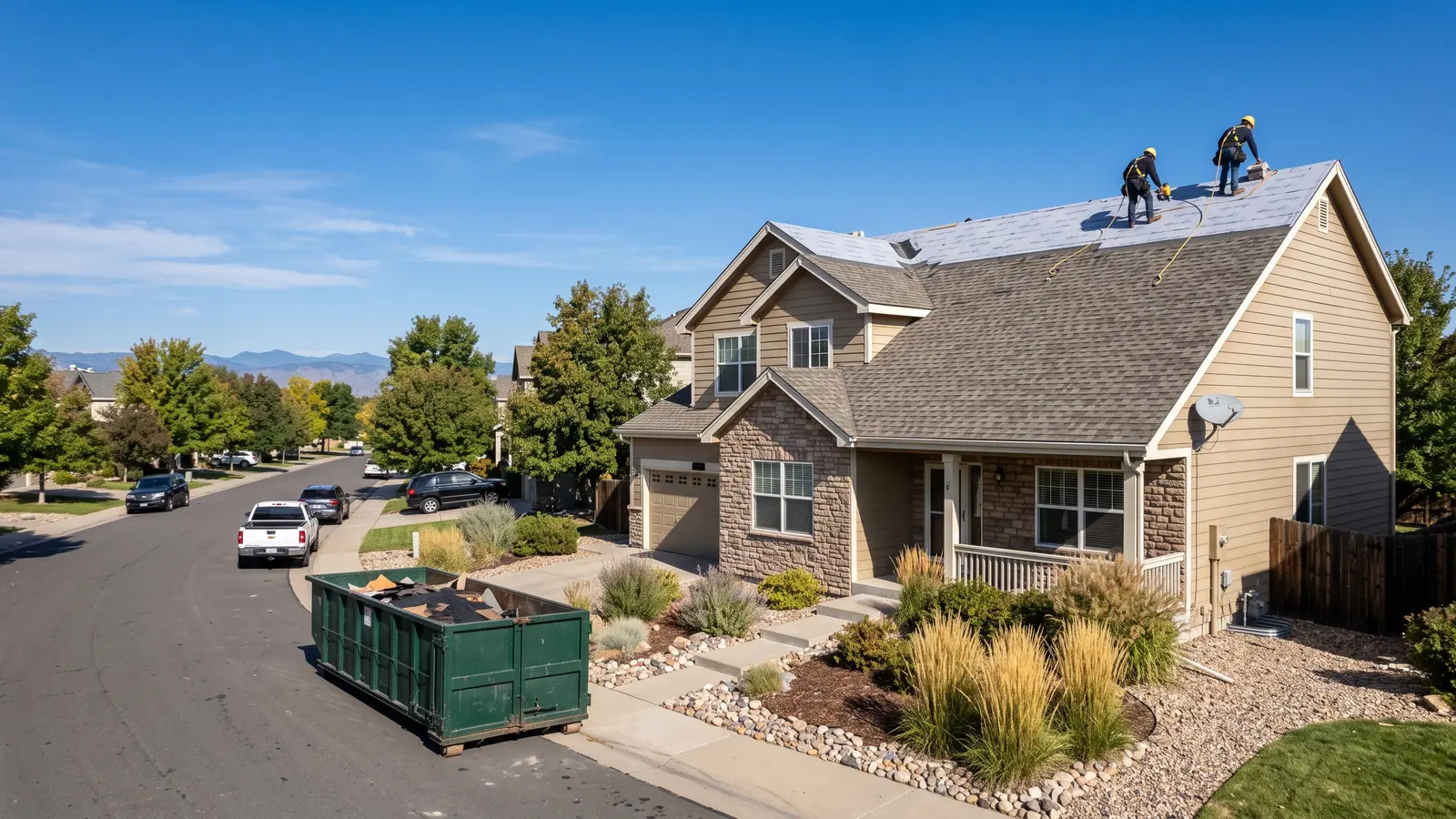
Metal Roofing Systems for Houses
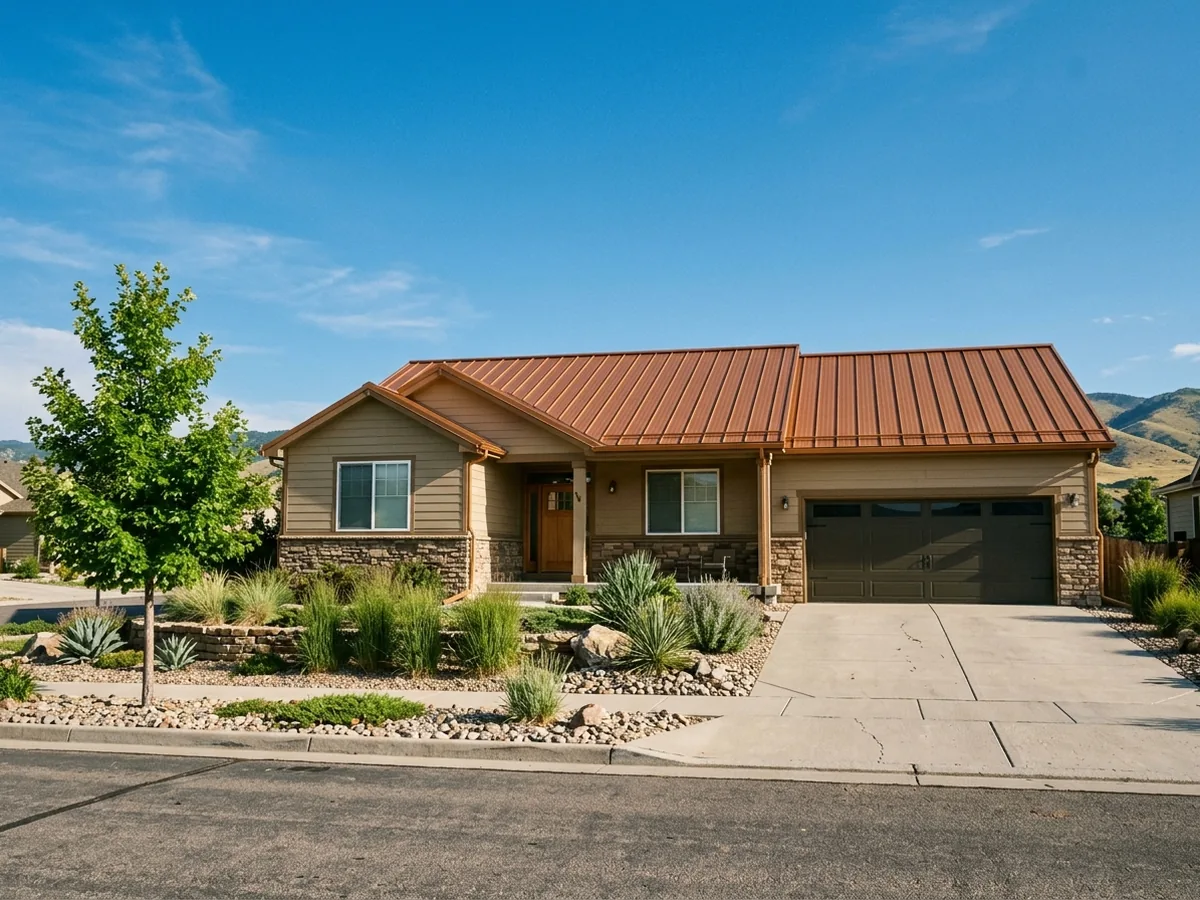
Standing Seam on Houses
Standing seam is the panel most people picture when they think of a metal house roof. Each panel runs in one piece from eave to ridge, the long edges lock together in a raised seam, and clips under the seams hold the panels to the deck so no fastener goes through the weather surface. The 2024 residential code allows standing seam down to a 1/4:12 slope, lower than any other metal system, which makes it the usual pick for a shallow porch or a low-pitched addition. Seam profiles, panel gauge and paint finish are covered on standing seam metal roof.
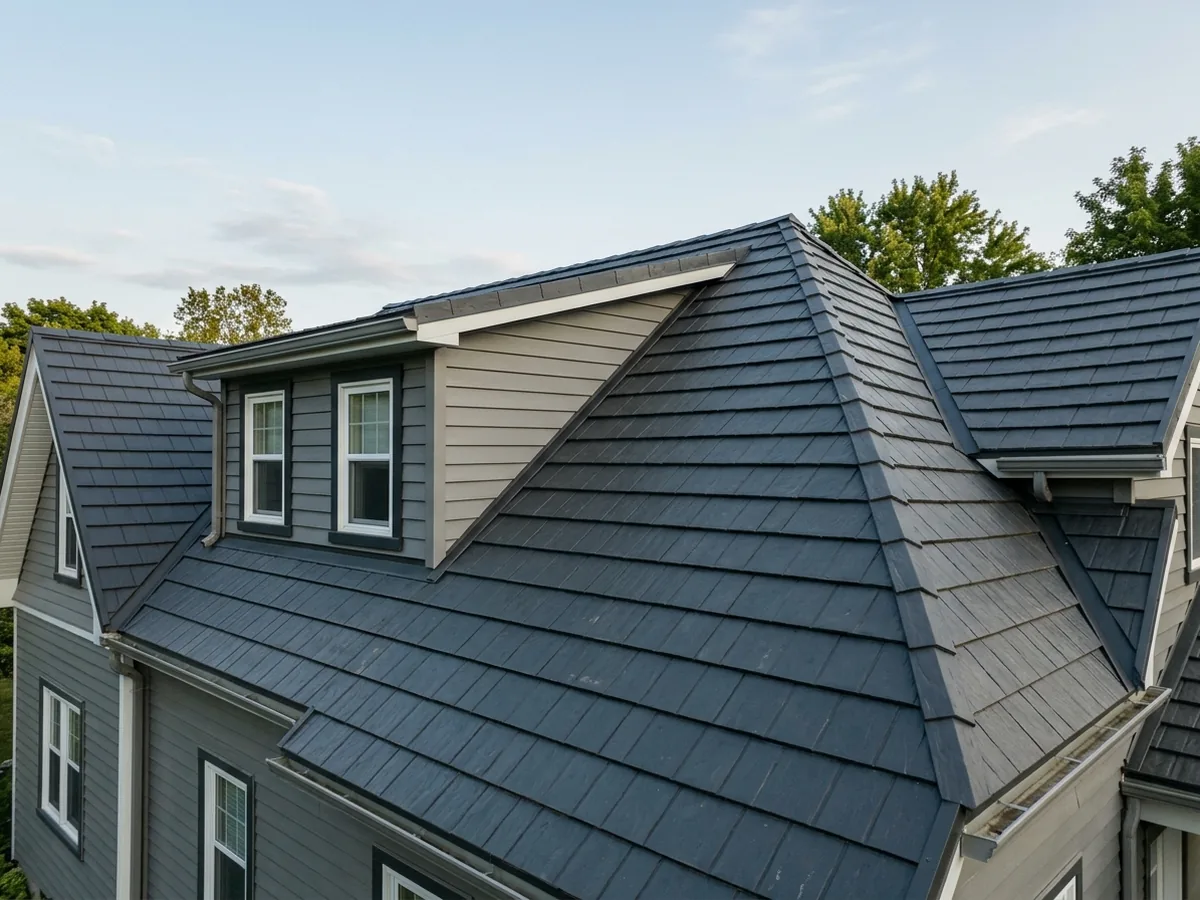
Stamped Metal Shingles
Metal shingles are steel or aluminum stamped into short interlocking pieces that mimic slate, shake or tile. From the street they can pass for the real thing, and they suit houses where an HOA wants a traditional look. The code is stricter with them than with panels: they need a slope of at least 3:12 and solid or closely fitted sheathing unless the product is built for spaced boards, and their valley flashing has to extend at least 8 inches each side of the center line with a raised splash rib. HomeGuide puts metal shingles at $6 to $14 a square foot installed. Stone-coated steel, a granule-coated cousin, has its own page at stone-coated steel roofing.
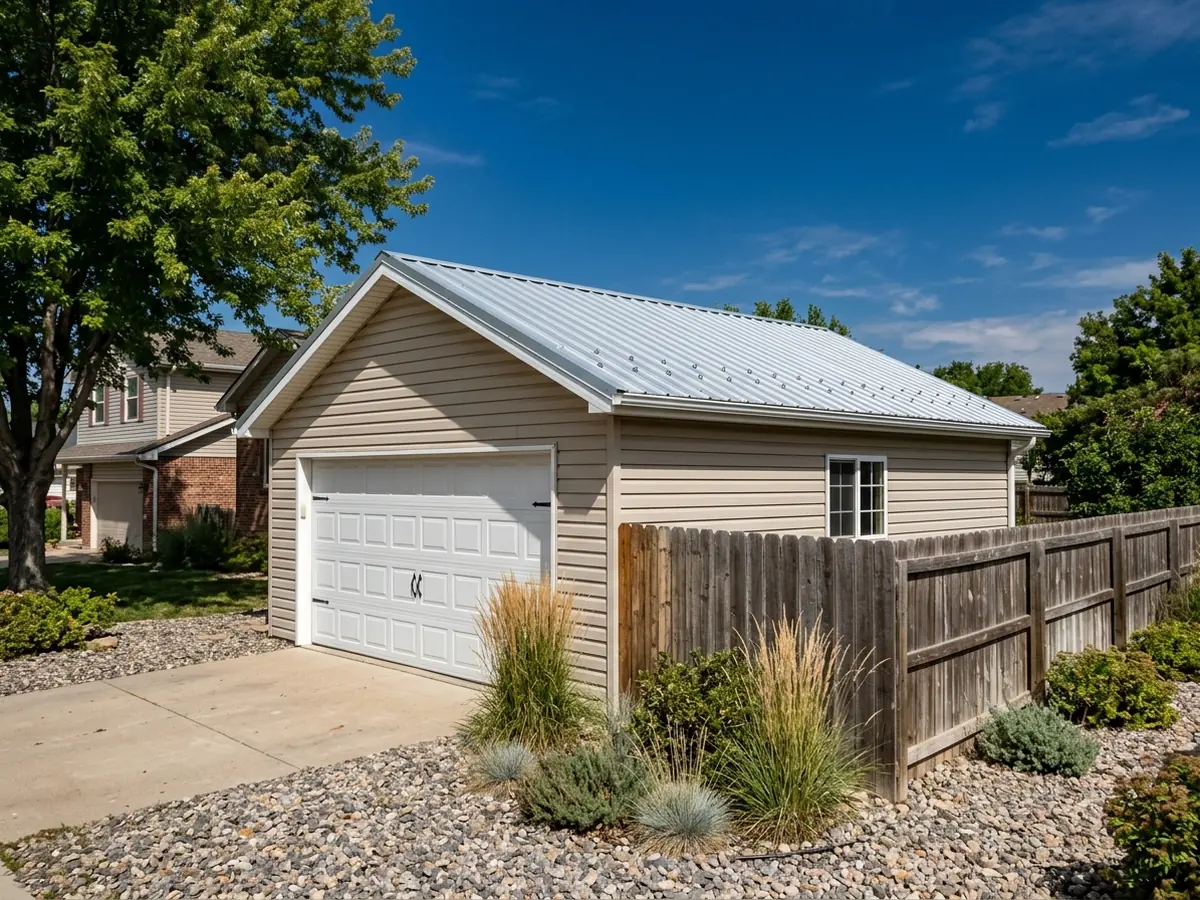
Exposed-Fastener Panels
R-panel, PBR and corrugated sheets are screwed straight through the panel face into the deck or purlins, each screw sealed by a rubber washer. They cost the least of the metal options, $5 to $12 a square foot installed on HomeGuide's figures, and they're a common choice for garages, sheds and barns. The trade-off is maintenance. Every screw is a hole, and HomeGuide flags the wear that expansion and contraction cause around exposed fasteners as a leak risk. Lapped seams without sealant need a slope of at least 3:12 under the code; with sealant applied, 1/2:12.
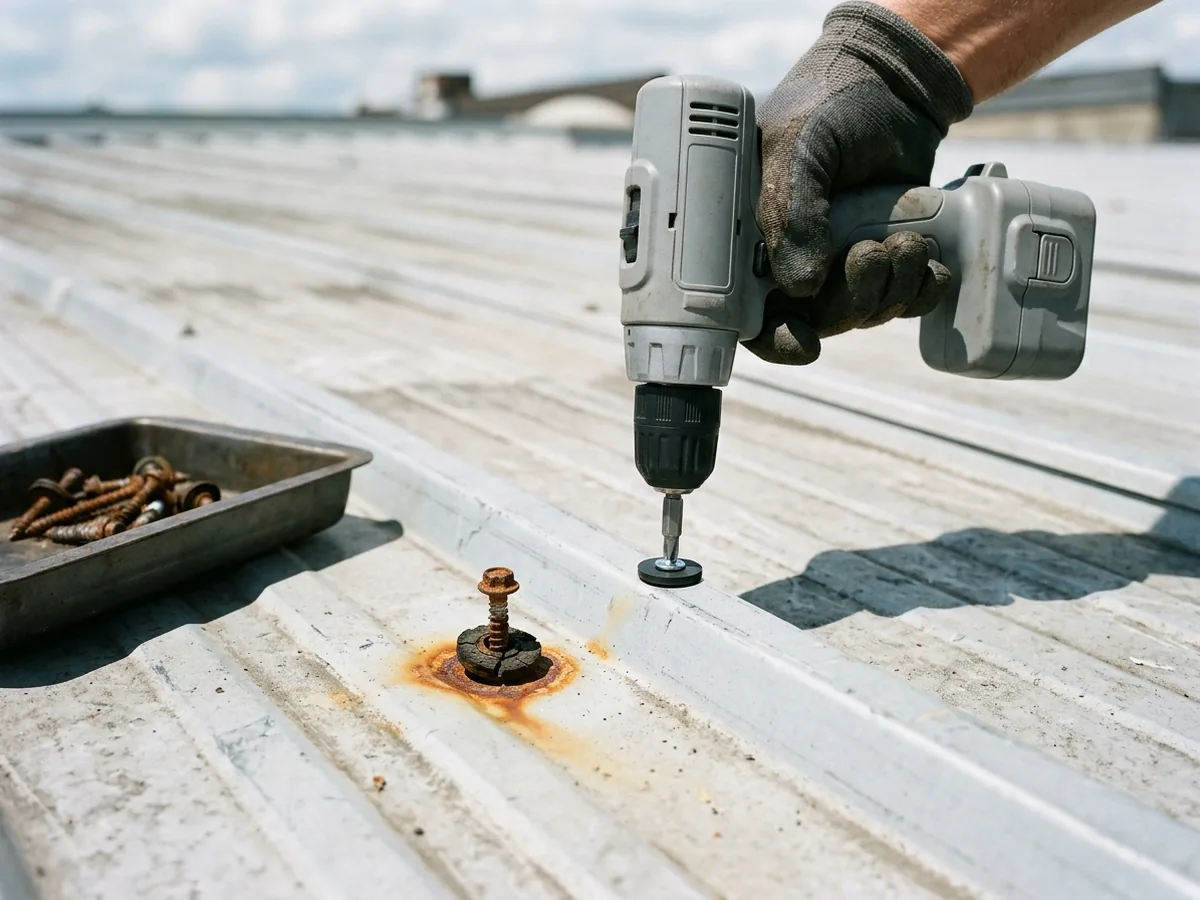
Metal Roof Repair and Refastening
Most metal roof repairs come down to the fasteners and the trim. On exposed-fastener roofs that means backing out screws with cracked or flattened washers and driving new, slightly larger ones, and resealing laps and ridge closures. On standing seam it is more often a lifted seam, loose flashing at a chimney or a pipe boot that has split. HomeGuide puts minor metal repairs at $200 to $600 and larger repairs or partial panel replacement at $500 to $1,500 or more per square. Ask for any replacement panel to come from the same profile and color line; HomeGuide lists color-matching repairs as one of metal's drawbacks.
Why Thornton homeowners call Thornton Expert Roofing
- Free written estimate, no obligation
- One independent local contractor per request, not a call list
- A written contract with the price and materials before any work, as Colorado law requires
- Nothing charged to homeowners for the referral
Metal Roofing Cost per Square Foot Installed
HomeGuide's published range for metal roofing is $5 to $16 a square foot installed, which comes to $7,500 to $40,000 on an average house. Where a roof falls in that range depends mostly on the system:
| System | HomeGuide installed estimate |
|---|---|
| Corrugated or exposed-fastener sheet | $5 to $12 per sq ft |
| Metal shingles | $6 to $14 per sq ft |
| Standing seam | see standing seam metal roof |
Roofers usually price by the square, 100 square feet of roof, so the exposed-fastener range works out to $500 to $1,200 a square. Gauge moves the price as well. The same guide notes that most homes get 24- or 26-gauge steel and that thicker 24 gauge costs more per square foot. Labor is a large share: HomeGuide puts it at $4 to $8 a square foot on its own, and a typical installation at two to five days. A tear-off of the old asphalt comes first, and the general tear-off and decking prices are on roof replacement.
Thornton Snow and Wind Loads on a Metal Roof
Thornton's design criteria table sets two numbers every roof here is built for: a ground snow load of 30 pounds per square foot and an ultimate design wind speed of 105 mph. The 2024 code requires metal panels on a solid deck to be wind-tested to UL 580, UL 1897 or FM 4474, and standing seam systems to ASTM E1592 or FM 4474. Ask which test the panel you're quoted passed.
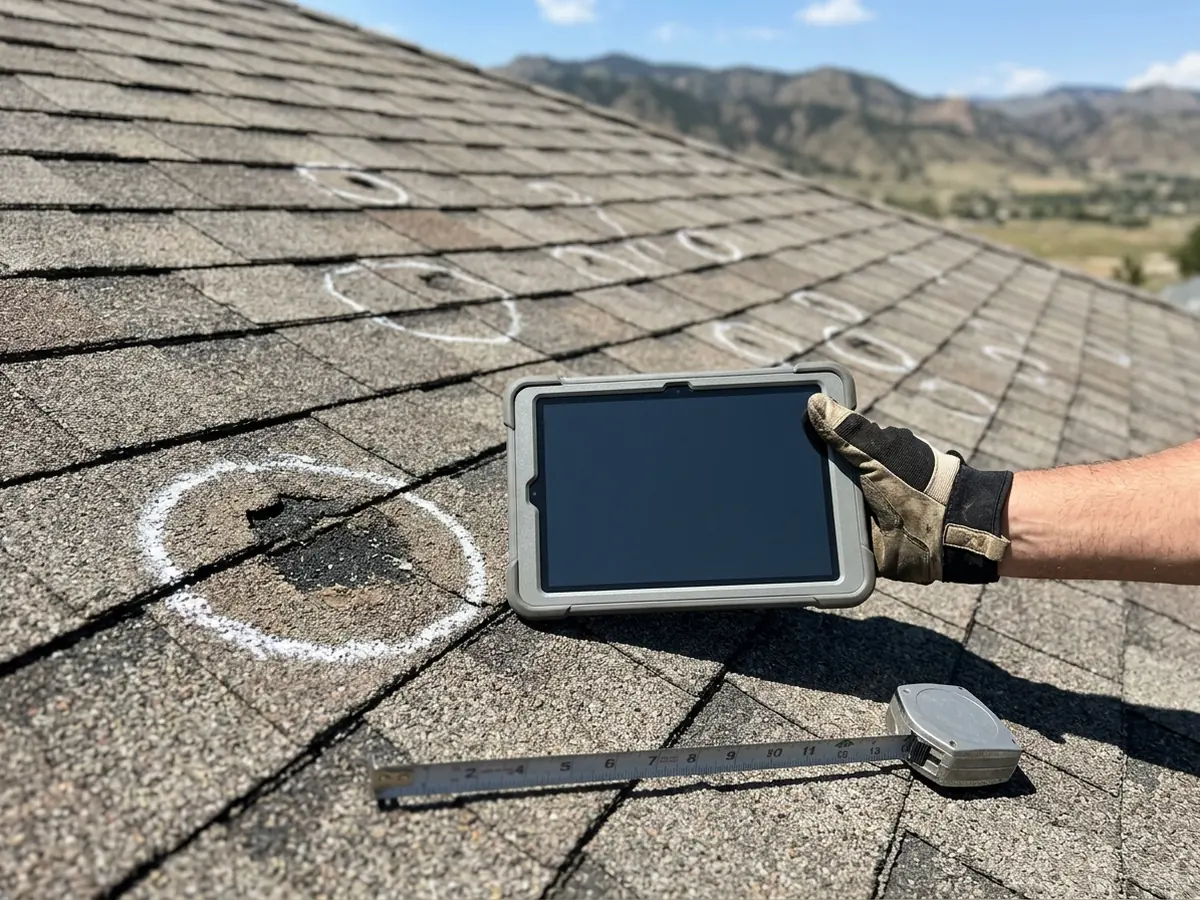
Snow behaves differently on metal than on shingles. It slides off in sheets once the sun warms the panels, so snow guards above doors, walkways and lower roofs are worth including. Hail is the other local factor. Steel usually comes through a storm with dents rather than holes, but whether your insurer pays for those dents depends on the policy, which is explained under hail damage roof repair. InterNACHI puts metal roofing's life at 40 to 80 years.
Steel, Coatings and Fasteners to Ask About
Bare steel rusts, so the code requires a corrosion-resistant coating. The two common ones are G90 galvanizing, a zinc coat to ASTM A653, and AZ50 aluminum-zinc, sold as Galvalume, to ASTM A792. Painted panels carry an ASTM A755 paint system over one of those coatings. On the estimate, look for:
Gauge and coating
"26-gauge AZ50, painted" tells you something; "metal roof" tells you nothing.Fasteners
Without the maker's instructions, the code calls for galvanized fasteners on steel roofs, and stainless is acceptable. Mixing in plain steel screws invites rust streaks.Underlayment
Panels need it too, labeled to an approved ASTM standard.Where metal meets shingles
Thornton allows mixed coverings only where they meet at a ridge, hip or open valley, so a steel porch roof tied into an asphalt main roof has to be laid out with that in mind.
Metal or Shingles on a Thornton House
Steel costs more up front than asphalt; shingle prices for comparison are on shingle roofing. What the extra money buys is time: HomeGuide says a metal roof lasts two to three times as long as asphalt shingles. Whether that pays off depends on how long you plan to stay in the house.
A few local points tip the decision one way or the other:
Hail
Steel sheds hail without the granule loss that wears shingles down, but it can dent, and dents may count as cosmetic under your policy.Noise
HomeGuide says a metal roof isn't noisy when it's installed and insulated correctly. Over a vaulted ceiling with little insulation, ask how the roofer plans to deal with rain and hail noise.HOA rules
If your house is in an HOA, find out whether a change of roof material or color needs architectural approval, and get it in writing before you sign a contract.Low pitches
Porches and additions too shallow for shingles can take standing seam, which the code allows down to 1/4:12.