
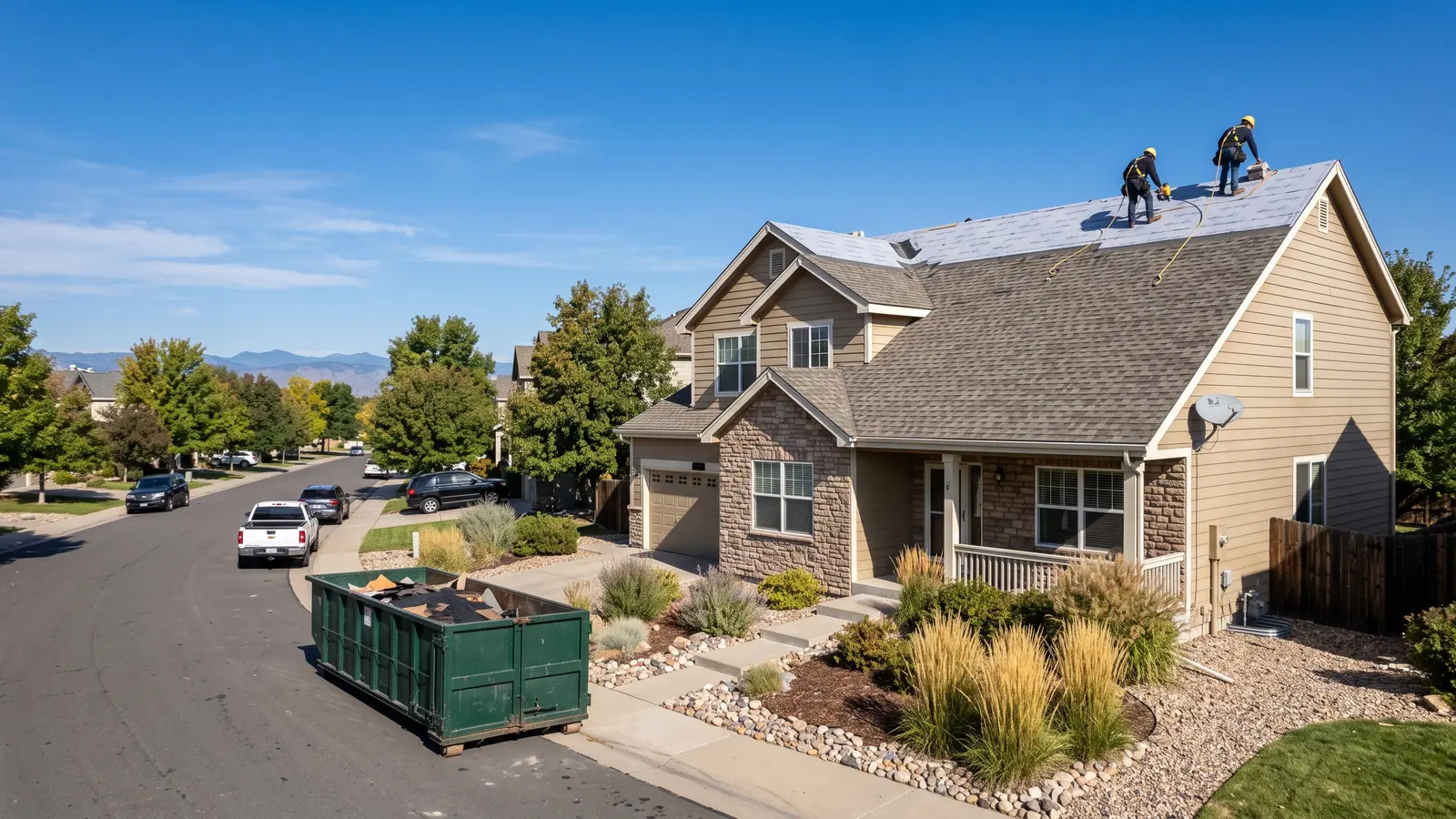
Roof Leak Sources on Thornton Houses
Water on a ceiling tells you there's a leak, not where it is. Here are four places a roofer will usually look on a shingle roof. The last one isn't a roof leak at all.
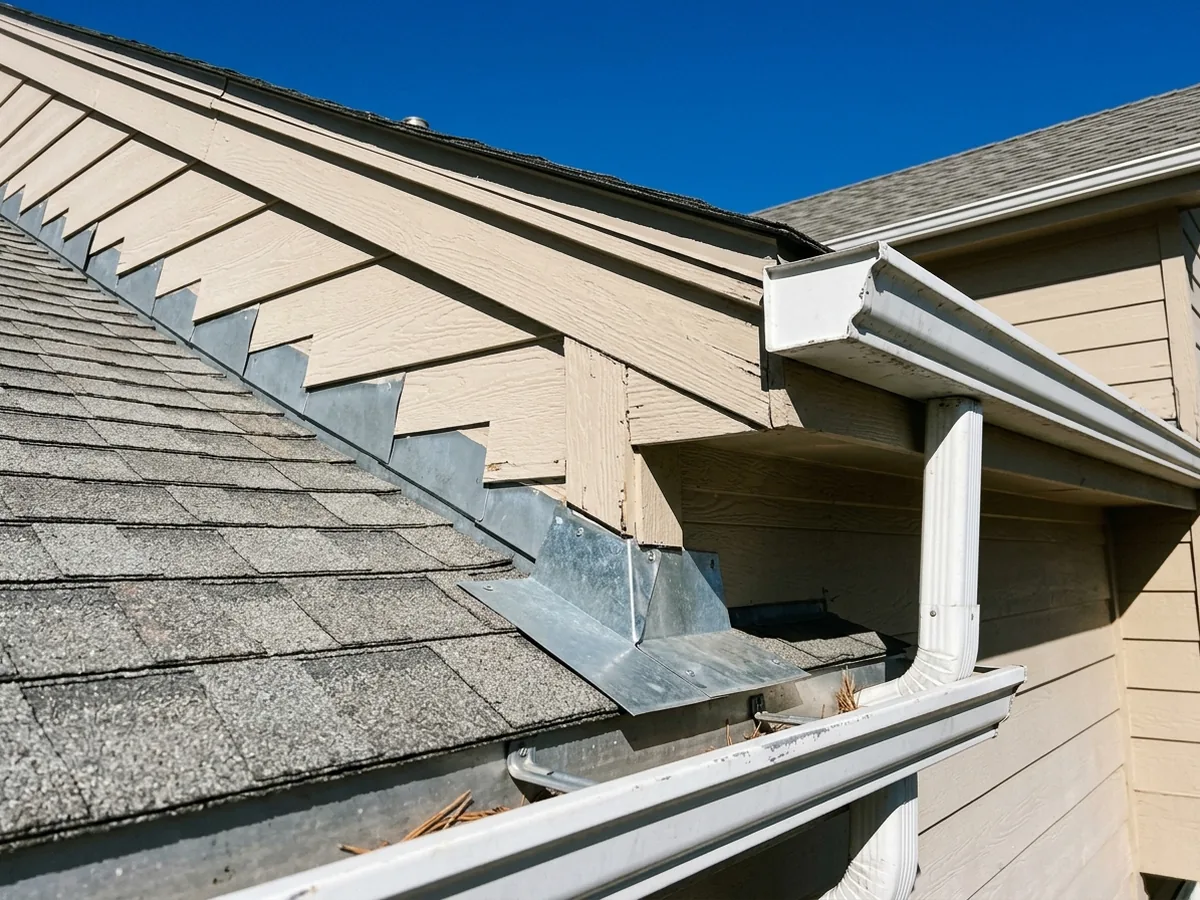
Kickout and Sidewall Flashing Leaks
Where a lower roof runs into a two-storey wall, water runs down the wall-side flashing and off the eave. Without a kickout diverter at that bottom corner, it pours behind the gutter end and into the wall. The 2024 International Residential Code, which Thornton applies to permits submitted from July 1, 2026, requires a flashing that diverts water away from that eave-and-sidewall corner. It also asks for base flashing at least 4 inches tall and 4 inches wide along the wall, with the vertical leg running continuously under the siding. A stain low on the wall or a swollen window trim under that corner is the classic sign. The proper fix means pulling a course of siding to fit the diverter and tuck the flashing behind it.
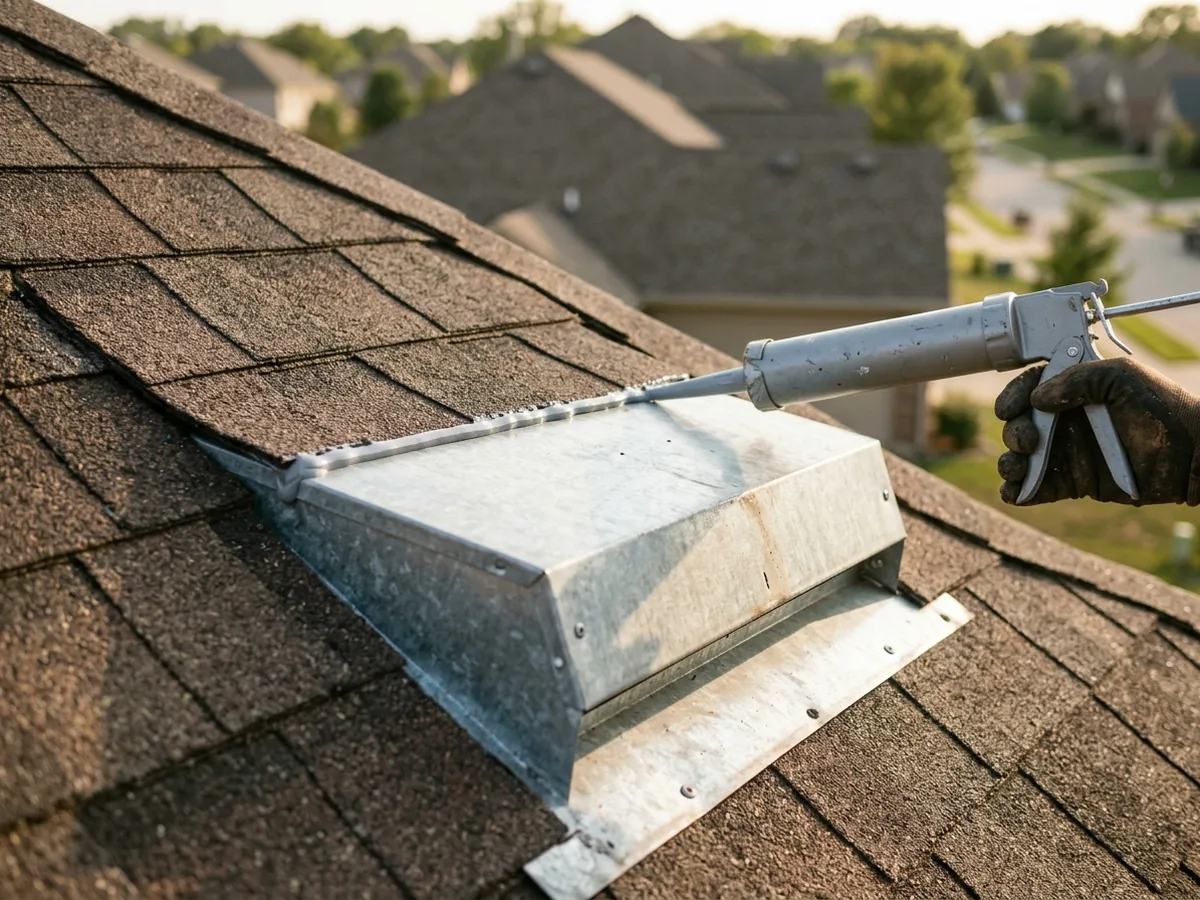
Exhaust Hood and Vent Penetrations
Every hole through the deck needs its own flashing: bath-fan and kitchen exhaust hoods, plumbing vent pipes, furnace and water-heater flues, and box vents. Hoods leak at the upper flange when the shingles above weren't lapped over it, or when hail has split a thin plastic cap. The rubber boot on a plumbing vent cracks with age and is the cheapest of these to fix. Ask the roofer to replace a cracked hood instead of coating it with sealant, which cracks as it ages and needs redoing. The code also says what has to come out of those hoods: bath and kitchen exhaust must discharge outdoors, never into the attic, a soffit or a ridge vent.
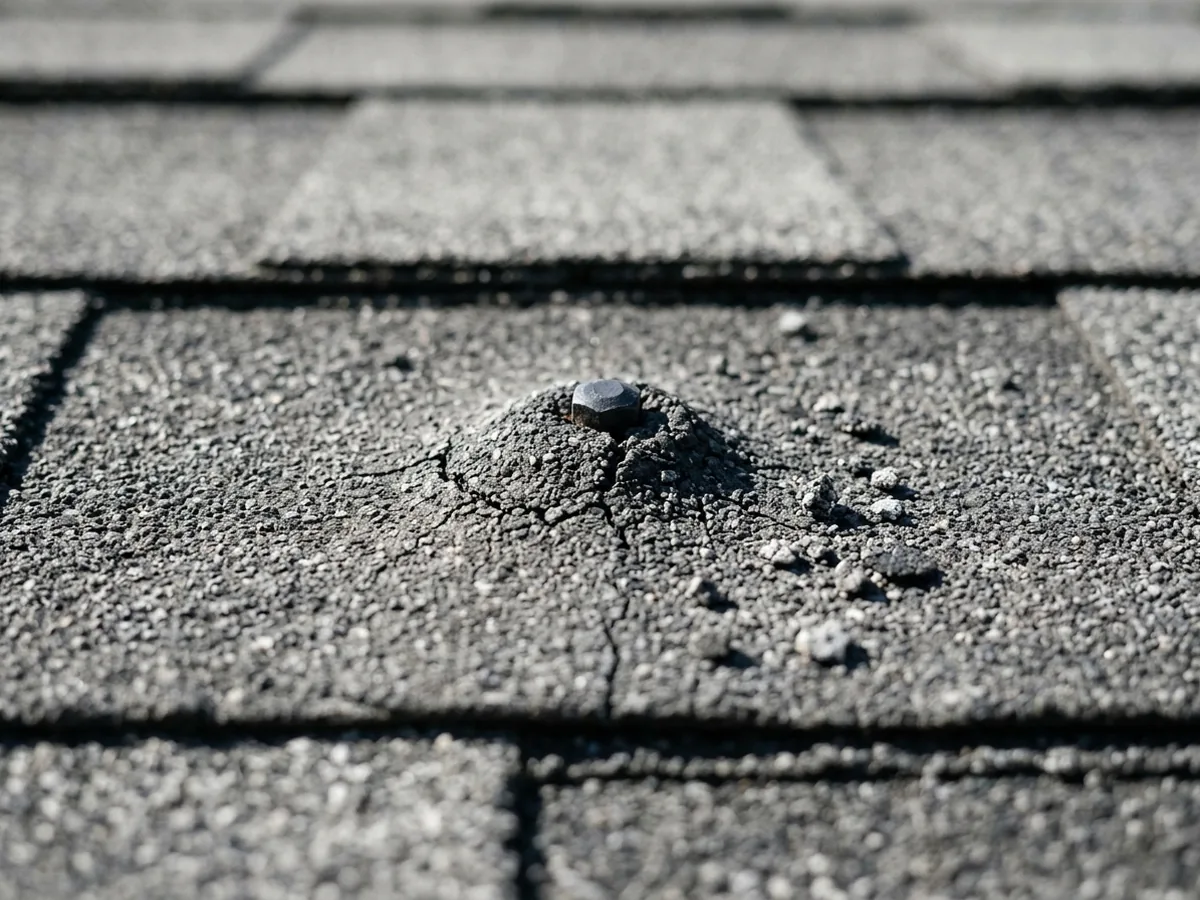
Backed-Out Nails and Exposed Fastener Heads
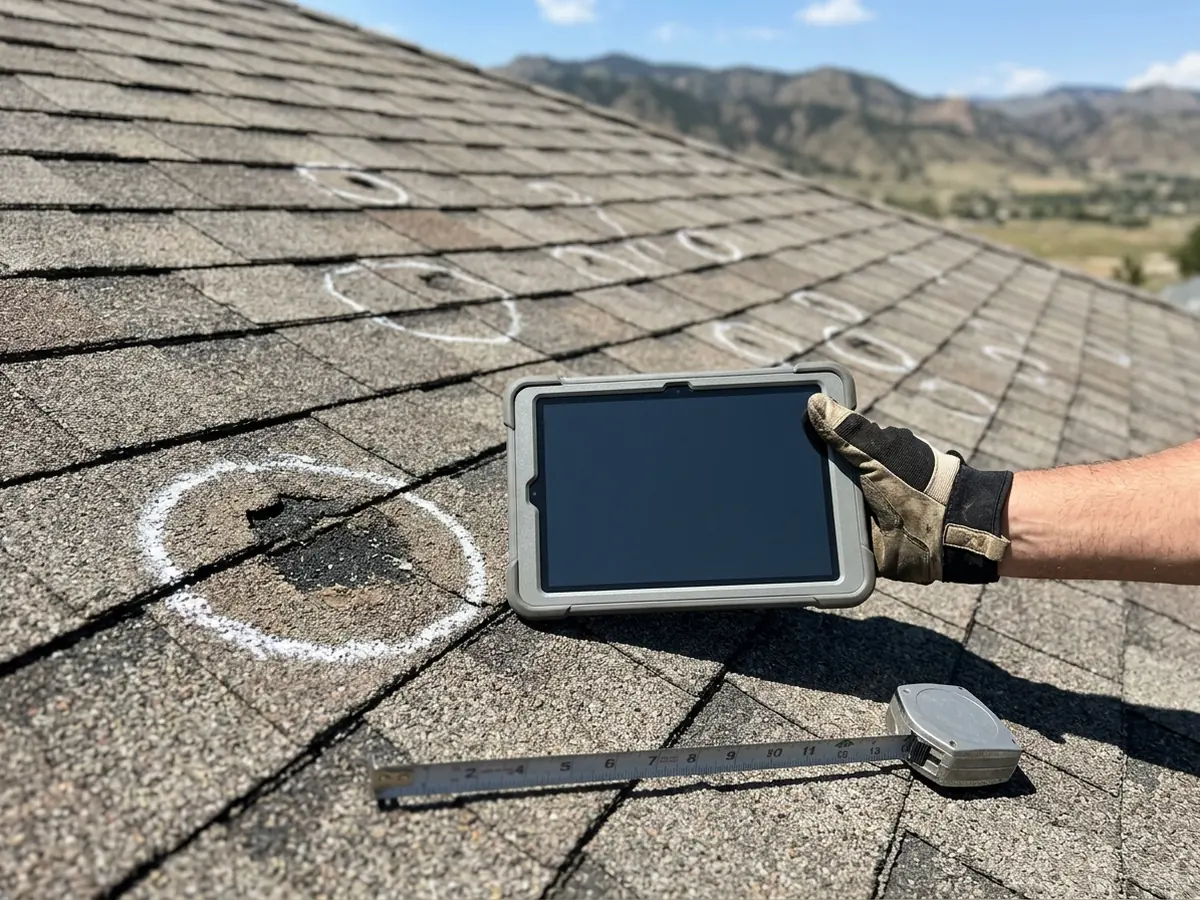
A nail pop is a fastener that has worked up and lifted the shingle above it, leaving a pin-sized path for water down the shank. Code calls for corrosion-resistant roofing nails with at least a 12-gauge shank and a 3/8-inch head, long enough to go 3/4 inch into the sheathing or right through it. Nails that only caught the edge of a board, or were driven into a gap between sheets, are the ones that tend to back out. The repair is to pull or reset the nail, seal the old hole and replace the damaged shingle. Exposed nail heads on ridge caps and flashing get a dab of sealant, but a row of popped nails on one slope points to a deck problem, not a fastener problem.
Attic Stains That Aren't Roof Leaks
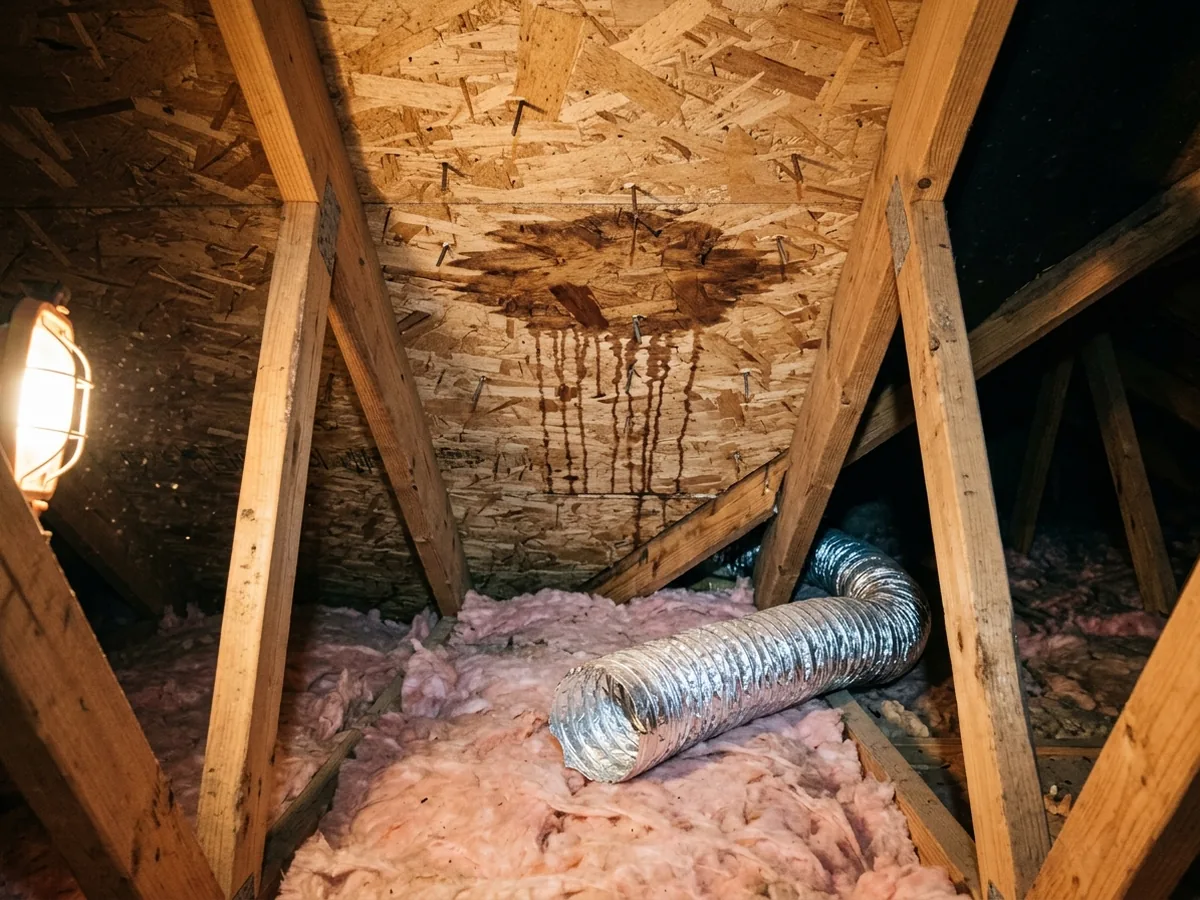
Some ceiling stains appear on dry days or after a cold snap, with no rain at all. That's often condensation: a bath fan duct that has fallen off its hood and is blowing warm, wet air into the attic, where it frosts on the cold nails and sheathing and drips when it thaws. The 2024 IRC (Section M1501.1) bars exhausting air into an attic, soffit, ridge vent or crawl space, so the cure for a loose duct is reconnecting it to its hood. Rusty nail tips and frost on the sheathing in winter are tells. Balanced intake and exhaust matters here too; see attic ventilation for how that works.
Why Thornton homeowners call Thornton Expert Roofing
- Free written estimate, no obligation
- One independent local contractor per request, not a call list
- A written contract with the price and materials before any work, as Colorado law requires
- Nothing charged to homeowners for the referral
Roof Leak Repair Season in the Denver Area
Leaks get noticed when it rains, and most of the Denver area's rain comes in a short window. About 14.5 inches of precipitation falls in a normal year, most of it from April through August, with May and July the wettest months at a little over 2 inches each. That's also hail season, so a flashing joint that held for years can start leaking the week after a storm cracked an exhaust cap or loosened a vent. A leak that first appears in late spring is worth checking for hail damage as well; hail damage roof repair covers what storm damage looks like and how claims work in Colorado.
Dry months are the better time to book a non-urgent leak repair. Sealants and self-sealing shingle strips bond best on a warm, dry deck, and the roofer can find the leak's path by its stains rather than chasing live water.
Roof Leak Repair Versus Re-Roofing a Slope
A leak at one joint is a repair. A leak that keeps moving, or soft decking spreading out from one stain, may mean more. Thornton draws the line by area. Up to one square of new shingles counts as a repair; past that, the job needs a permit and the city's whole-slope rule kicks in (both are explained under roof replacement). A leak fix that turns up rotten sheathing across half a slope can cross that line once the shingles come off.
For leak repair cost ranges and how to check a roofer's city license, see roof repair. Leaks around chimneys and skylights have their own flashing details, covered under chimney flashing repair and skylight installation.
Leak Diagnosis: What to Ask the Roofer to Show You
A leak repair is hard to judge from the ground, so ask for proof at each step.
The entry point
A photo of the spot on the roof where water got in, and a second photo of the matching stain or wet wood in the attic. If the two are far apart, ask the roofer to explain the path: water often runs along the deck or a rafter before it drips.What was replaced
The old flashing or hood, or a photo of it, beside the new part. "Resealed" alone isn't much of a repair.The siding work
On a kickout or sidewall job, a photo of the flashing before the siding goes back, showing the vertical leg tucked under it.What wasn't fixed
A note on anything else found, such as worn pipe boots, a loose bath duct or popped nails on another slope, so you can decide what to do next.
When the next big rain comes, check the stain. If it has stopped growing, the repair held. If it hasn't, ask the roofer back to look before the stain spreads.