
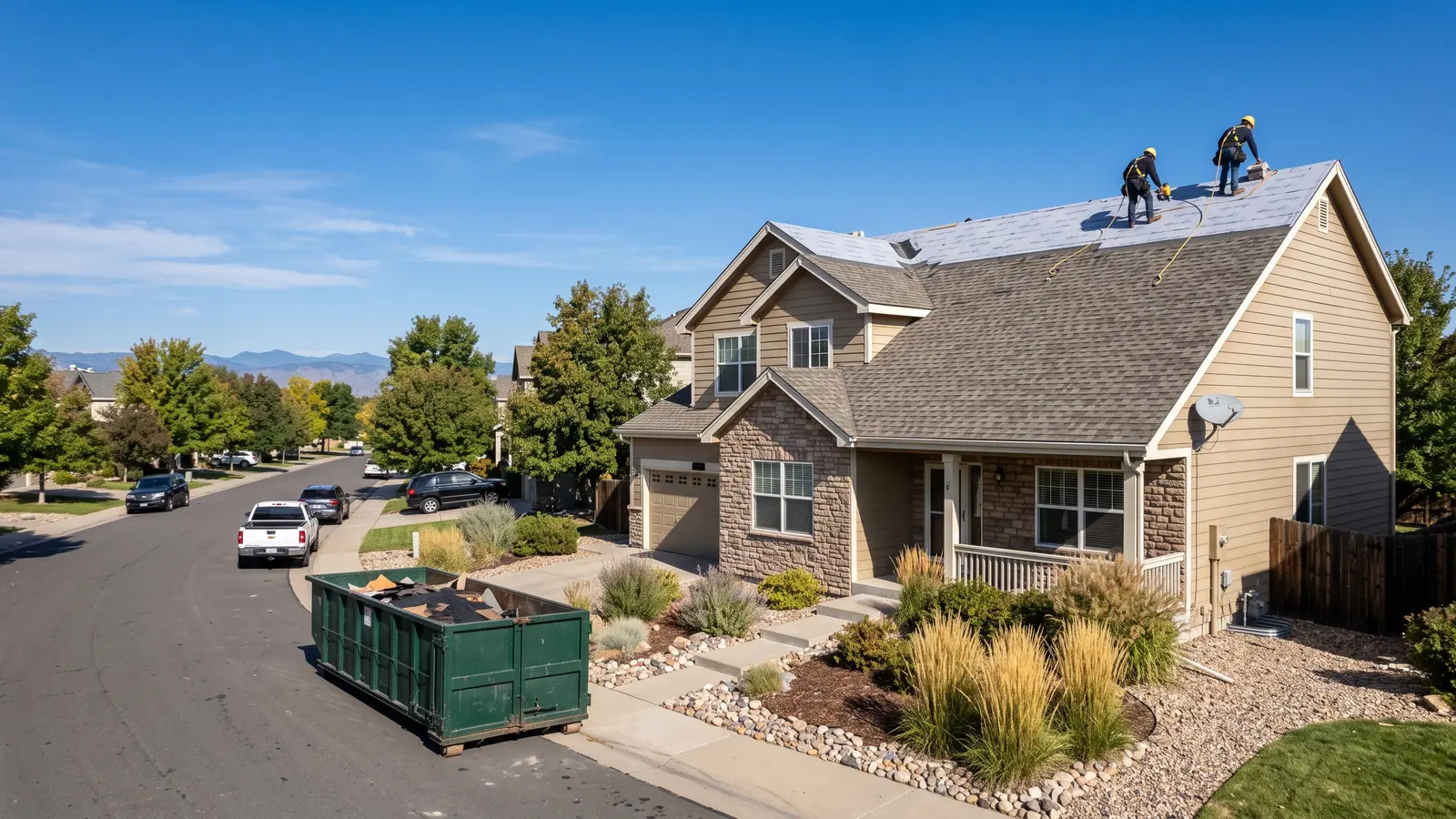
Standing Seam Metal Roof Profiles and Panel Specs
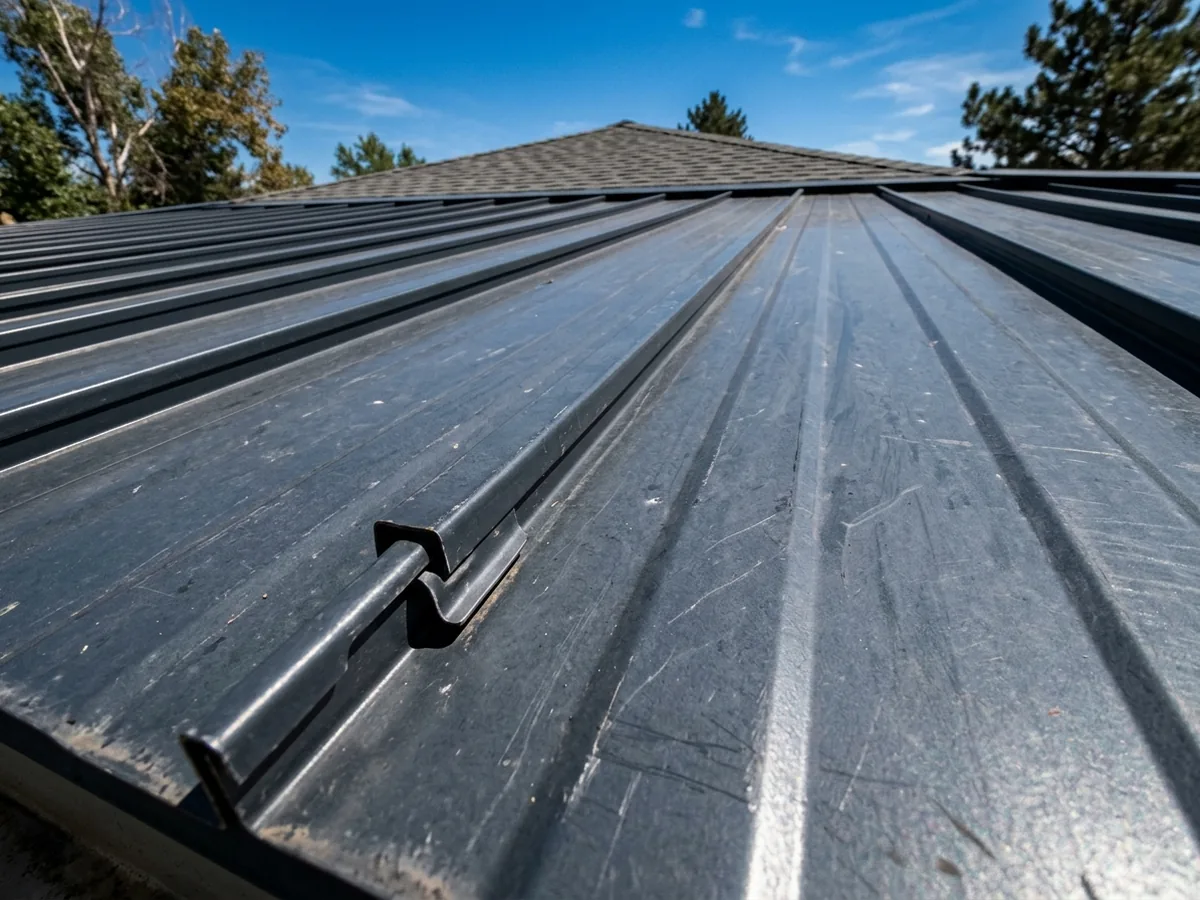
Snap-Lock Seams
On a snap-lock panel, one edge has a male leg and the other a female leg. Clips screwed to the deck hold each panel, and the next panel snaps over the last one by hand, with no seaming tool. SFS, a fastener maker, lists the trade-offs plainly: easier and cheaper to install, but less weathertight than a mechanical seam and with no room for the panels to expand and contract. It recommends snap-lock for short runs on roofs of 3:12 or steeper. That suits a typical two-story gable or a garage roof. It's a poorer fit for long, shallow runs.
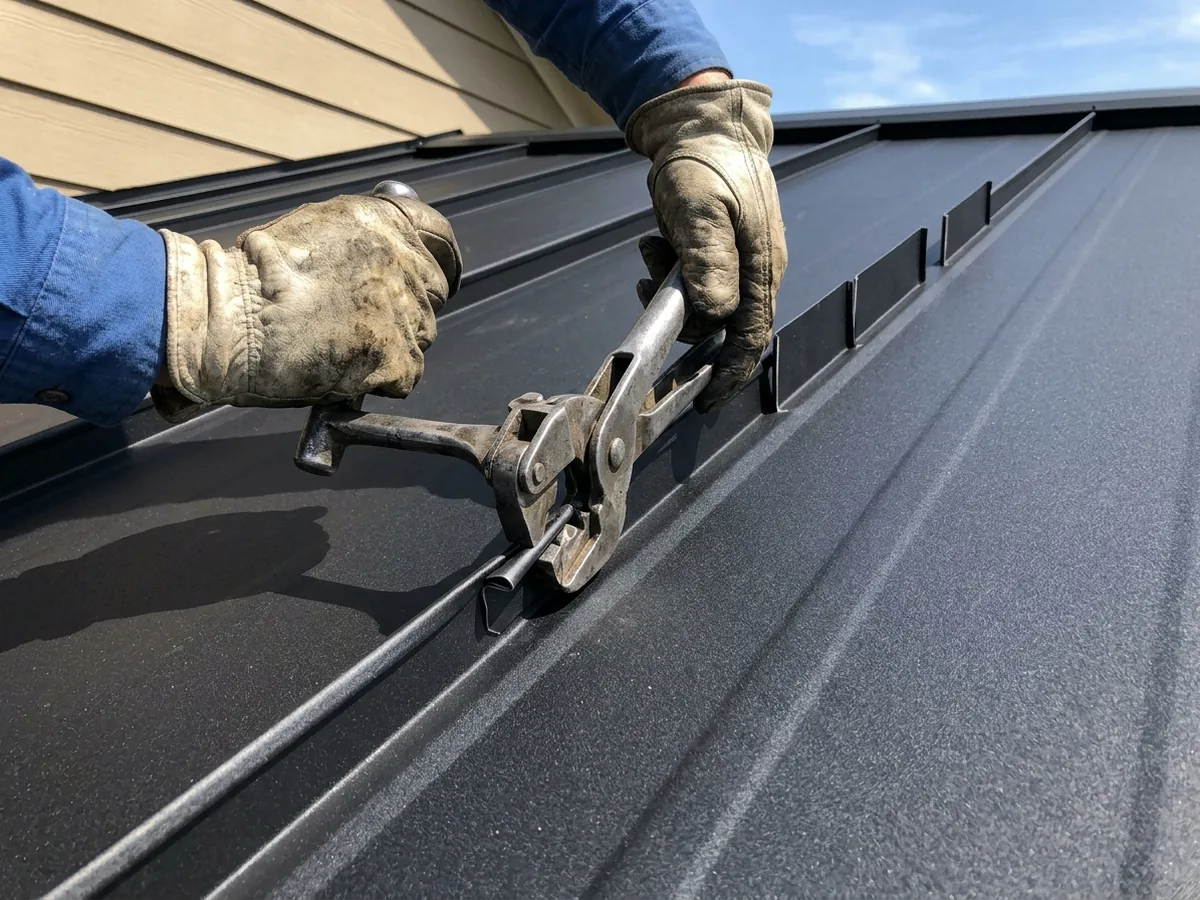
Single- and Double-Lock Mechanical Seams
Mechanically seamed panels are clipped down too, but after they're laid a seamer folds the joint closed: once for a single lock, twice for a double lock. A double lock is a 180-degree fold, and trade guidance rates it above a single lock in cold climates where roofs freeze and thaw, as they do through a Denver-area winter. These systems can use float clips that let long panels move with temperature. The cost is labor, and a damaged double-locked panel is harder to swap out. On low slopes, SFS recommends double-locking the seams.
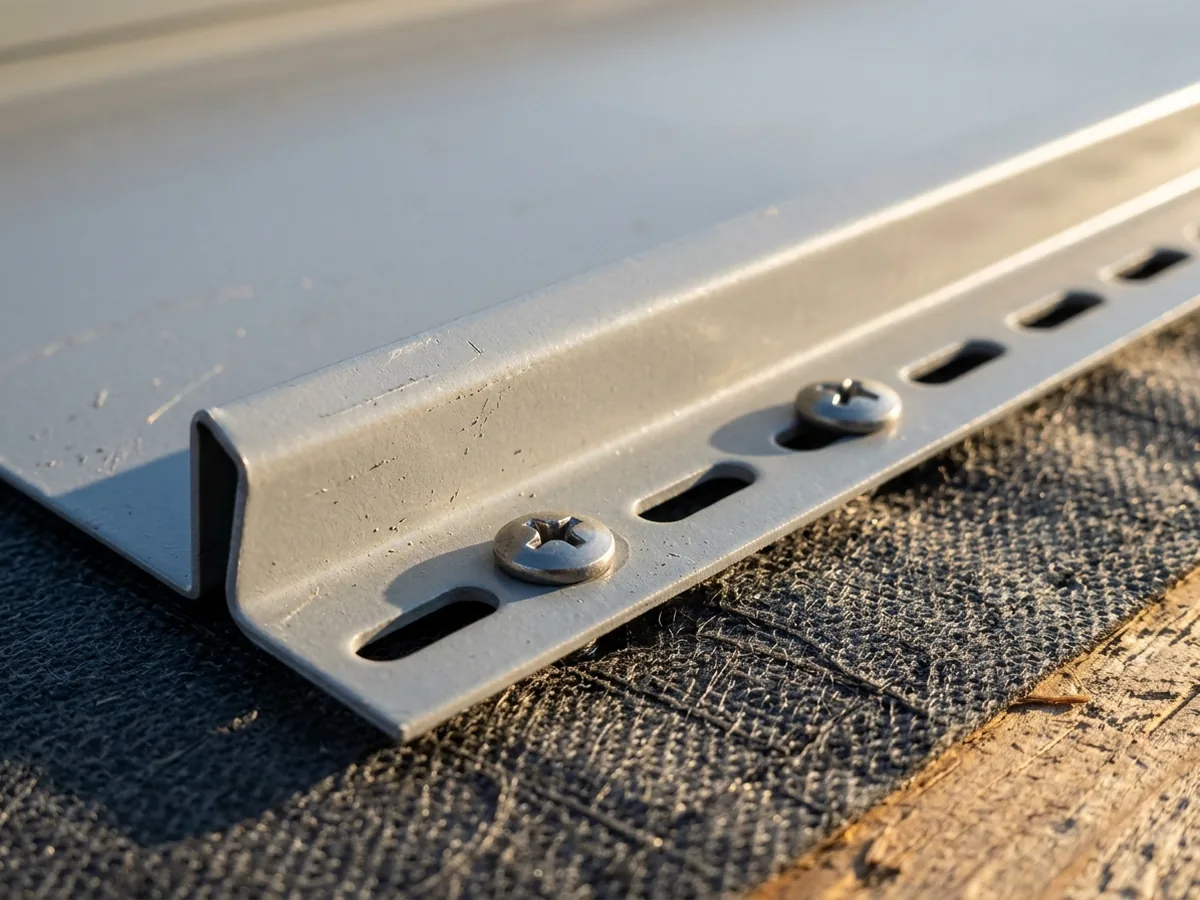
Nail-Strip Panels
Nail-strip panels drop the clips. Each panel is fastened through a flange along one edge, with slotted holes so the steel can still move, and the next panel covers those fasteners. Gibraltar's version is sold in 24 and 26 gauge with a 3:12 minimum slope and needs a solid deck underneath. It installs quickly, and Gibraltar pitches it at residential work. The trade-off is attachment: without clips, everything rides on the flange fasteners. Clip systems can tighten their spacing at corners and edges, where wind uplift is highest. Ask which system is being bid and why.
Panel Gauge and Paint Finish
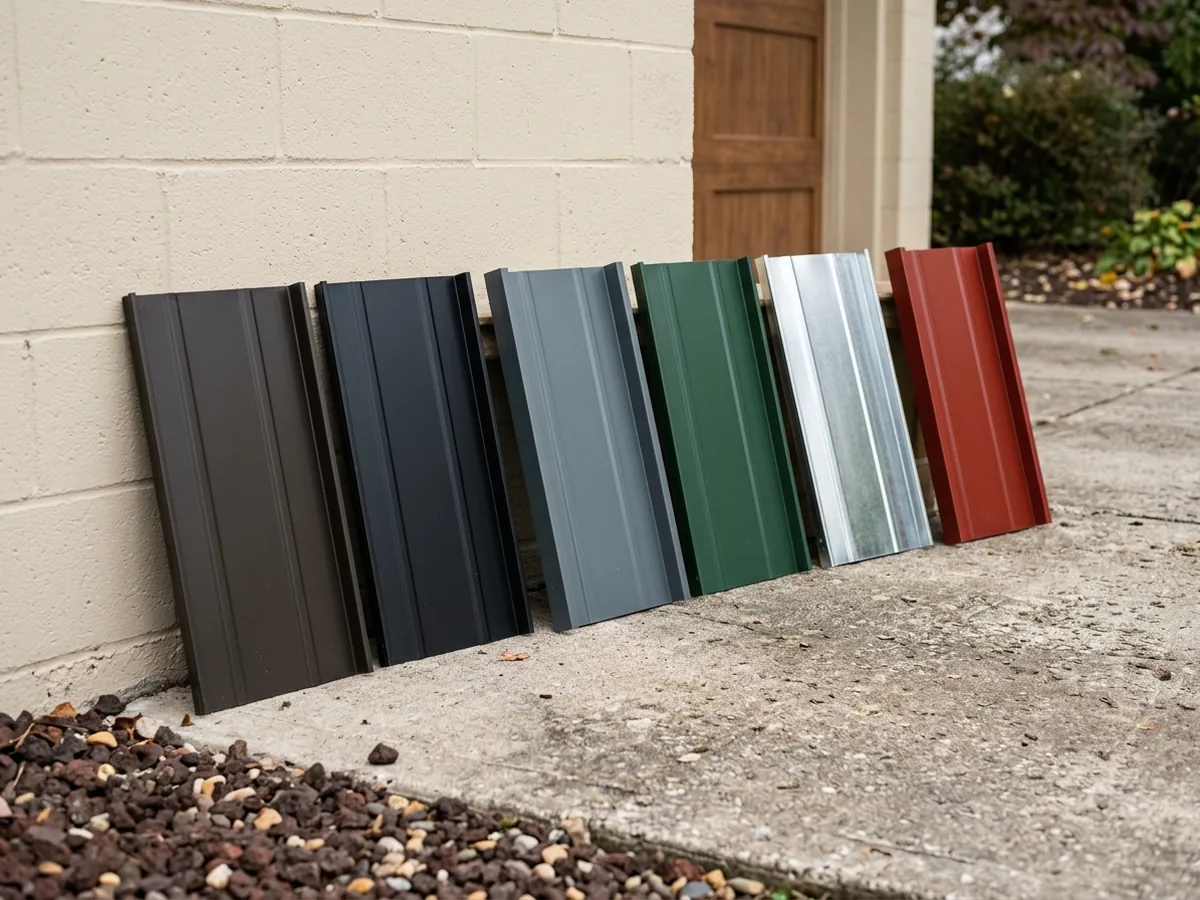
Gauge numbers run backwards: 24 gauge steel is thicker than 26. Thicker steel is stiffer and costs more. Under the panel's paint, the 2024 IRC requires a real corrosion coating: 55% aluminum-zinc alloy to ASTM A792 AZ50, galvanizing to G-90, or an equivalent listed in its table. For the paint, PVDF (often sold as Kynar 500) resists chalking and fading better. SMP (silicone-modified polyester) costs less. Gibraltar's warranty chart gives PVDF 35 years of fade coverage against SMP's 30, which matters under hard Colorado sun.
Why Thornton homeowners call Thornton Expert Roofing
- Free written estimate, no obligation
- One independent local contractor per request, not a call list
- A written contract with the price and materials before any work, as Colorado law requires
- Nothing charged to homeowners for the referral
Standing Seam Metal Roof Cost Ranges
HomeGuide puts standing seam at $9 to $16 a square foot installed, or $13,500 to $40,000 for an average roof. Those are published estimates, not quotes. Where a Thornton job lands in that range depends mostly on:
Seam system
Mechanically seamed panels take a seaming pass and more labor than snap-lock or nail-strip.Gauge and finish
24 gauge with PVDF paint sits toward the top; 26 gauge SMP toward the bottom.Roof shape
Every hip, valley, dormer and chimney means cut panels and custom trim. A plain gable costs least to panel.Tear-off and deck
Old shingles come off and soft decking gets replaced before panels go on.Snow retention
Guards over doors, walkways and the driveway add to the price.
SFS, the fastener maker, puts screw-down (through-fastened) metal roofs at about 20 to 30 years and standing seam at 50 or more when it's installed properly, which is part of what the higher price buys. For the cost of metal roofing in general, including exposed-fastener panels and metal shingles, see metal roofing. InterNACHI's chart gives metal roofs 40 to 80 years, and the lifespans of other materials are compared on the roof replacement page.
Standing Seam on Low Slopes, Porches and Snowy Eaves
The 2024 IRC lets standing seam systems go as low as 1/4:12. Lapped metal panels without sealant need 3:12. The code figure is only a floor; the manufacturer sets the real limit for each profile. Snap-lock and nail-strip lines are often rated for 3:12 and up. Seam height follows slope too. Trade guidance says roofs steeper than 3:12 shed water fast enough to work with a lower seam, while low-slope roofs, where water can sit against the seam, call for a taller one. A shallow back-porch roof or a low addition is where a double-locked mechanical seam is worth the extra labor.
Snow is the other design load. Thornton's design table sets the ground snow load and wind speed a roof has to be built for, covered on the metal roofing page. A smooth panel sheds that snow in one go, so the eaves over entries, decks and the garage door are where guards belong. Clips need attention too. A long panel on fixed clips has nowhere to go when it heats on a summer afternoon and cools at night, and that movement works at the fasteners.
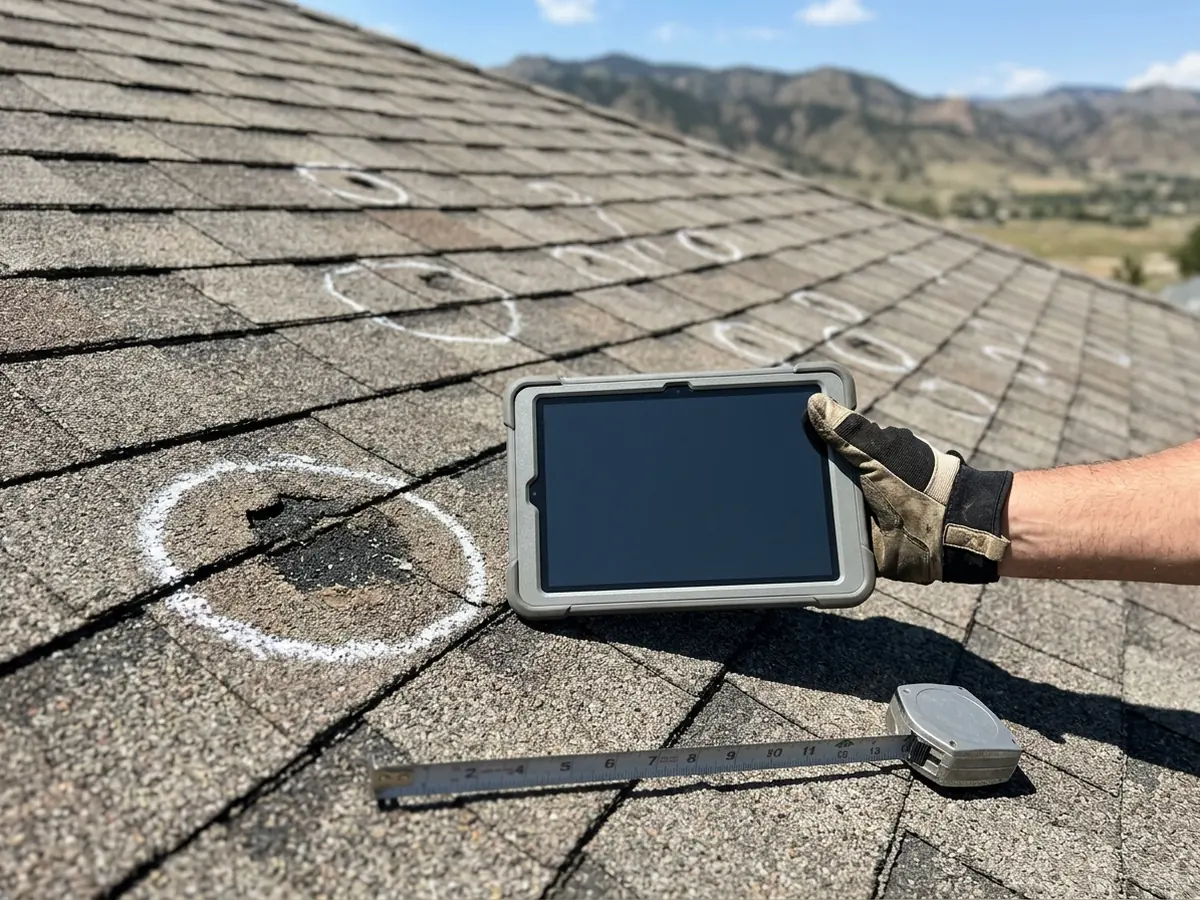
Hail is the third load, and one more reason to weigh gauge carefully. For what to check after a storm, and how claims work, see hail damage roof repair.
Standing Seam Bids Compared Side by Side
Two standing seam quotes can describe very different roofs. A useful bid names:
- STEP01The panel profile, seam type (snap-lock, single lock, double lock or nail-strip) and seam height.
- STEP02Gauge, base coating (AZ50 aluminum-zinc or G-90 galvanized) and the paint system, PVDF or SMP, with the color.
- STEP03Clip type and spacing, fixed or floating, and whether spacing tightens at corners and edges.
- STEP04Underlayment, trims at eaves, rakes, ridge and walls, and how penetrations are flashed.
- STEP05Snow guards, if any, by location.
- STEP06Tear-off, decking allowance and the permit.
A re-roof over one square needs a Thornton permit, and roof inspection explains what the city checks. Colorado law also sets what the contract itself must say, covered under hail damage roof repair. Ask for a sample panel in the finish being quoted. A small offcut tells you more about gauge and color than a brochure does.