
Shingle Roofing by Shingle Grade
Architectural Laminated Shingles
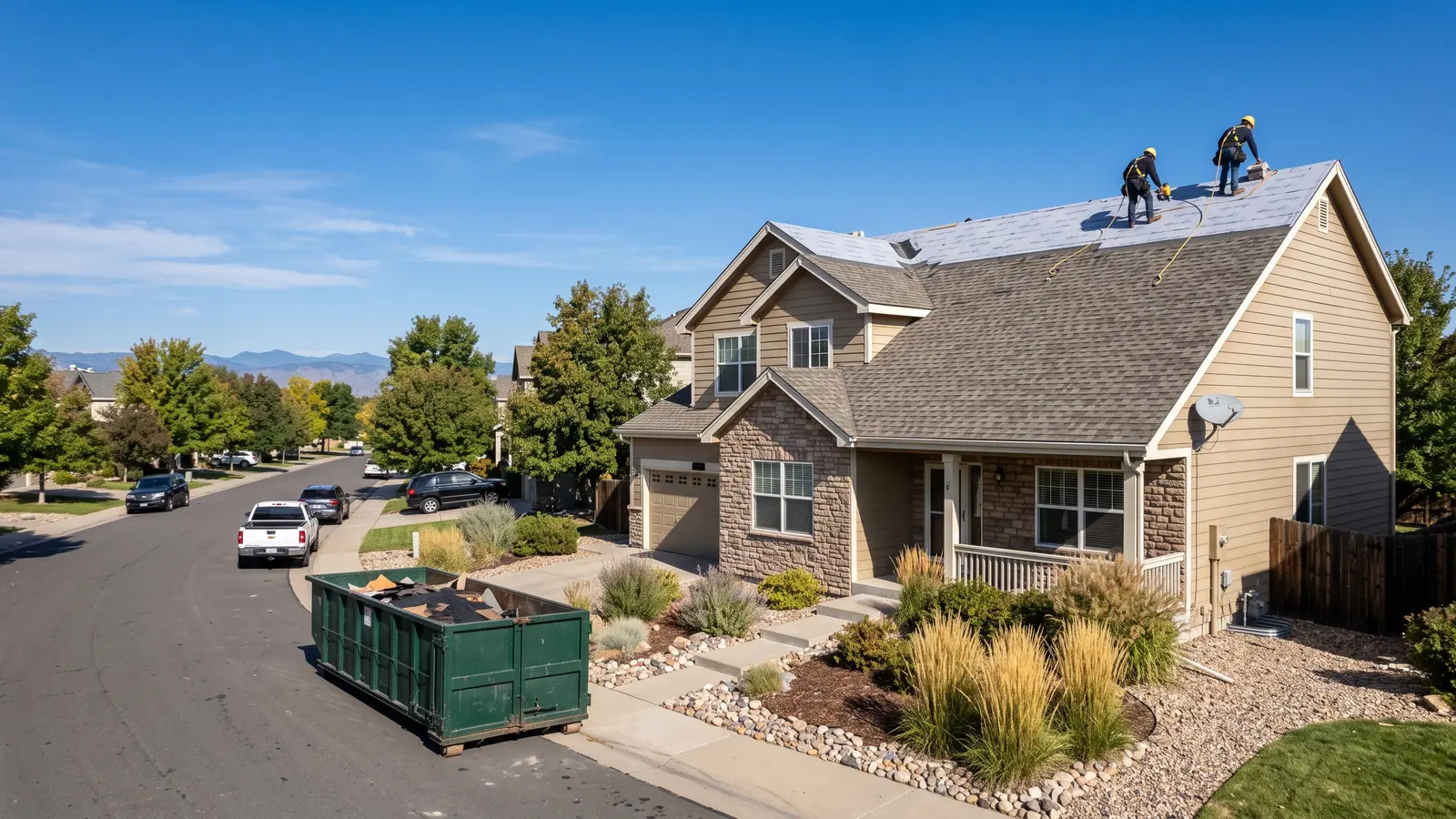
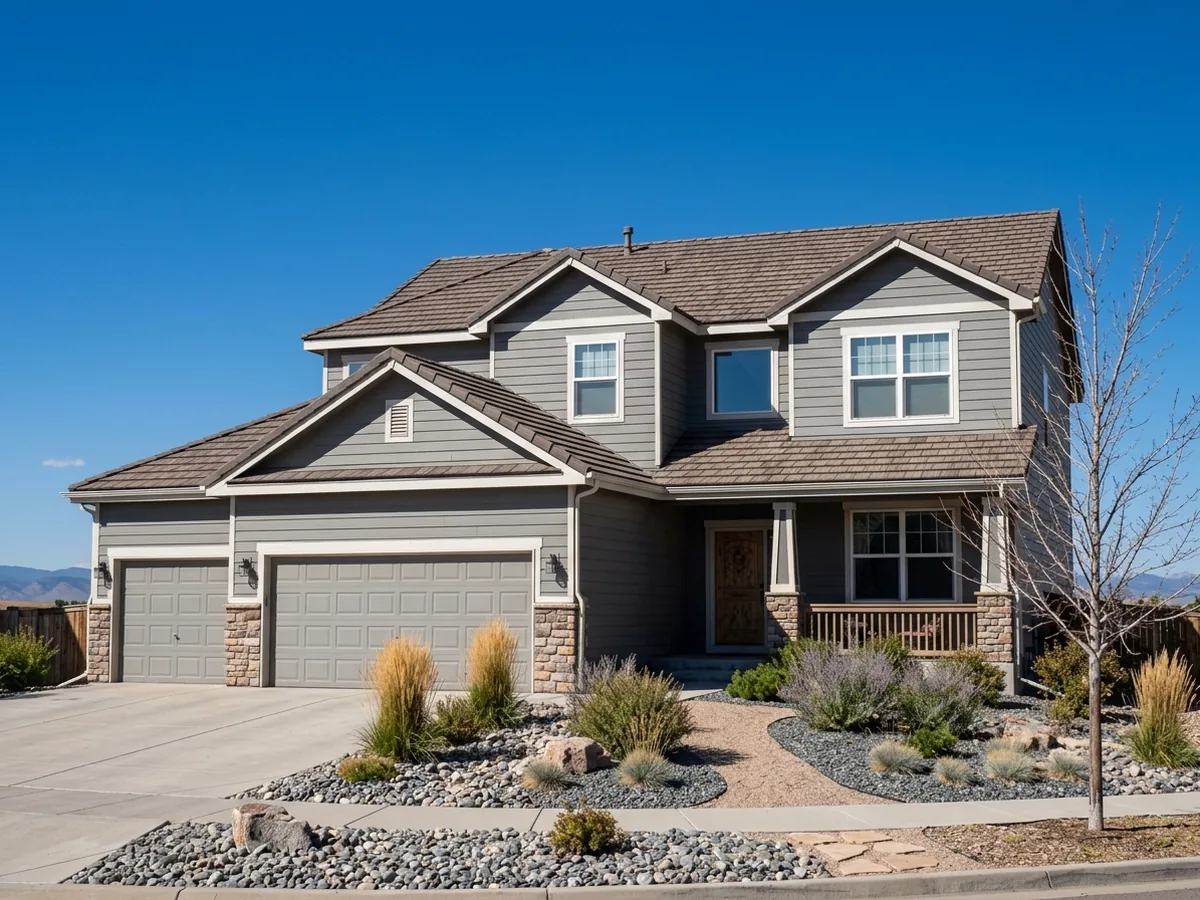
Architectural shingles, also sold as laminated or dimensional, bond a second layer of tabs to a base sheet so the roof shows depth and shadow lines. HomeGuide describes them as thicker and longer-lasting than 3-tab, and InterNACHI gives them about 30 years. HomeGuide prices them at $4 to $6 a square foot installed, or $7,500 to $16,000 on an average house. The 2024 code requires them to meet ASTM D3462 and carry their wind class on the bundle wrapper, and every one goes on with at least the maker's nail count, using roofing nails with a 3/8-inch head that reach 3/4 inch into the deck. Thornton's mid-roof photos have to show the wrapper.
3-Tab Shingles and Matching Repairs
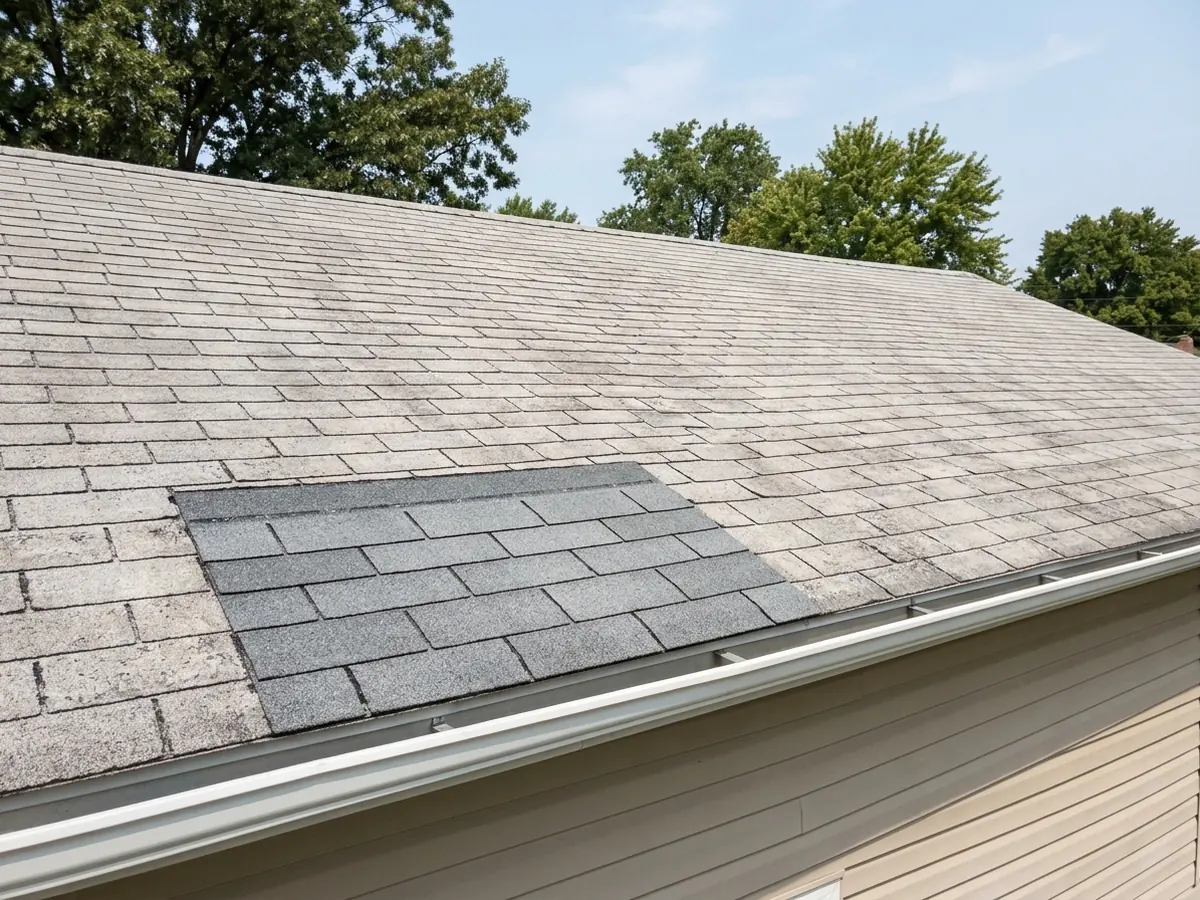
A 3-tab shingle is a single flat sheet slotted into three tabs, which gives the roof its even, brick-like pattern. HomeGuide prices 3-tab at $3 to $5 a square foot installed and InterNACHI rates it at about 20 years. The practical question on an older 3-tab roof is matching. A small repair can use a close 3-tab match, but new shingles rarely blend with ones that have weathered for twenty summers. Past one square of damage, Thornton's rules mean whole slopes get redone anyway, and that's the natural point to move up to architectural.
Designer Multi-Layer Shingles
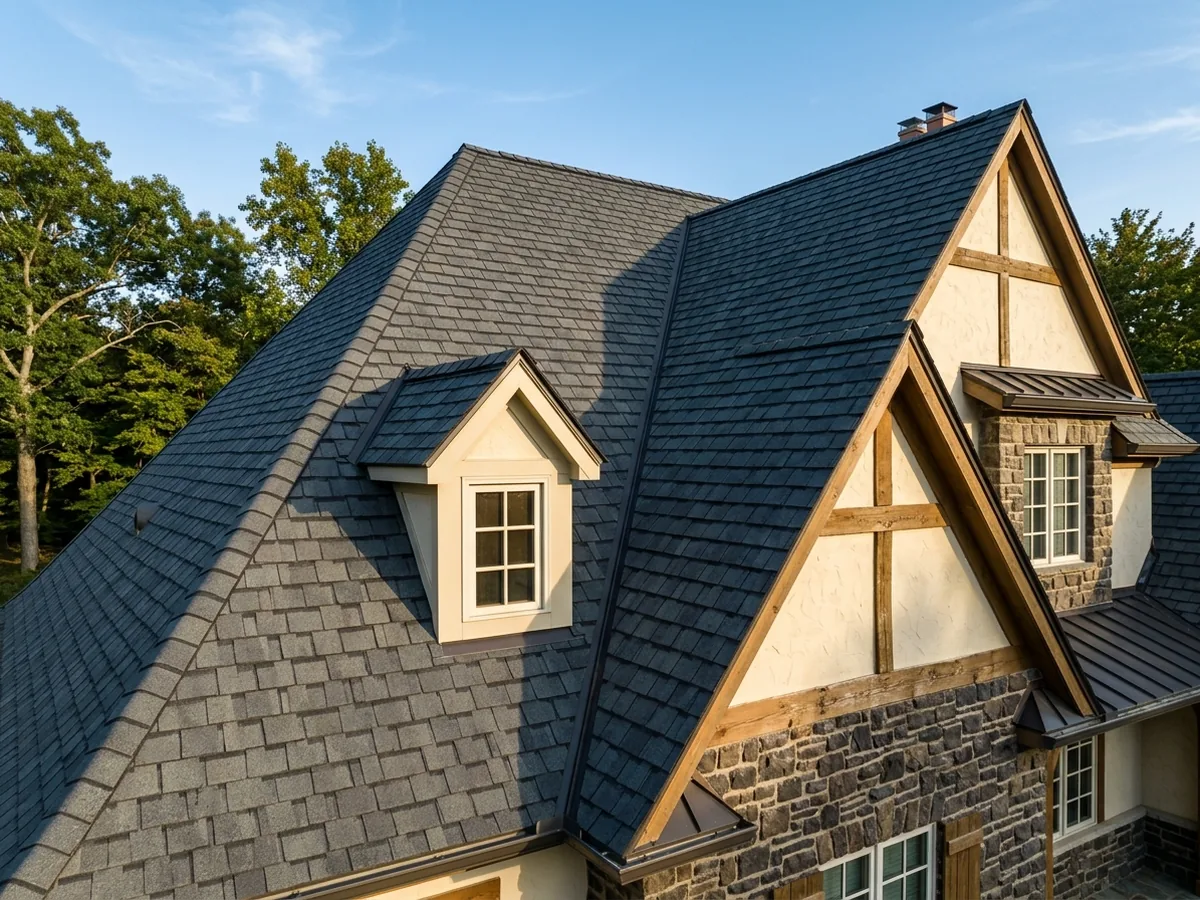
Designer, or luxury, shingles stack extra layers and cut them to imitate slate, wood shake or tile. They cost more: HomeGuide puts premium shingles at $500 to $700 a square installed, with a 25- to 40-year lifespan against 20 to 30 for standard architectural. Thornton's approved list includes several of these lines by name, among them CertainTeed Grand Manor, Carriage House and Presidential Shake, GAF Camelot II and Grand Canyon, and IKO Crowne Slate. Ask the roofer for a sample board, because the look changes a lot between a showroom and a full roof in Colorado sun.
Impact-Rated Shingles
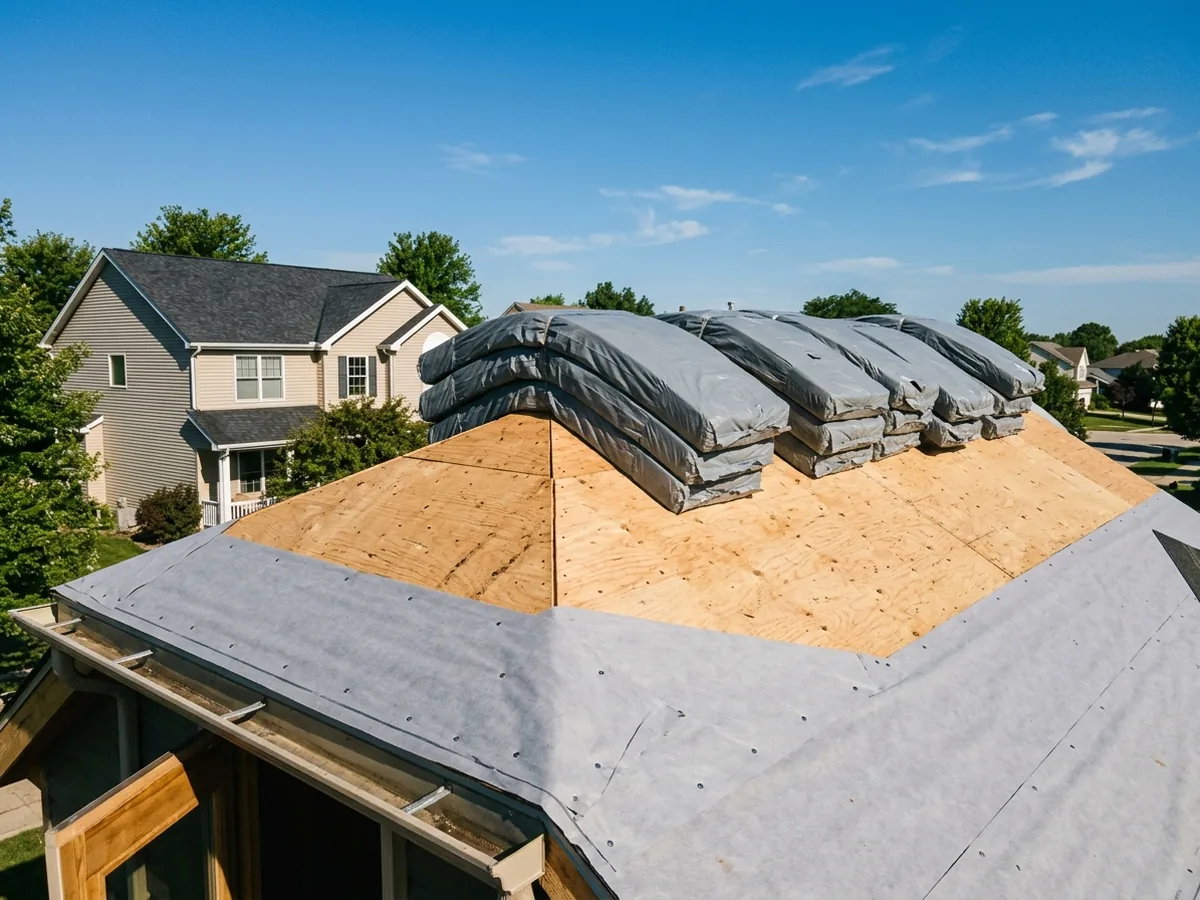
Impact-rated shingles are tested by dropping steel balls on them under UL 2218, and the top rating is Class 4. Thornton's approved list includes several lines marketed for storms, such as Tamko Proline Stormfighter IR, Atlas StormMaster and CertainTeed Landmark (AR & IR). Go by the UL 2218 class printed on the wrapper, not by the product name, and ask the roofer to leave you one wrapper for your records. The test classes, insurance discount questions and Colorado's hail-retrofit grants are covered on impact-resistant shingles.
Starter, Hip and Ridge Shingles
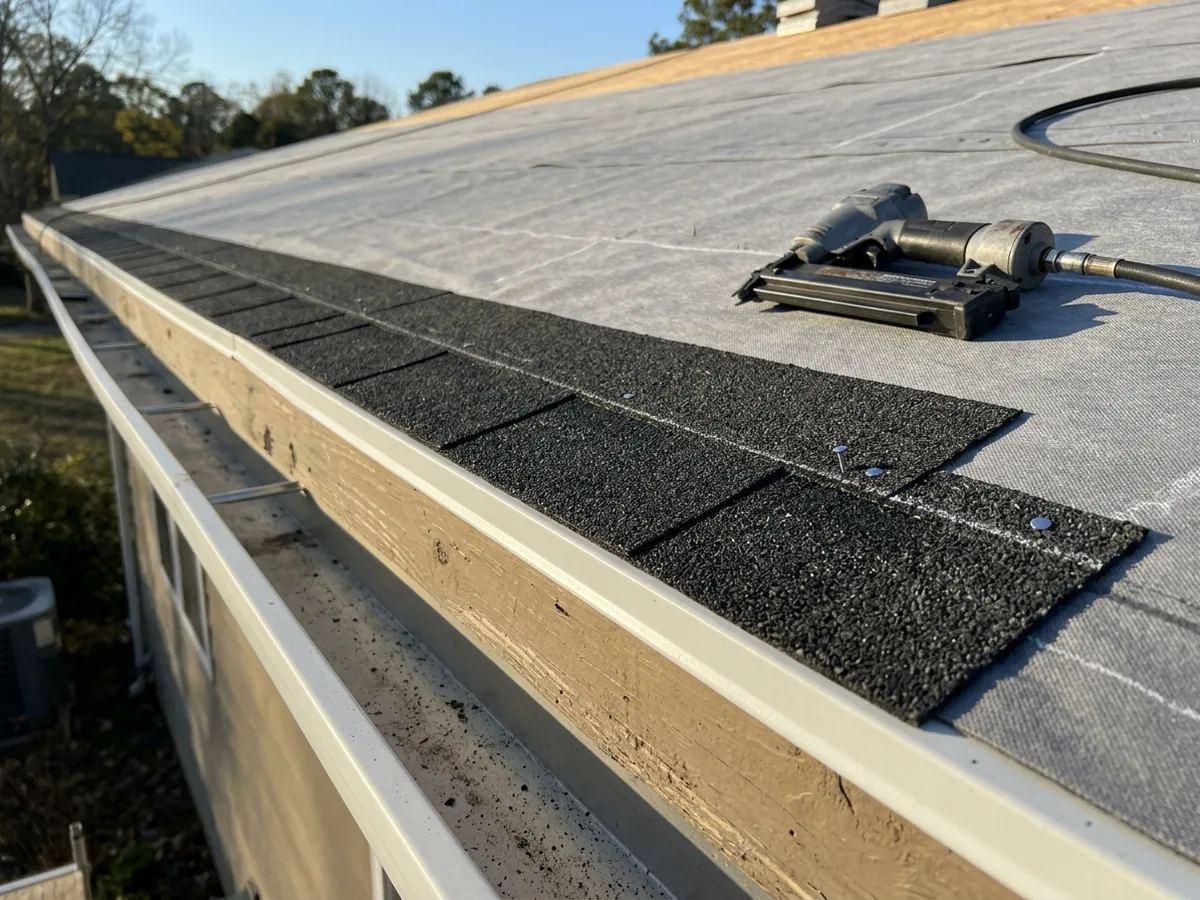
The field shingles get most of the attention, but the edges need pieces of their own. Starter strip shingles run along the eaves and rakes with a factory sealant line close to the edge, so the first course is glued down rather than left loose. At the top, hip and ridge caps are a separate product, thicker and made to bend over the peak without cracking. Thornton's mid-roof photos must show the starter course (see roof inspection). Cutting starter from old 3-tab leftovers and using flat shingles as ridge caps are shortcuts worth asking about on any estimate.
Why Thornton homeowners call Thornton Expert Roofing
- Free written estimate, no obligation
- One independent local contractor per request, not a call list
- A written contract with the price and materials before any work, as Colorado law requires
- Nothing charged to homeowners for the referral
Shingle Roofing Cost by Shingle Grade
HomeGuide's installed estimates, all national averages rather than quotes:
| Shingle grade | Per square foot | Per square (100 sq ft) | HomeGuide lifespan |
|---|---|---|---|
| 3-tab | $3 to $5 | $200 to $500 | 15 to 20 years |
| Architectural | $4 to $6 | $400 to $600 | 20 to 30 years |
| Designer / premium | n/a | $500 to $700 | 25 to 40 years |
Labor is the bigger share. HomeGuide puts it at $2 to $3 of every $3 to $5 per square foot, around 60% to 70% of the installed cost. A bundle covers 32 to 33 square feet, so a square takes about three bundles, and the bundle count on an estimate lets you check the roof area it assumes. Tear-off, decking and the full Colorado replacement range are on roof replacement.
Thornton's Approved Shingle List and Wind Ratings
Thornton's Roofing Standards include a list of approved asphalt shingle lines from nine makers: Atlas, CertainTeed, EuroShield, GAF, IKO, Malarkey, Owens Corning, Pabco and Tamko. Naming them here isn't a recommendation of any brand. A few rules come with the list:
Not exhaustive
The Building Inspection Division will consider any shingle that carries a national wind warranty for 80 mph sustained or 90 mph 3-second gust.Approval first
A shingle that isn't on the list needs a material review and approval before the permit is issued.High-wind installs
Atlas Pinnacle, Owens Corning Oakridge and Malarkey Legacy must go on to the maker's high-wind instructions.Warranty upgrades
Some makers require you to buy an upgraded warranty before the stated wind speed is covered. Ask the roofer which applies to your line.
Color can need approval too. If your subdivision has an HOA, its architectural committee may have to sign off on the shingle line and color before work starts. Ask the roofer for the exact product and color name in writing early, since that's what the committee will want to see, and keep the approval letter with your contract.
The 2024 code adds its own test. Shingles must be classified under ASTM D7158, and at Thornton's design wind speed, explained on metal roofing, Class D, G or H all meet the code table. The class is printed on the wrapper, which is one reason the city wants to see it.
Shingle Life and Hail Wear on the Front Range
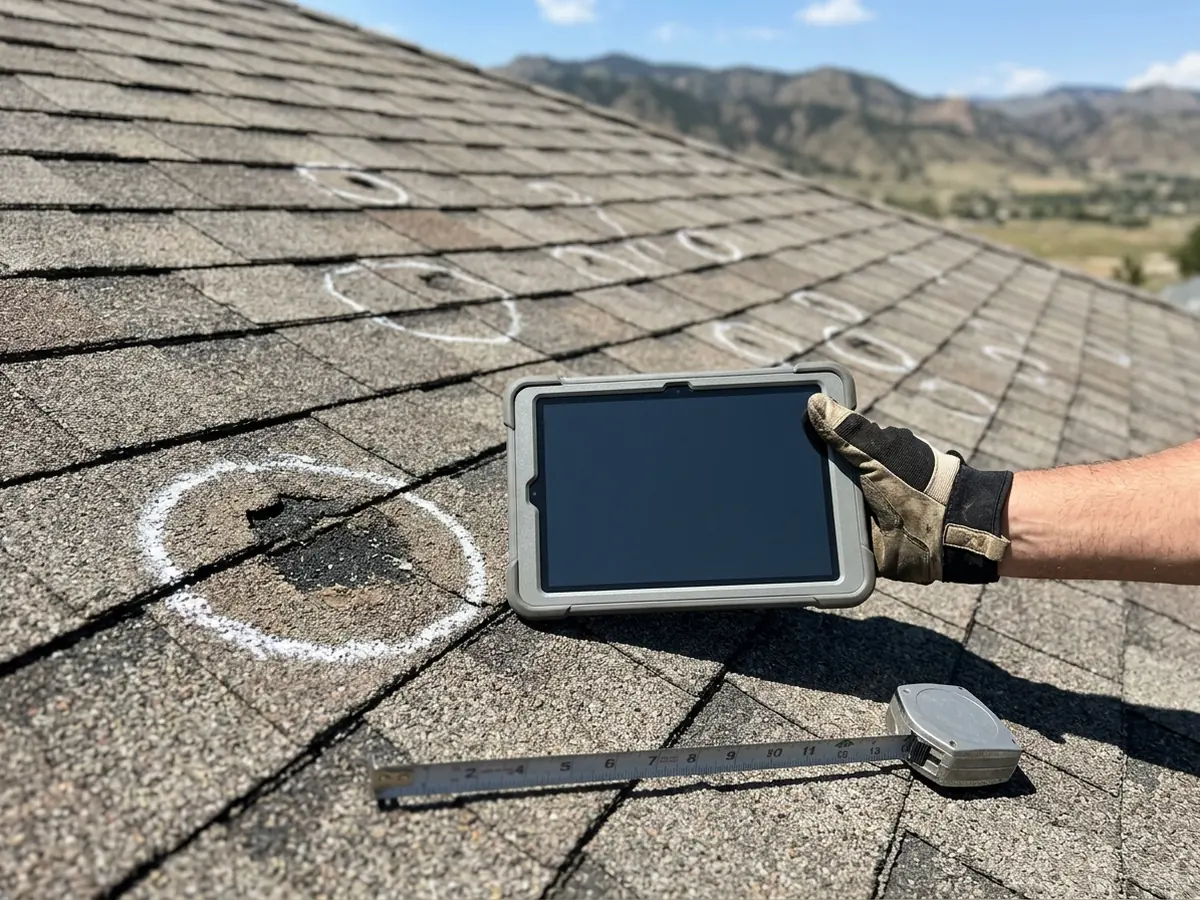
Rated lifespans assume ordinary weather. InterNACHI's chart says roofs in severe-weather areas, hail included, may not reach them. Thornton sits in Hail Alley, and recent research shows small storms matter too. An IBHS study published in 2025 found that high concentrations of sub-severe hail, stones under an inch, wear away granules and make shingles age faster and resist the next big storm less well. The authors' conclusion: shingles that had been weathered and hit by small hail were about ten times more susceptible to later severe hail, and in their tests impact-resistant shingles lost about as many granules as conventional ones.
So check the roof after small storms as well as big ones. Bare black patches, granules piling up at the downspouts and tabs that crack when lifted all mean the shingles are wearing faster than their rating. A hail damage roof repair inspection with photos of each slope will show how far along yours are.