
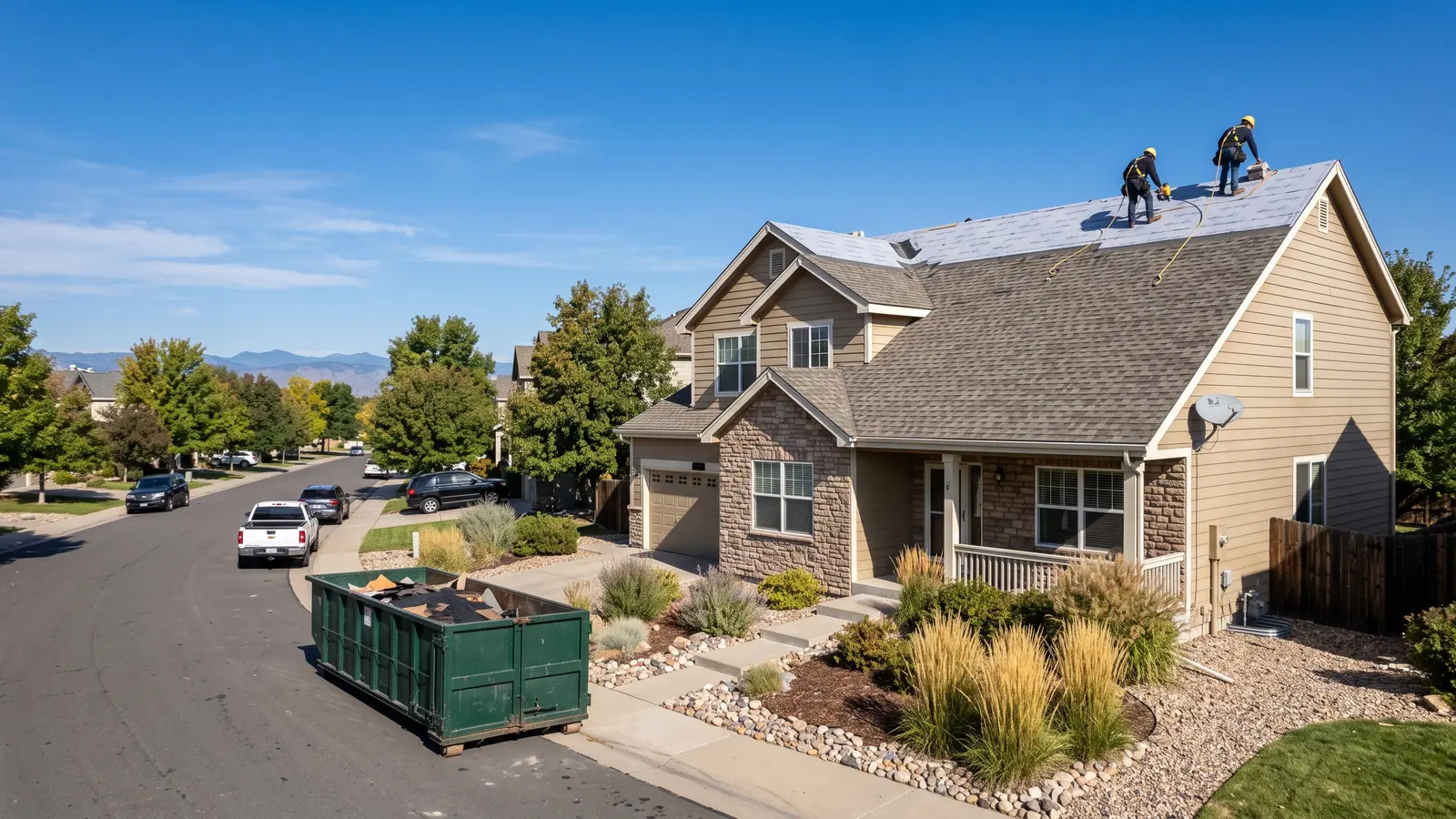
Commercial Roofing by Building Type
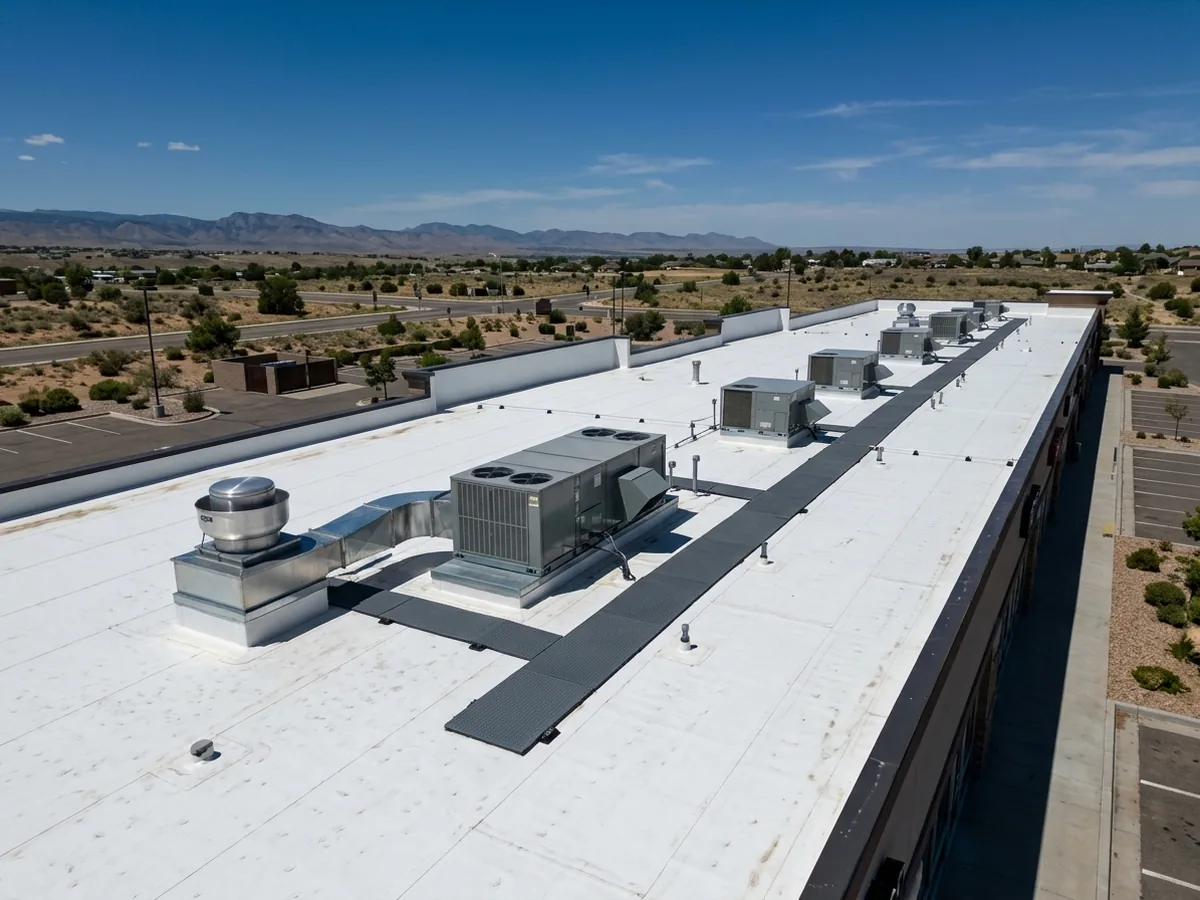
Strip-Center and Restaurant Roofs
A strip center is one long low-slope roof shared by several tenants, broken up by rooftop HVAC units, curbs, parapet walls and scuppers. Restaurants add kitchen exhaust fans, so ask how the membrane around them will be protected from grease. The work has to fit trading hours, with storefronts and parking kept open. Ask for a plan that phases the roof by tenant space, keeps each section watertight overnight, and puts walkway pads on the routes HVAC techs use to reach their units.
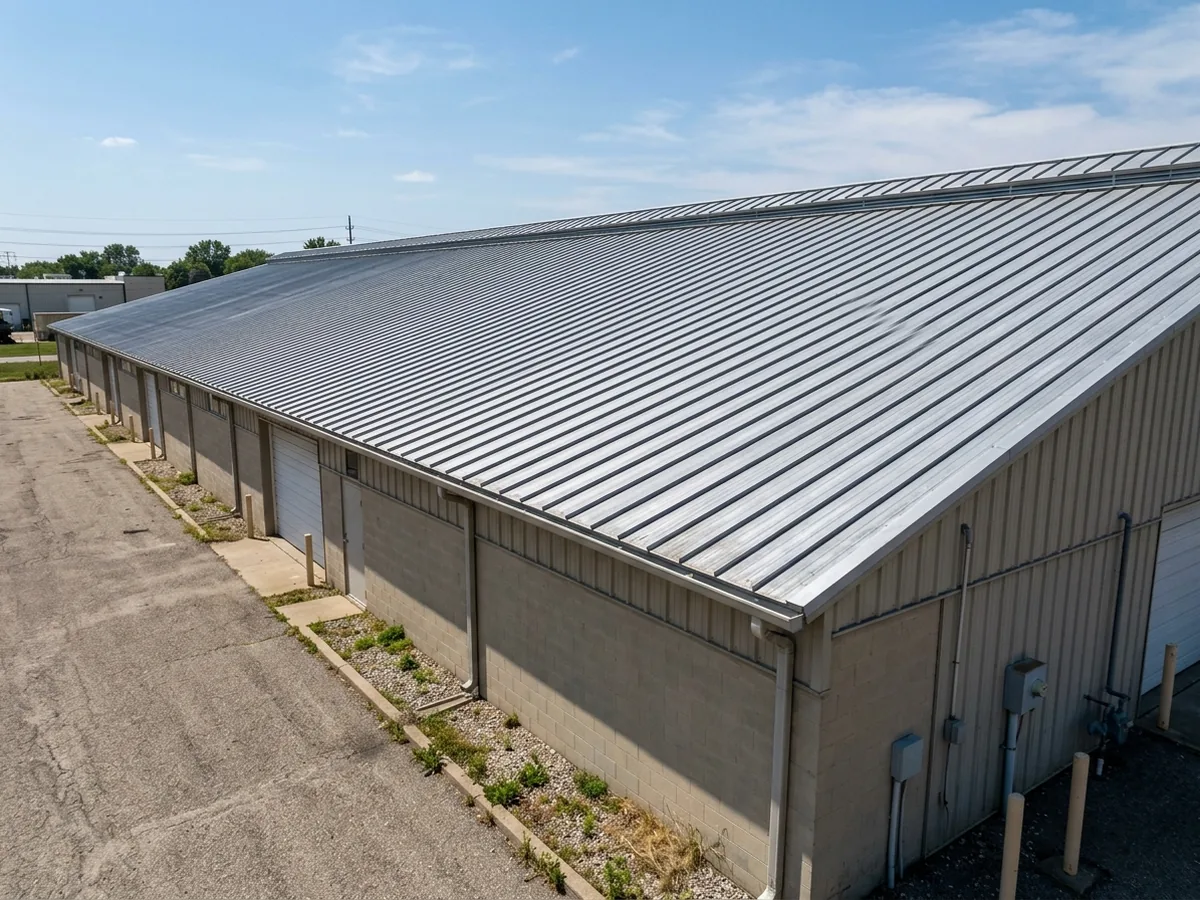
Warehouse and Flex-Space Roofs
Warehouses and flex buildings tend to have big, simple roofs: long metal panel runs or a single membrane field over steel deck. On metal, the questions are seam type, clip type and fastener condition. Mechanically seamed panels with float clips suit long runs and low slopes, while through-fastened panels depend on every exposed screw and washer staying tight. On membrane roofs, the long runs to a few drains make ponding the main worry. Leaks over high racking can go unnoticed for a long time, which is one reason to put someone on the roof after every hailstorm.
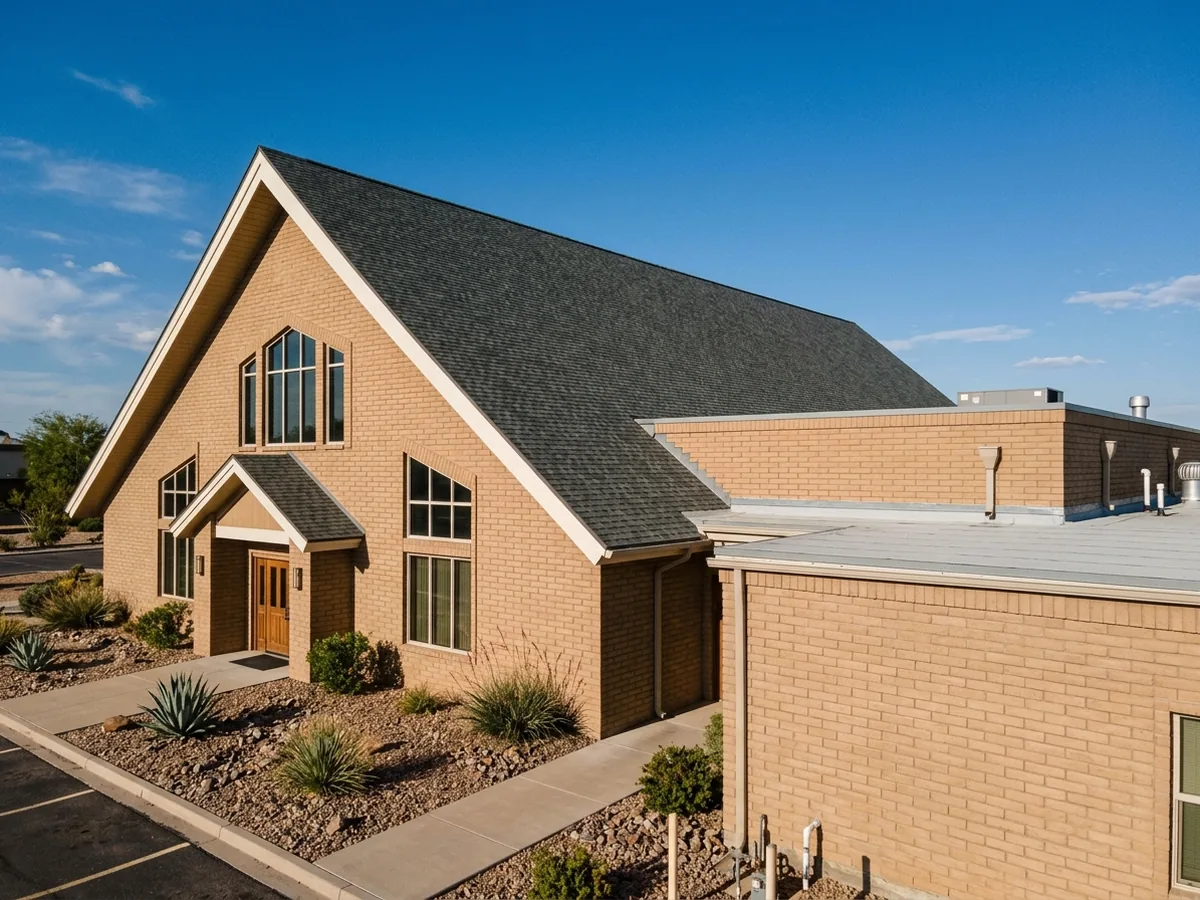
Church and School Roofs
Churches and schools often combine roof types: a steep sanctuary or gym roof in shingles or metal, flat wings in membrane, and the tricky transitions between them. Steep asphalt sections on commercial buildings fall under Thornton's version of the whole-slope rule, and the city's code amendment also requires every old layer of asphalt shingles to come off to the deck. Schedules matter as much as materials: worship services, school terms and events set the work windows. Boards and committees usually need a written scope, a phased price and product data they can circulate before they vote.
Maintenance Plans for Managed Buildings
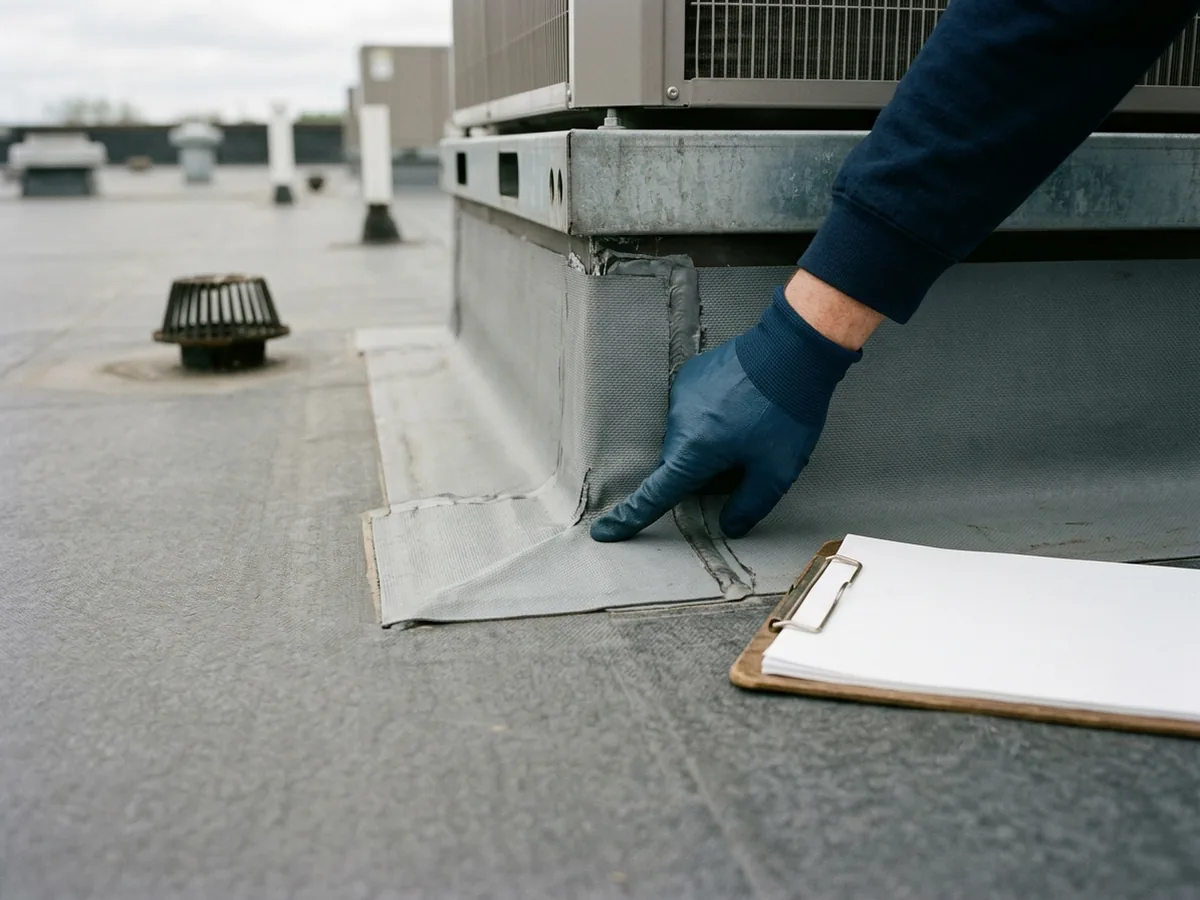
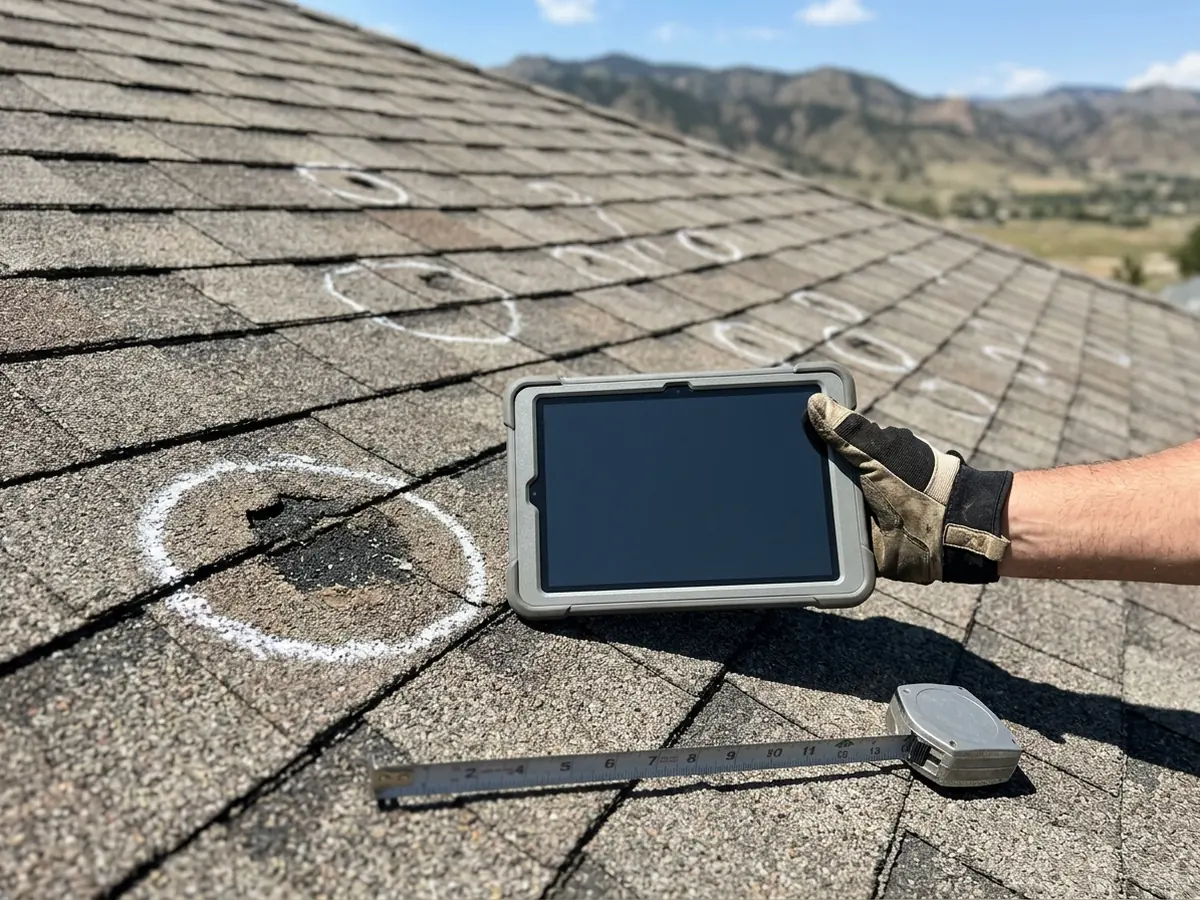
NRCA, the national roofing contractors' association, recommends inspecting a roof at least twice a year, ideally in spring and fall, and again after any severe storm such as a hailstorm. It also advises recording what's found in writing and in photos, and keeping the file so each inspection can be compared with the last. For a property manager, that file is the evidence behind an insurance claim or a capital budget request. A plan should cover drains and scuppers, rooftop unit curbs, pitch pans, seams, parapet copings and debris. Where the roof is under warranty, NRCA suggests the installing contractor do repairs.
Why Thornton homeowners call Thornton Expert Roofing
- Free written estimate, no obligation
- One independent local contractor per request, not a call list
- A written contract with the price and materials before any work, as Colorado law requires
- Nothing charged to homeowners for the referral
Commercial Roofing Permits and Plan Review in Thornton
Commercial roofs in Thornton don't get an over-the-counter permit. The city checks each proposed roof against the building and energy codes, so every commercial roofing permit goes through plan review, with a maximum turnaround of five working days. The submittal needs:
- a description of the work, including demolition and the existing roof assembly;
a narrative of the finished assembly
Insulation that stays and its thickness, new insulation, cover boards, slip sheets, any covering left in place, and the new membrane;- product cut sheets for the membrane, insulation, cover board and slip sheets;
- the membrane maker's FM or UL assembly numbers for wind uplift and fire, or the maker's ICC Evaluation Service report.
The city's checklist for membrane roofs also asks for the roof height above grade, the pitch, whether the deck is combustible, how many coverings are on it now, overlay or tear-off, and whether the new membrane will be ballasted, mechanically attached, fully adhered or welded. A roofer who can't fill that sheet in after the site visit hasn't looked closely enough.
Inspections follow the same pattern as a house, with one difference at mid-roof: sheathing before it's covered, a mid-roof check with 40% to 75% of the covering on and the maker's installation instructions on site, and a final with all flashing complete.
Commercial Roof Warranties and Rated Assemblies
Thornton ties the membrane to its warranty. If a modified bitumen, thermoset or thermoplastic single-ply membrane comes with the maker's standard warranty of 10, 15 or 20 years, the city requires it to go on exactly as the warranty's installation instructions say. A system sold with no such warranty has to be listed as an FM I-90 assembly or a UL Class 30 system, or be certified by an evaluation report to resist at least 45 pounds per square foot of static wind uplift.
In practice, the warranty is part of the specification. Ask the roofer:
- STEP01Which manufacturer warranty is being offered, for how many years, and whether it covers labor or only material.
- STEP02Whether the maker inspects the finished roof before issuing it.
- STEP03The FM or UL assembly number, matched to your deck type and insulation.
- STEP04
What the warranty requires of you
Inspections, records, approved repairers.
Put the scope, schedule, warranty and price in one written contract before work starts. After a storm, hail damage roof repair covers the insurance side.
Commercial Roof Replacement, Recover or Repair
The checklist's questions are the decision. If there's one covering on a sound deck with dry insulation, a recover over it may be possible, subject to code and the maker's rules. Two coverings, wet insulation, or a deck that's rusting or soft point to a full tear-off. Ask for core cuts or a moisture survey before anyone prices a recover; trapping wet insulation under a new membrane shortens its life.
On metal buildings the same question comes up with screws instead of seams. Exposed-fastener roofs have the shorter life of the two in SFS's comparison, so on an old screw-down roof, re-panelling can make more sense than refastening year after year. Many smaller problems don't need either. Open seams, failed flashing at a curb, a split at a drain or ponding at one low spot are repairs. For the coatings that can extend a sound membrane, and the residential side of low-slope roofs, see flat roofing. Apartment, condo and townhome buildings have their own permit rules, covered on HOA roofing.