
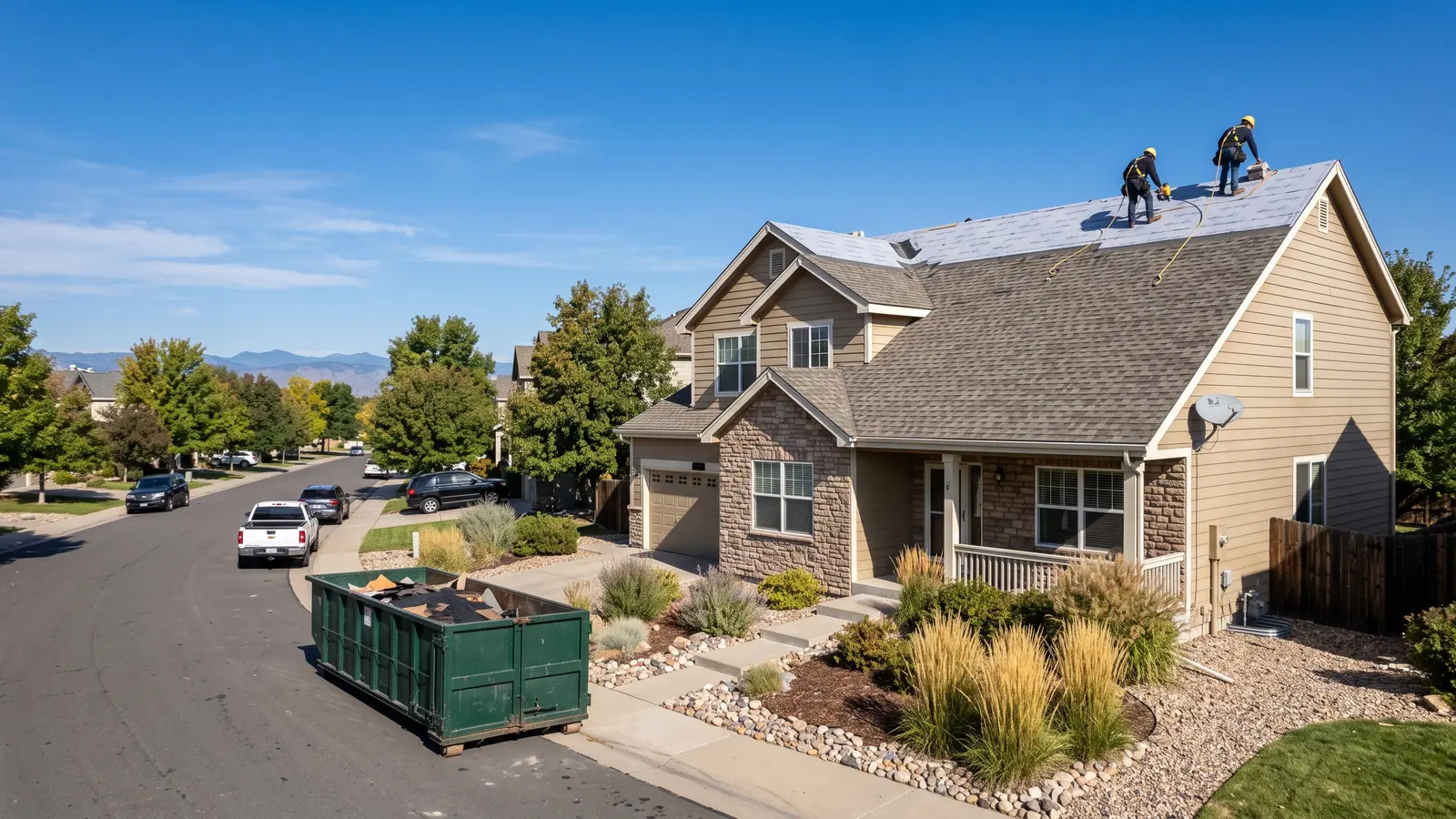
Roof Inspection Visits and What Each One Is For
The reason for the inspection decides what the roofer looks hardest at and what you get at the end.
Post-Hailstorm Roof Check
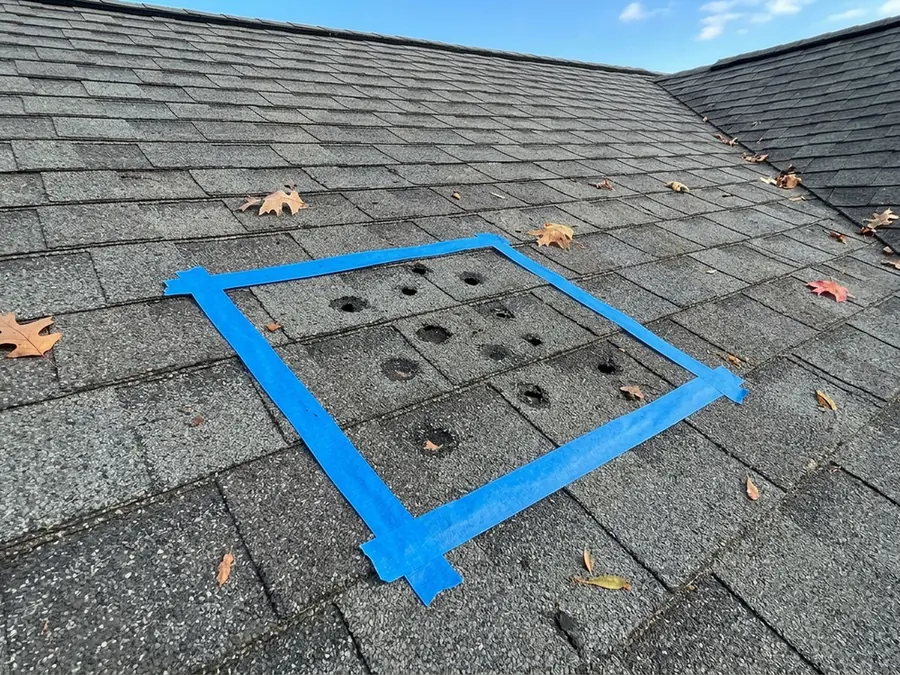
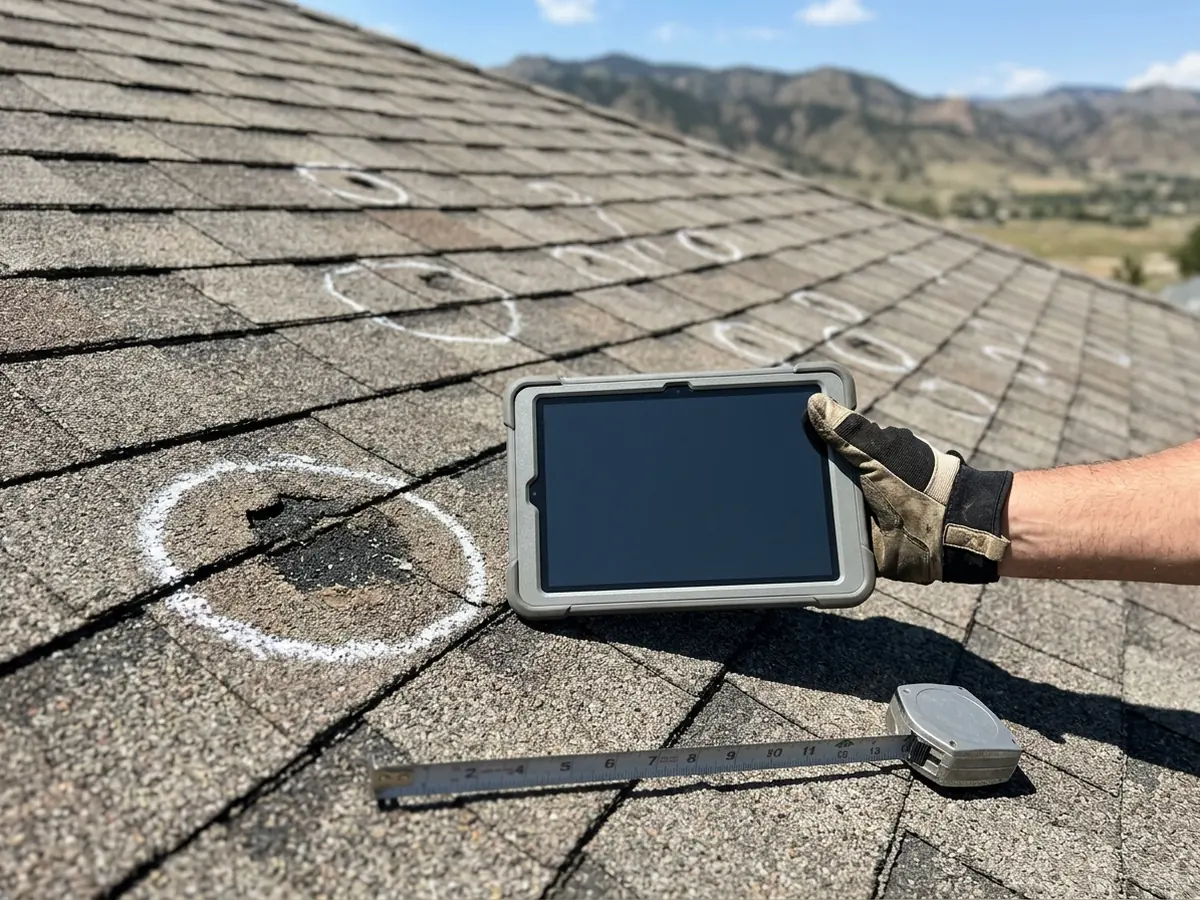
After hail, the roofer works slope by slope, marking a test square on each and counting hits inside it. Hail bruises show as soft spots where the granules are knocked off and the mat gives under a thumb. Hail driven by wind can hit one slope much harder than the others, so a count on one slope doesn't speak for the whole roof. Soft metals tell the story fastest: dents in ridge vents, exhaust hoods, gutters and downspouts show the size and direction of the hail. Ask for photos with each slope labeled, because an adjuster will want to see the same thing. Who should be on the roof after a storm, and how the claim works, is covered on hail damage roof repair.
Home Purchase and Sale Inspections
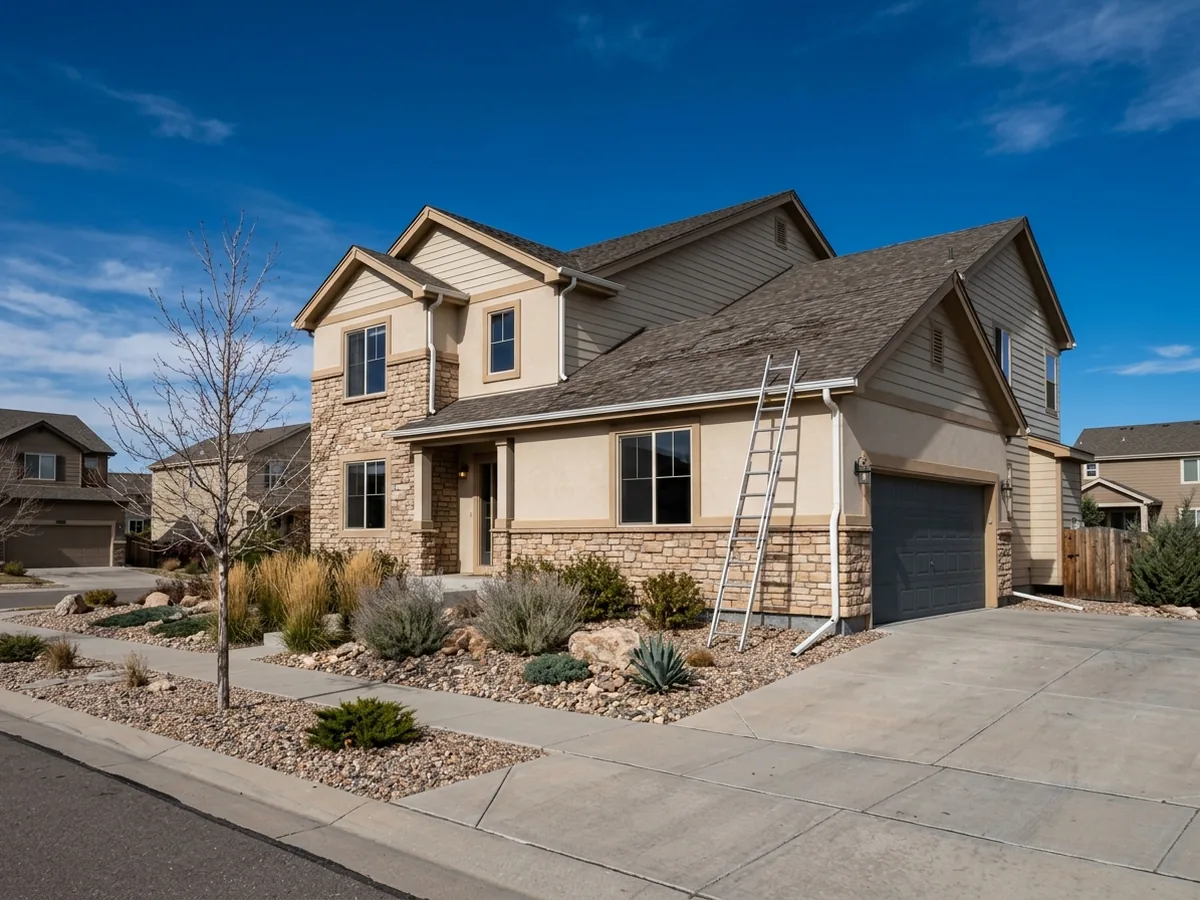
A general home inspector looks at the roof, but InterNACHI's standards of practice for home inspectors let them do it from the ground or the eaves. Under those standards an inspector isn't required to walk the roof, estimate how long it will last, water-test it, check the nailing or certify it. That's where a roofer's inspection fits in a sale: it climbs onto the roof and puts a rough remaining life in writing. For a buyer, that's something concrete to bring into the negotiation. For a seller, it can show the roof's condition before a buyer's inspector raises it.
Roof Certification Letters
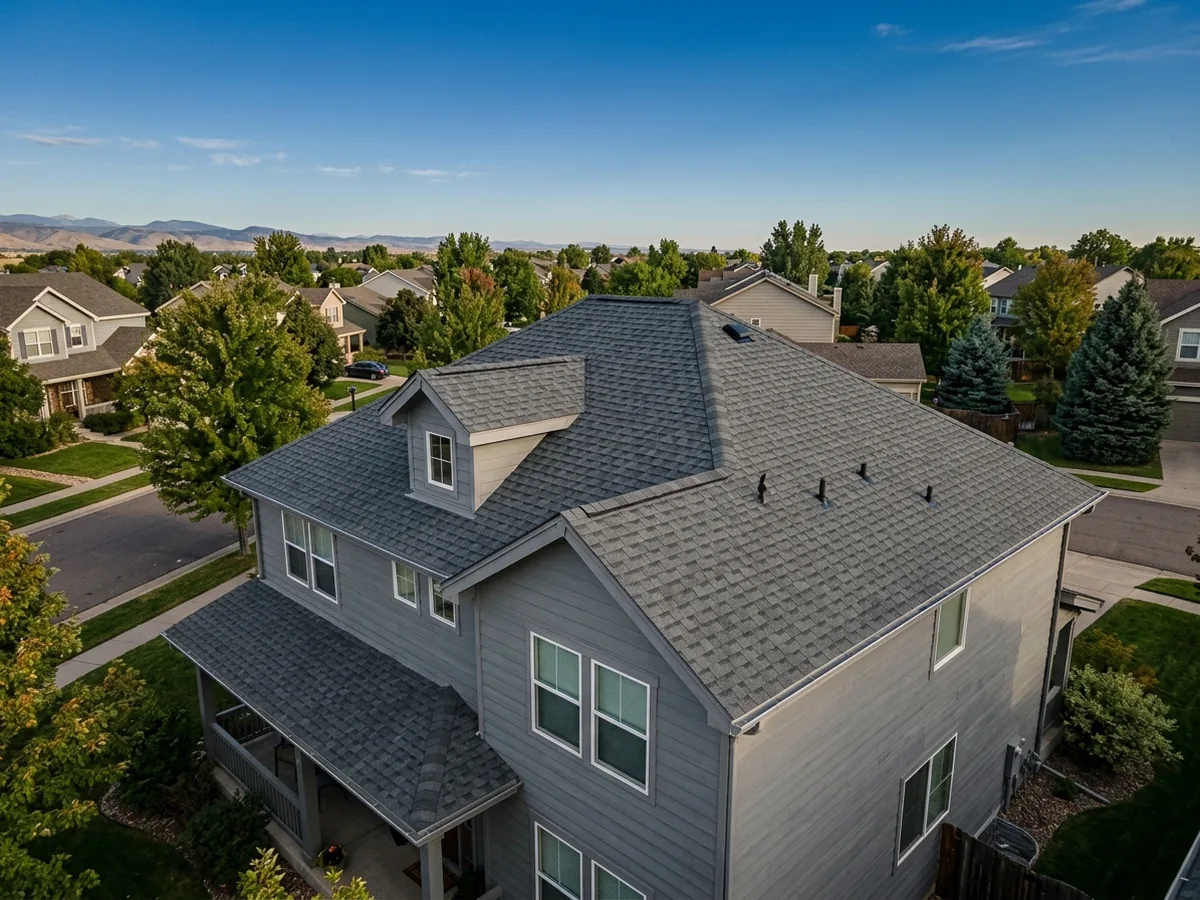
A roof certification is a roofer's written statement that the roof is free of active leaks and has a stated number of years of useful life left, sometimes after small repairs are made. It isn't a code document and it isn't a warranty. What a certification includes, how long it runs and what repairs it requires before it's issued differ from one roofer to the next. Ask to read the wording before the inspection, and ask what happens if a leak turns up during the term.
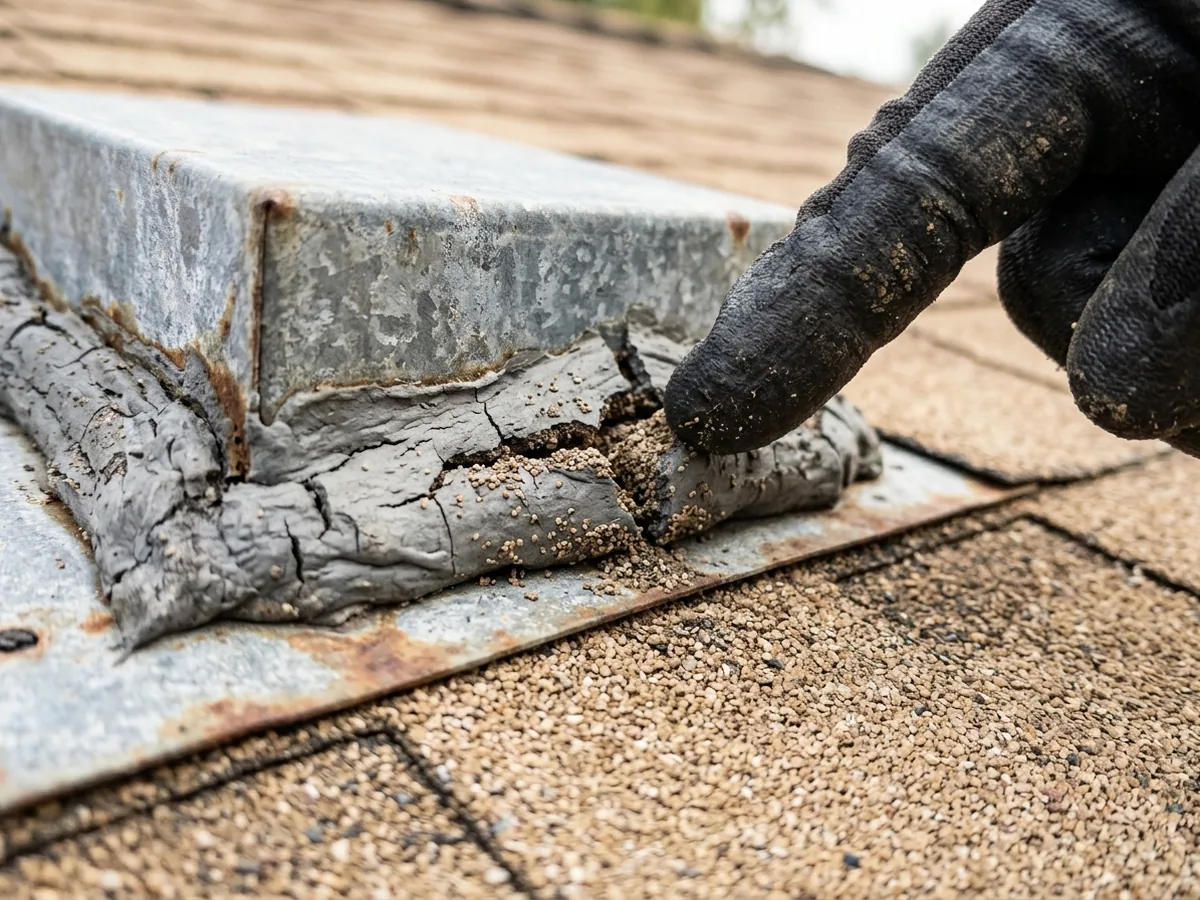
Seasonal Maintenance Checks
A maintenance visit is for roofs that aren't damaged yet. The roofer looks for cracked sealant at hoods and flashing, pipe boots splitting in the sun, nail pops, shingles that never sealed down, granules piling in the gutters, and debris packed in valleys. Small fixes found this way, like a dab of sealant or a reset nail, cost far less than the ceiling they protect. Early fall, once hail season is over, and spring, after the winter's freeze-thaw, are the natural times to book one.
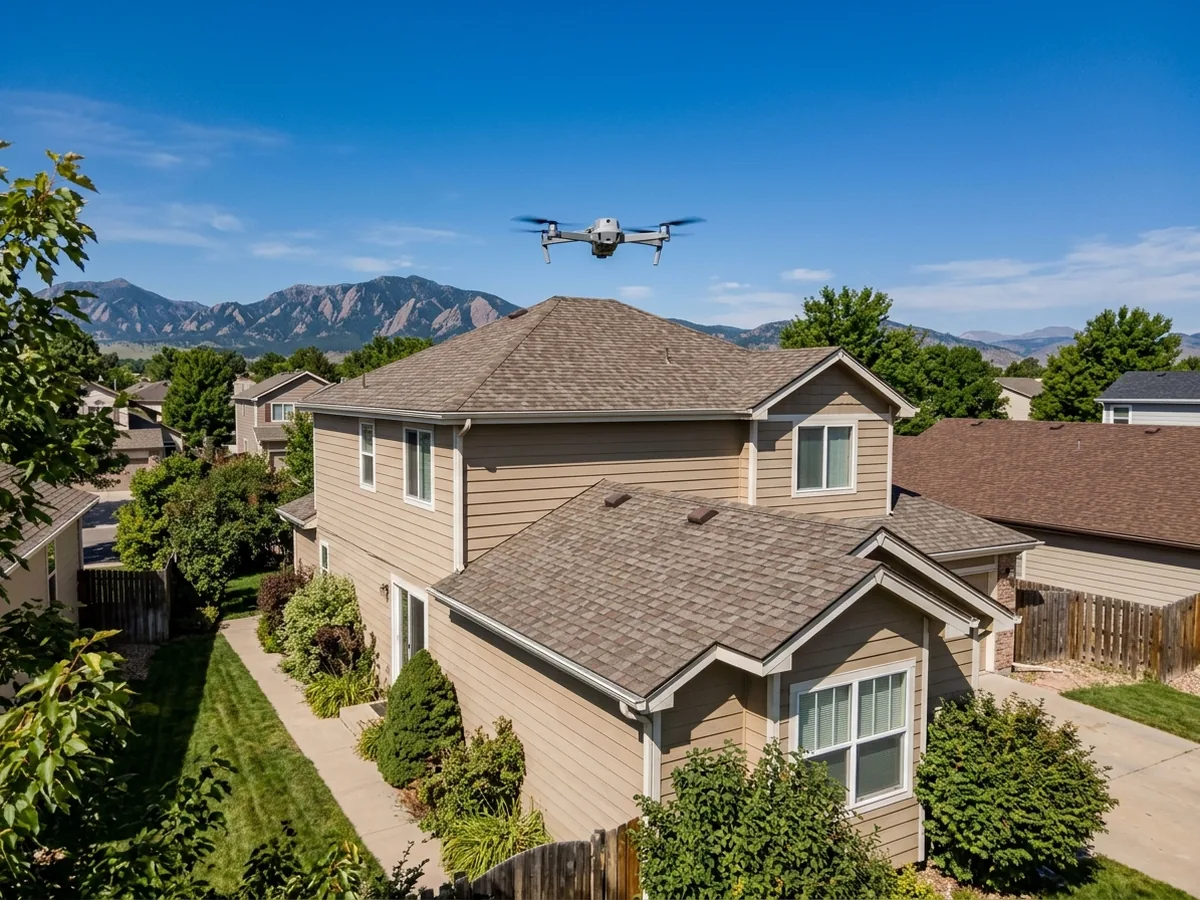
Drone Roof Surveys
A drone photographs steep or fragile roofs without anyone walking on them, which helps on tile, slate-look and very steep slopes. Federal rules apply: a drone under 55 pounds flown for business falls under the FAA's Part 107, which calls for a Remote Pilot Certificate earned by passing a knowledge test, plus registration and Remote ID broadcast. Ask whether whoever flies it holds that certificate. A drone shows the surface well. It can't feel a soft deck or lift a tab, so a drone survey is usually a first look before someone checks the suspect spots by hand.
Why Thornton homeowners call Thornton Expert Roofing
- Free written estimate, no obligation
- One independent local contractor per request, not a call list
- A written contract with the price and materials before any work, as Colorado law requires
- Nothing charged to homeowners for the referral
Roof Inspections the City Does During a Thornton Re-Roof
When a re-roof needs a permit, the city inspects it three times, and none of those visits is a roofer's inspection. Thornton's Roofing Standards set out the sequence:
Sheathing inspection
Any new roof sheathing is inspected before it's covered.Mid-roof inspection, by photo
By this stage all the old roof covering has to be gone, all drip edge and valley flashing installed, 75% to 100% of the underlayment down and 40% to 75% of the shingles on. The roofer texts photos showing the house number, an approved underlayment labeled with its ASTM standard (such as D226, D1970 or D4869), the valley material, starter course, metal flashing, a six-nail pattern on each shingle and a shingle wrapper that matches the permit. The city texts back a status, and the roof shouldn't be closed up before it arrives.Final inspection, by video call
The inspector walks the roof virtually over FaceTime or Google Meet, looking at the shingles (which must be self-sealed), nailing, underlayment, flashing, drip edge, valley lining and ventilation. Poor signal can turn it into a rescheduled, in-person visit.
Inspections are booked through the city's CityView portal after the permit is issued; requests in before 3:30 p.m. can be set for the next business day, and the inspector calls or texts between 8 and 9 a.m. that morning. Ask the roofer to share the mid-roof photos and the final result. They show the hidden layers you'll never see again. Whether a job needs a permit at all is covered under roof replacement.
Roof Inspection Findings to Get in Writing
Whatever the reason for the visit, the useful result is the same: something you can act on and show to someone else, whether that's an adjuster, a buyer's agent or a second roofer giving a competing bid. Ask for it as a dated PDF or email with the photos attached, not a verbal summary on the driveway.
Material and age
The shingle type or other covering, and the roofer's estimate of its age and remaining life.Damage by slope
Each slope named, with photos and what was found, so a repair can be scoped without another trip.Penetrations and edges
Flashing, boots, hoods, vents, drip edge and gutters, each marked sound or not.The attic
Stains, daylight, damp or rotted sheathing, and whether bath fans vent outside.A recommendation
Repair, replace or leave alone, with the reason. If it's a repair, the roof repair page has cost ranges to compare against.