
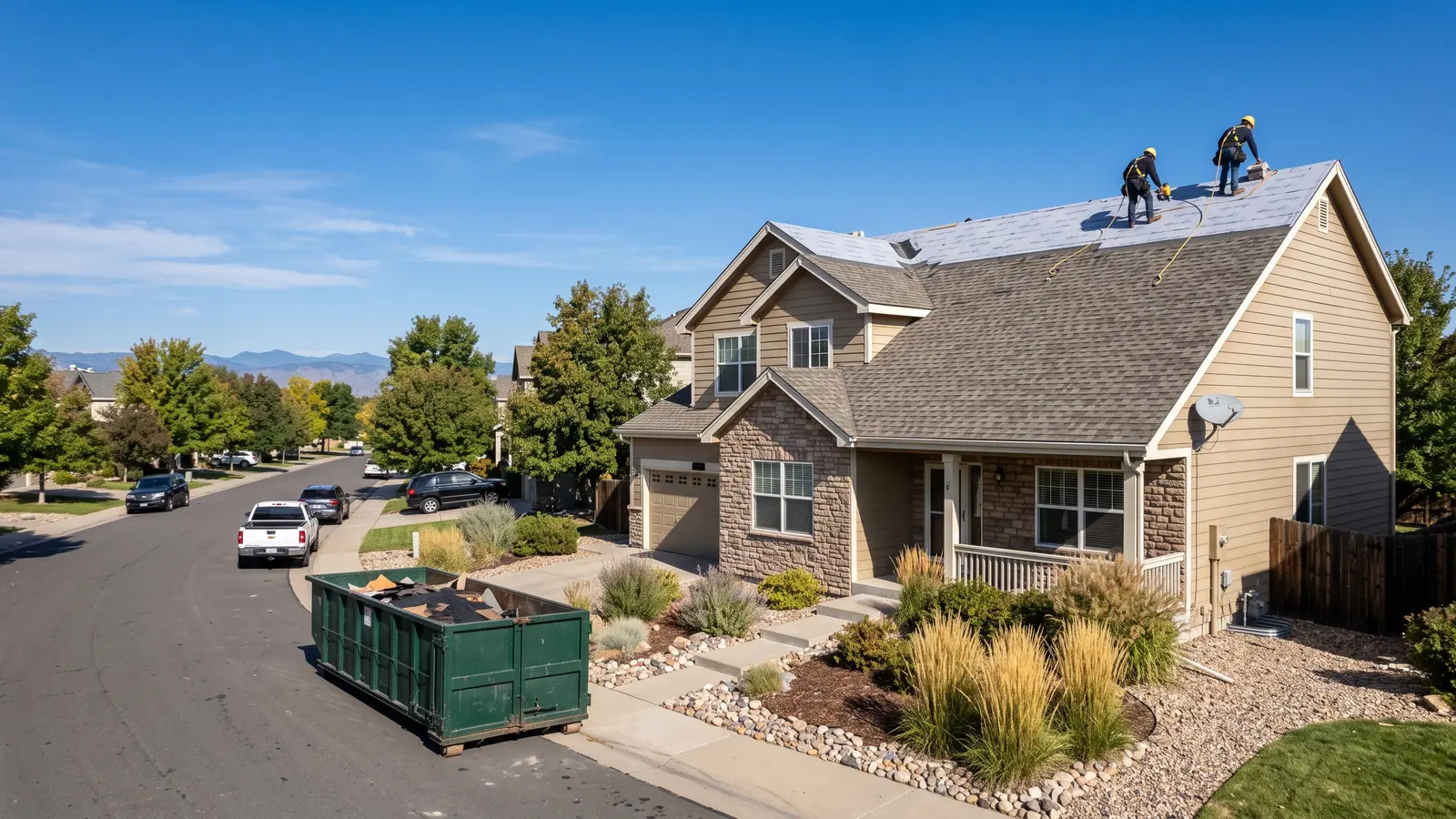
Gutter Installation by Profile, Size and Metal
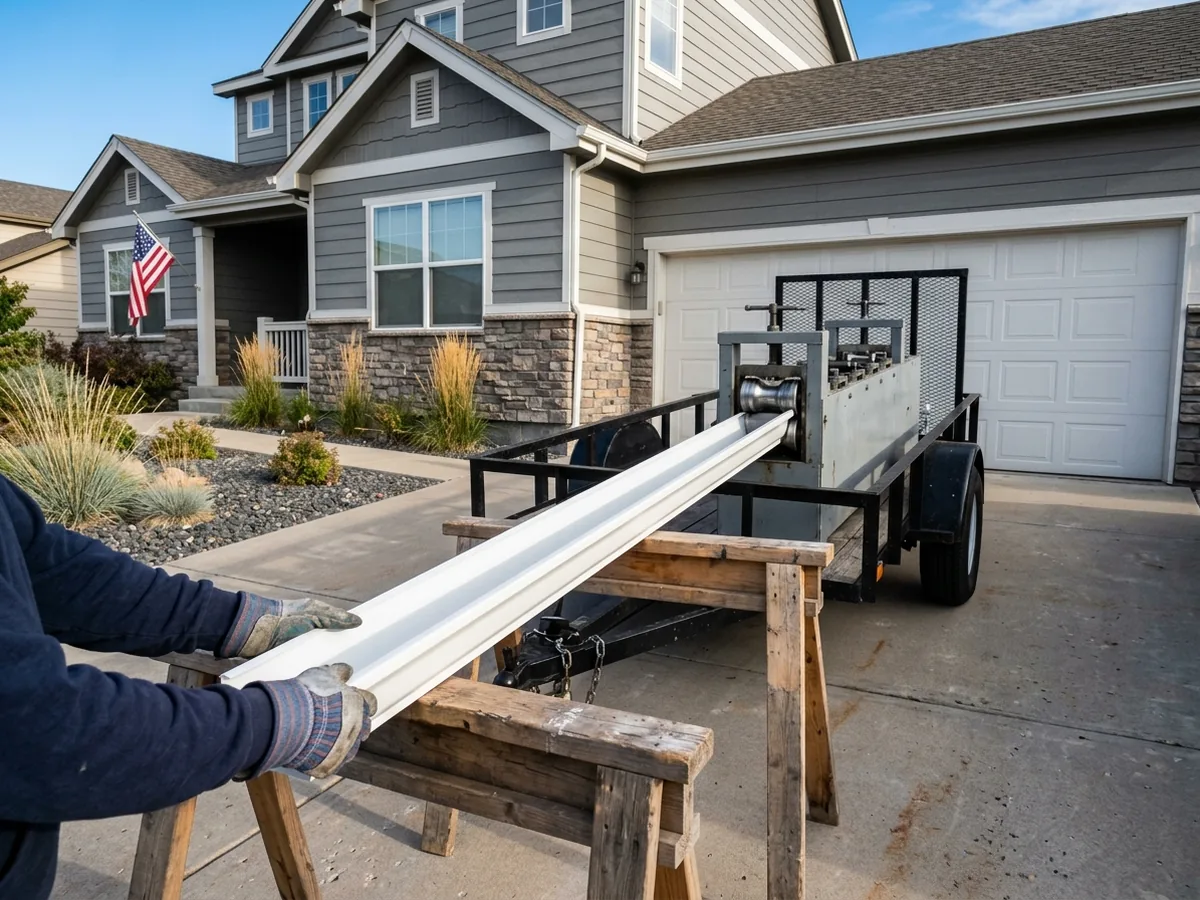
5-Inch Seamless K-Style Gutters
HomeGuide calls 5-inch K-style the size most homes use. The name comes from the profile: a flat bottom and a front with two opposing curves, close to crown moulding. Seamless means the installer feeds flat aluminum coil through a portable roll-former on site and cuts each piece to the eave, so a long back wall gets one gutter instead of several sections lapped together. That costs $3 to $5 or more per foot over sectional gutter on HomeGuide's figures, and it leaves far fewer joints to leak. Aluminum runs $10 to $20 a foot installed, with a 20 to 30 year life by the same source. Ask for screw-in hidden hangers rather than spikes through the face.
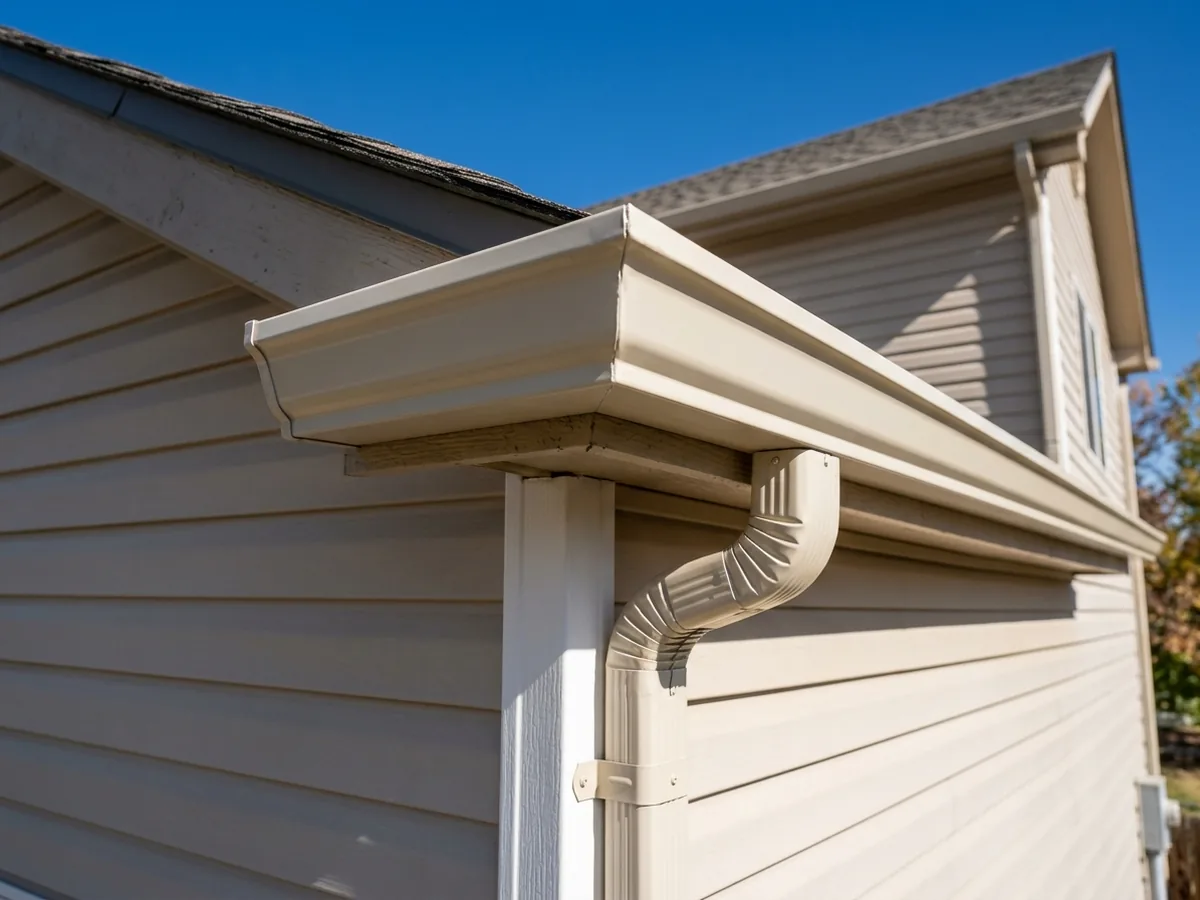
6-Inch Gutters and Oversized Downspouts
A 6-inch gutter holds more, but the downspout usually sets the limit. One gutter manufacturer's sizing guide lists a 2x3-inch rectangular downspout at 6 square inches of opening and a 3x4 at 12, twice the flow area. The same guide says anything under 7 square inches belongs on porches and canopies, and it treats about 50 feet of gutter as the practical most one downspout should serve. HomeGuide adds $1 to $2 a foot for the 6-inch size and suggests it for big roofs and heavy-rain areas. Denver-area rain arrives mostly April through August, and May and July are the wettest months. A long rear eave catching a steep two-storey slope is where the upgrade pays off.
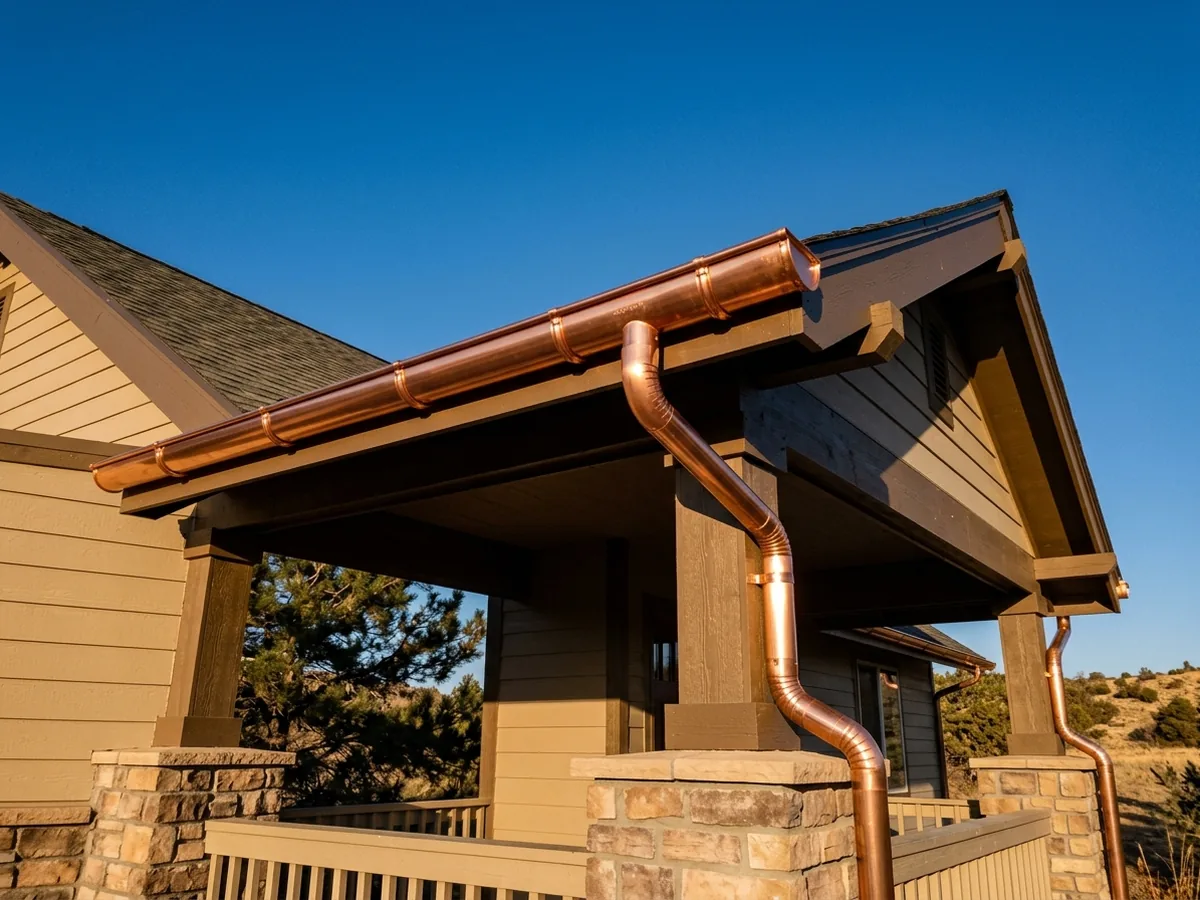
Half-Round Gutter Profiles
Half-round is the U-shaped profile, hung in round brackets and drained by round downspouts. HomeGuide adds $1 to $2 a linear foot for it because of the specialised installation, and round downspout stock costs more than rectangular: $2 to $8 a foot against $1 to $3 for materials. It suits a craftsman porch, a modern farmhouse front or a copper accent over the entry. On a whole house the rectangular K-style is the cheaper and more common pick. If your subdivision's HOA reviews exterior changes, send the profile and color to the architectural committee before the order goes in, because a gutter is part of the street-facing trim.
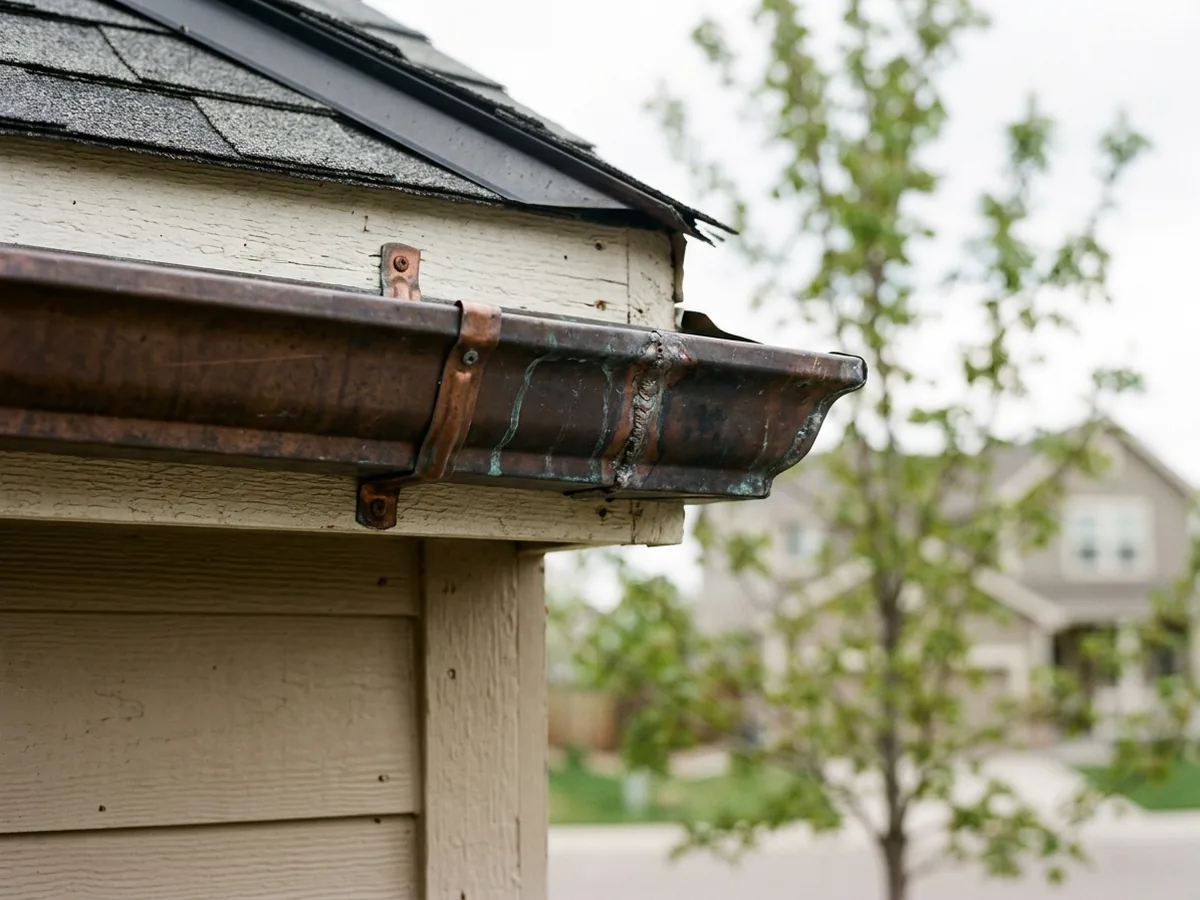
Steel and Copper Gutters
Hail is the argument for a heavier metal. InterNACHI's hail course says steel gutters are highly resistant to hail, aluminum dents fairly easily, and copper sits in between. HomeGuide prices galvanized or stainless steel at $10 to $35 a foot depending on gauge and finish, and says it carries heavy rain and snow better than most other gutters, though it is heavier to hang. Copper runs $25 to $40 or more a foot. It never rusts and darkens to a patina as it weathers. Lifespans on InterNACHI's chart: 20 years for galvanized steel, 50 or more for copper gutters and about 100 for copper downspouts. Vinyl is the cheap end at $8 to $12 a foot, but HomeGuide warns it can turn brittle in hard cold.
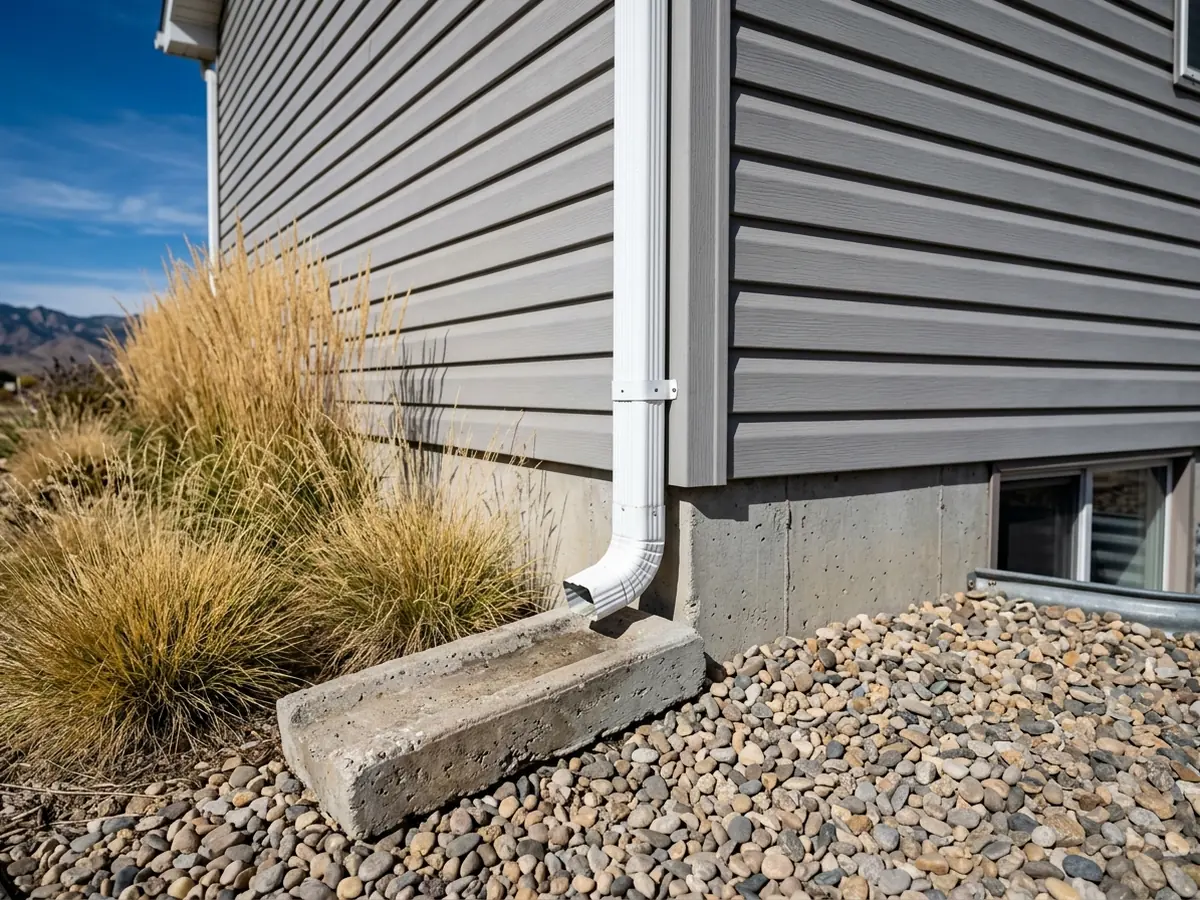
Downspouts and Splash Extensions
A typical house has 4 or 5 downspouts. HomeGuide puts each at $30 to $75 installed, an extension or splash block at $10 to $50, and a buried drain line ending in a bubbler at $150 to $350. Water should land well clear of the foundation, ideally into rock mulch or a planting bed. Colorado law lets you catch some of it: up to two rain barrels, 110 gallons combined, with sealable lids and no permit, for outdoor watering only. CSU Extension adds that an HOA can't ban rain barrels but can set reasonable rules on where they sit and how they look. Placement matters in winter too. The same manufacturer's guide advises against putting downspouts on a north wall in places that ice up.
Why Thornton homeowners call Thornton Expert Roofing
- Free written estimate, no obligation
- One independent local contractor per request, not a call list
- A written contract with the price and materials before any work, as Colorado law requires
- Nothing charged to homeowners for the referral
Gutter Installation Pricing, Foot by Foot
HomeGuide's estimate for new gutters is $12 to $25 a linear foot installed, which comes to $2,200 to $5,000 on an average home. Its table pairs a 2,000-square-foot house with about 180 feet of gutter, at $2,200 to $4,500. These are national published estimates, not Thornton quotes. The add-ons it lists:
Second storey
$1 to $3 or more per foot, for the extra ladder and safety work.Tearing off the old system
$50 to $200 to remove and haul away.Color matching
$1 to $4 a foot for a custom color.Rotten fascia
It has to be fixed before new gutters go on, at $5 to $12 a foot. See soffit and fascia repair.
A quote you can compare line by line names the profile and size, the metal and its finish, the hanger type and spacing, how many downspouts and what size, where each outlet goes, and what ends up on the ground at the bottom.
Gutter Replacement on Original-Builder Systems
The median home in Thornton was built in 2000, so plenty of houses here may still have the gutters the builder hung. HomeGuide gives aluminum gutters 20 to 30 years and InterNACHI 20 to 40 or more. A 25-year-old run with pulled hangers, leaking corners and two or three hail seasons of dents is near the end of that span. HomeGuide's view is that once gutters pass 20 years, replacing them is often better value than patching. If a few seams and a sag are the only trouble, gutter repair costs a fraction of a new system.
Timing with the roof matters. New drip edge goes on at the eaves during a re-roof (the rule is on the soffit and fascia page), and the gutter hangs just below it, so that is the cheapest moment to swap gutters: the old ones come down once, and the new ones go up against fresh metal. If you want leaf protection, pricing gutter guards on the same quote saves a second trip up the ladder. Winter is the other test. In the Denver area, snow on a roof melts by day and refreezes by night for months, and the attic ventilation page covers what that freeze-thaw cycle does at the eaves.