
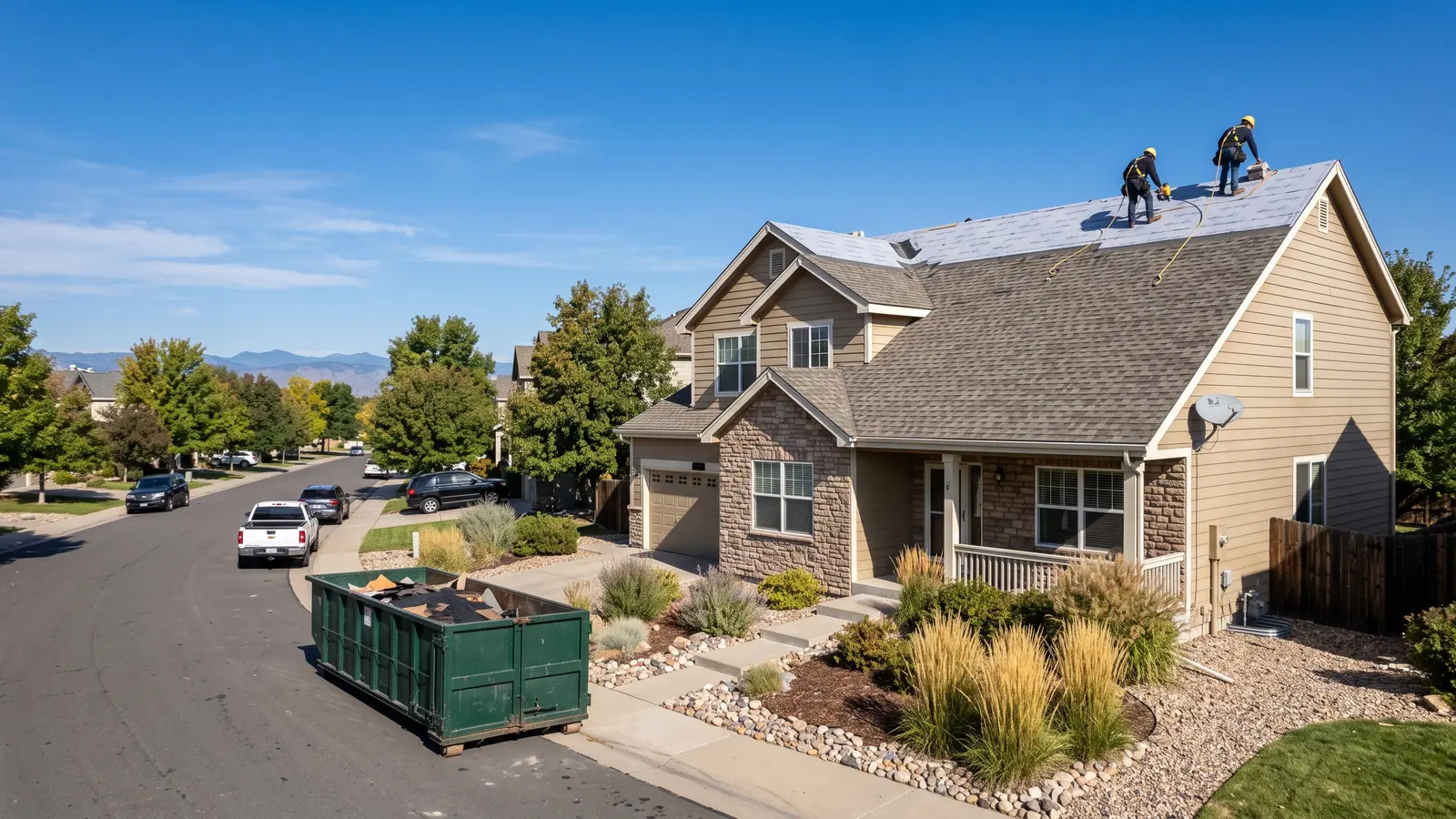
Hail Damage Roof Repair by Roofing Material
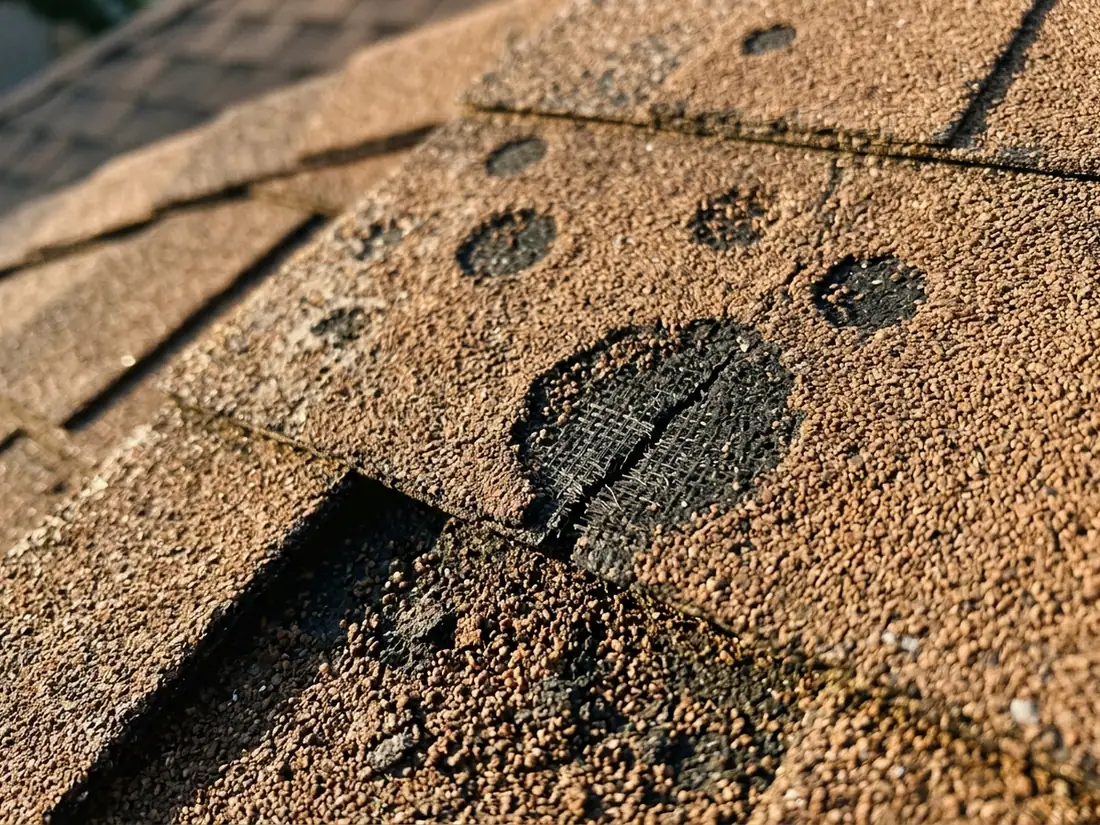
Fractured and Bruised Asphalt Shingles
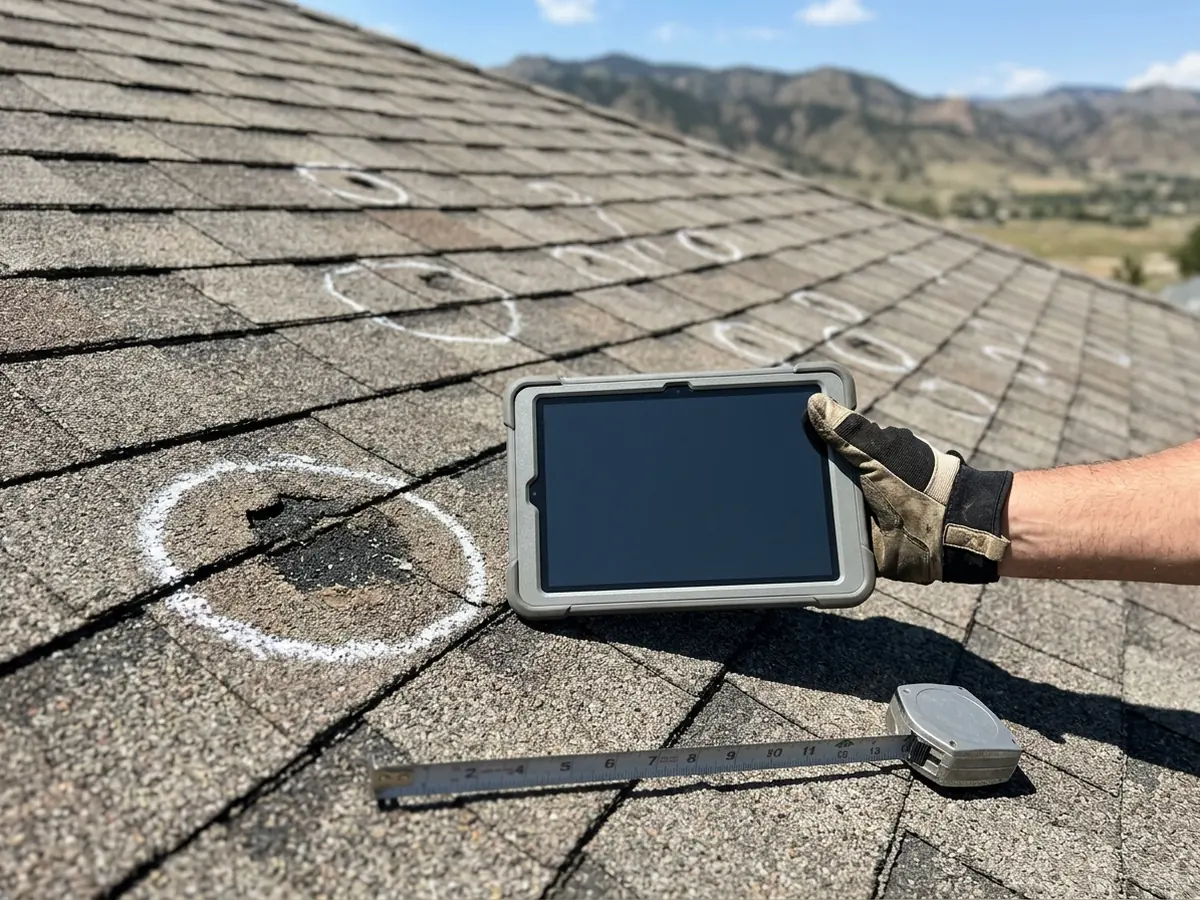
On asphalt, a hailstone leaves a round spot where the granules are knocked loose. If the hit was hard enough, the fiberglass mat underneath fractures, which is the damage that matters: a broken mat lets water in, while scuffed granules alone are mostly cosmetic. IBHS, which now tests shingles with 1.5- and 2-inch lab hailstones, started out by documenting in the field how real hailstones fracture, dent and tear them. A good roofer will press on suspect spots to feel for a soft, bruised mat, and photograph each slope separately, since the slope is what Thornton's replacement rule is measured in.
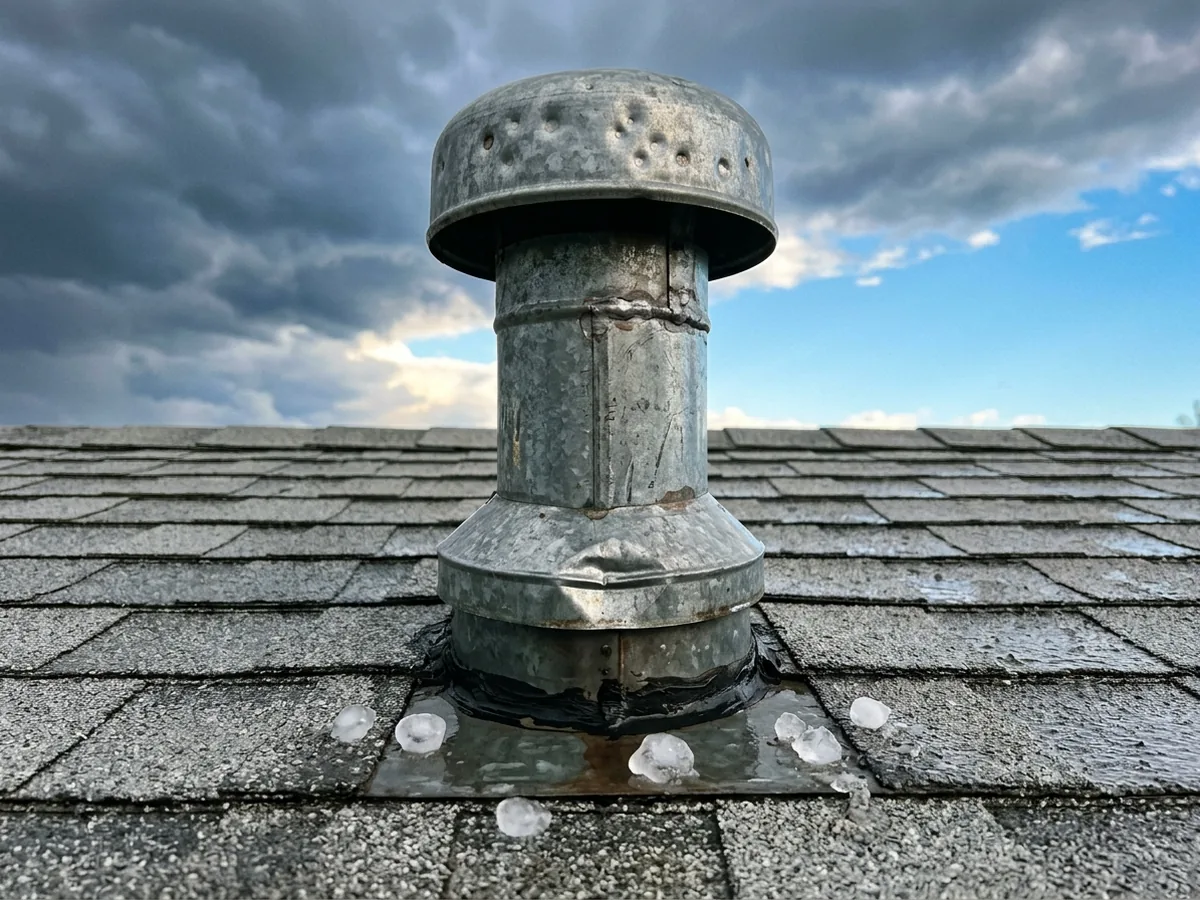
Dented Flue Caps, Vents and Flashing
Soft metal shows hail before shingles do. Colorado's emergency management office lists dented soft-aluminum roof vents, patio covers and screens, and shrubs stripped of leaves, as signs a roof may be damaged. Look at the furnace and water-heater flue caps, turtle vents, the ridge-vent ends and the gutter faces. A dent in a vent cap is usually cosmetic on its own, but a cracked storm collar or a split in a pipe boot isn't, and both get replaced. Dented metal is also the easiest hail evidence to photograph, so take those pictures before anything is swapped out.
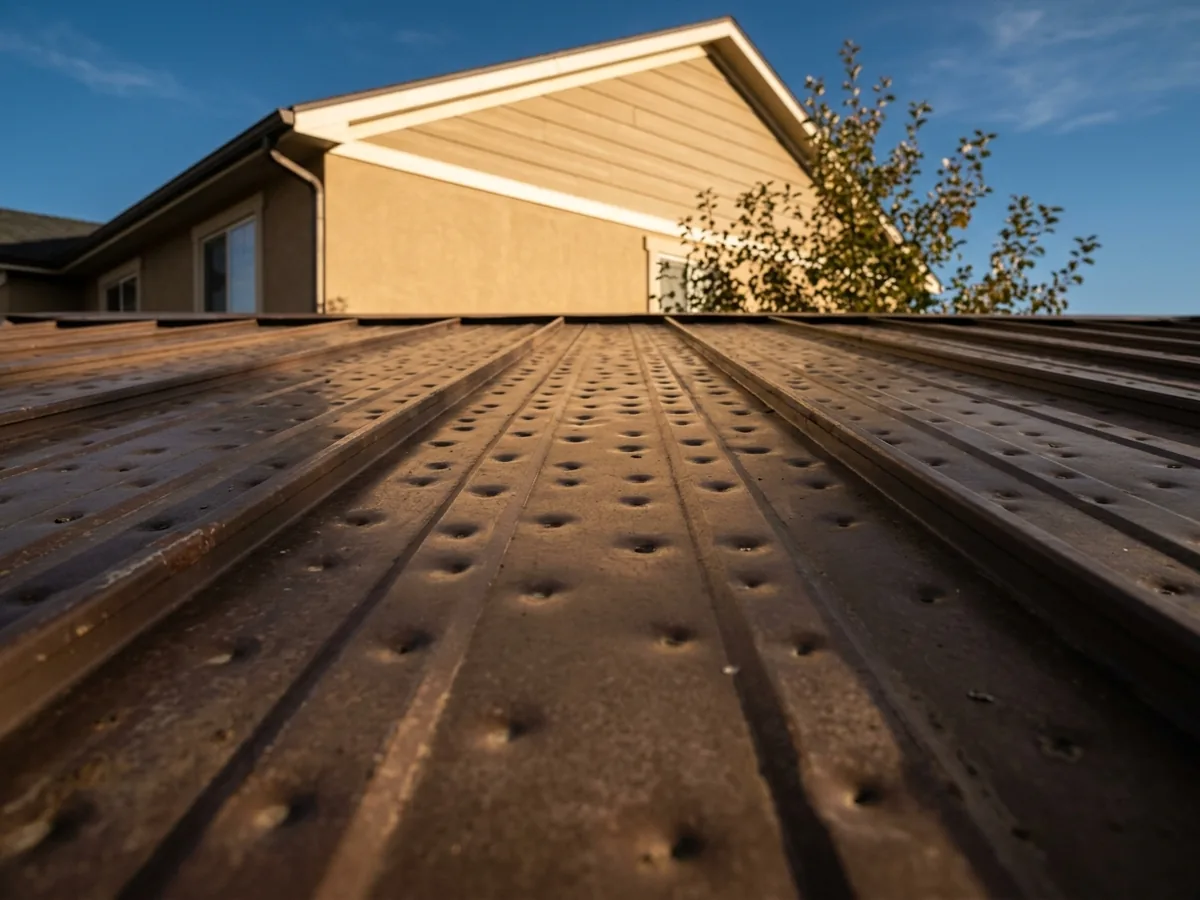
Hail on Metal and Stone-Coated Roofs
On a steel roof the usual mark of hail is a dent rather than a hole, and HomeGuide notes that thinner metals are the ones prone to denting. The insurance question is whether a dent counts as damage at all. Some Colorado property forms exclude "cosmetic damage" to roof surfacing, meaning marring or pitting that changes the roof's appearance but leaves it keeping weather out. Read your own policy for wording like that, and ask your agent how it treats dented metal, before you assume a claim. Details on panel types and gauges are on metal roofing.
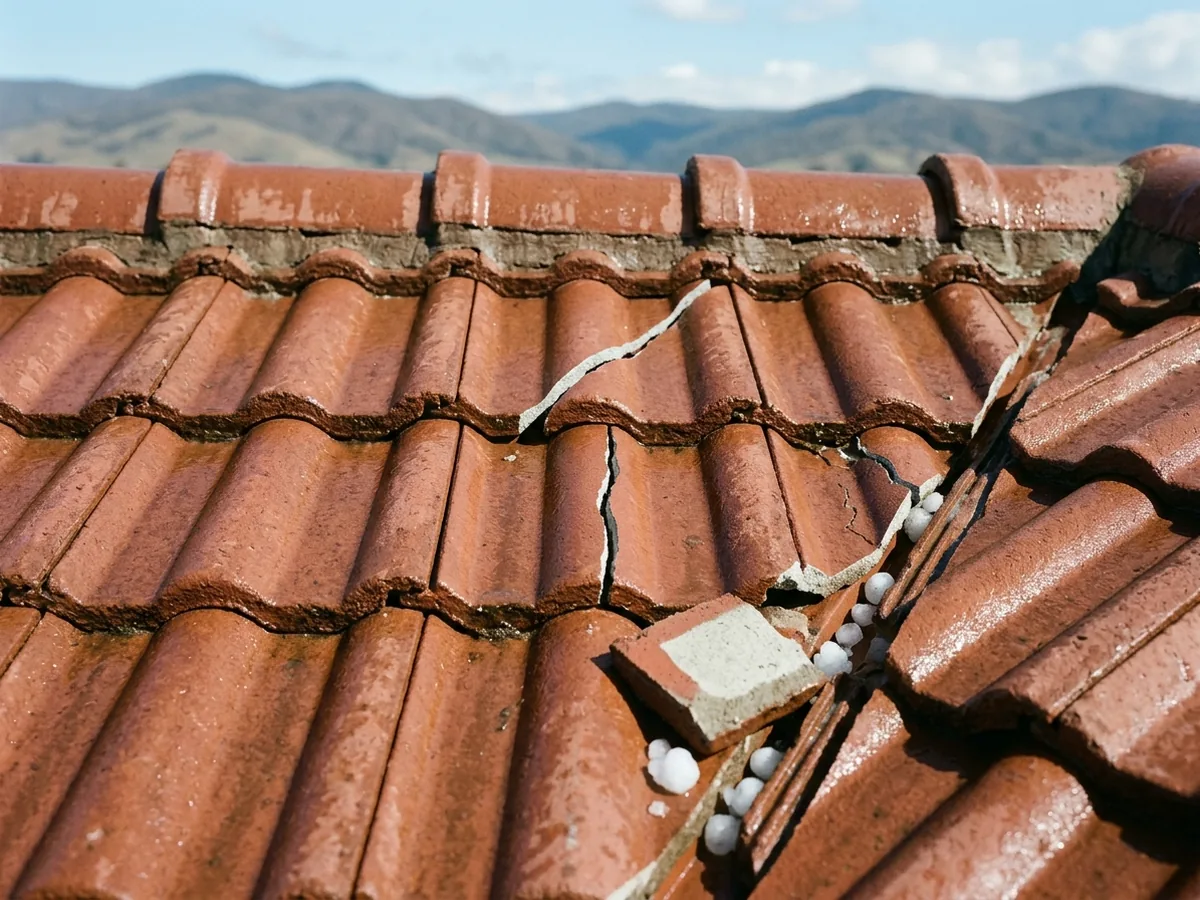
Cracked Concrete and Clay Tile
Concrete tile resists small hail. In Haag Engineering's ice-ball tests on 13 concrete tile products, 1-inch balls broke none, 1.25-inch balls broke four at the corners, and 2.5-inch balls broke every one. Fresh hail fractures have clean, light-coloured edges. Curved cracks at the lower right corner of a tile, with dirt or algae in them, are usually old and have other causes, so a careful inspection separates the two. HomeGuide puts single-tile replacement at $60 to $125 a tile when nothing underneath is damaged.
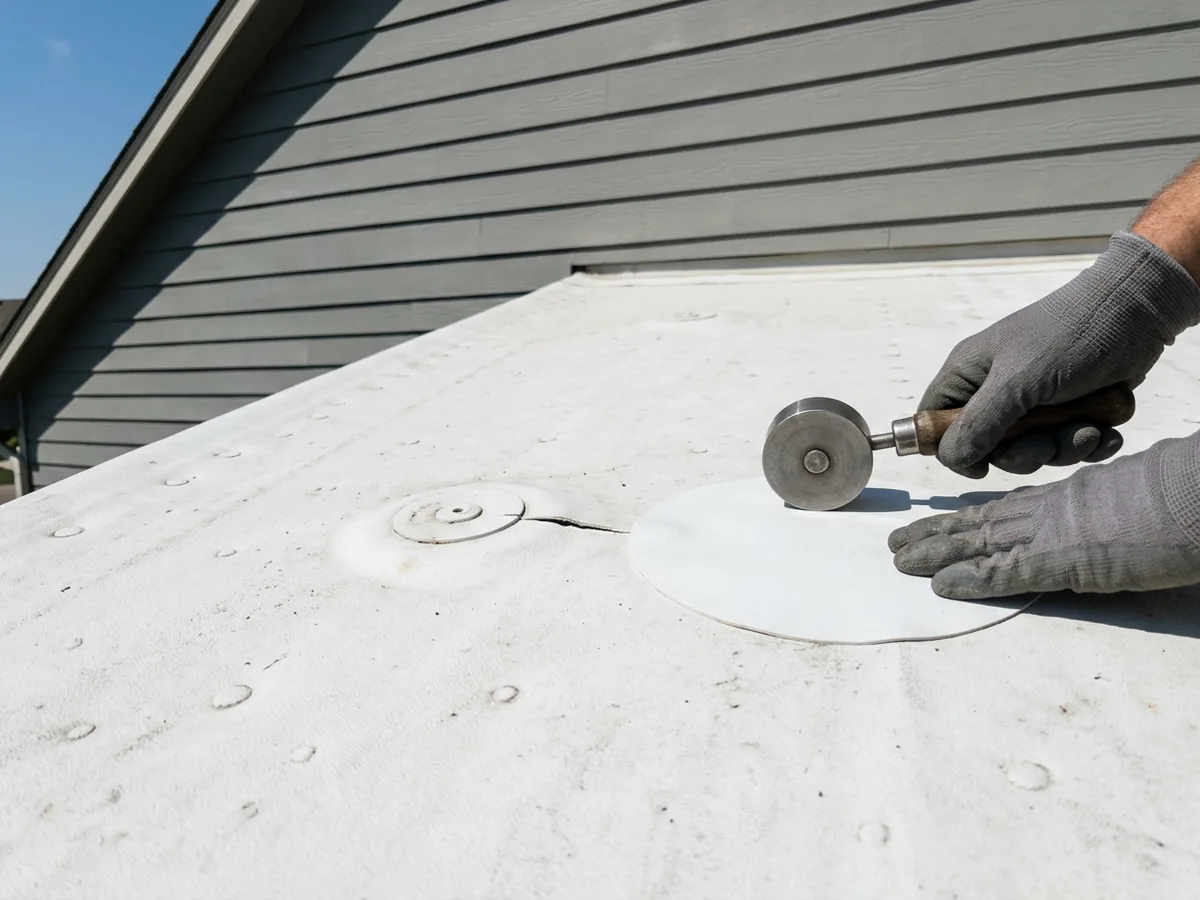
Split Seams on Low-Slope Membranes
Membrane roofs over porches, garages and rear additions fail at their weak points. GAF research published in Professional Roofing found that large ice balls striking a TPO or PVC membrane directly over a fastener plate pressed it onto the screw head and split it, and that standard polyiso insulation underneath was crushed to about half an inch deep. Dimples in the field of the membrane can mean the board below is crushed even where the sheet is whole. Patches fix the splits. Crushed insulation means cutting in. More on these roofs is on flat roofing.
Why Thornton homeowners call Thornton Expert Roofing
- Free written estimate, no obligation
- One independent local contractor per request, not a call list
- A written contract with the price and materials before any work, as Colorado law requires
- Nothing charged to homeowners for the referral
Hail Season on the Front Range
The National Weather Service counts a storm as severe once hail reaches 1 inch across, about the size of a quarter. Golf-ball hail is 1.75 inches. State emergency managers describe the Front Range as the heart of "Hail Alley", the stretch of the continent where big stones fall most often, with damaging storms from mid-April to mid-September.
The numbers behind that reputation:
Events
The Insurance Information Institute counted 244 hail events with stones of 1 inch or larger in Colorado in 2025, sixth among the states.Claims
Citing the Rocky Mountain Insurance Information Association, the state reports 182,591 Colorado hail claims from 2013 to 2015, second only to Texas.Premiums
The Colorado Division of Insurance found hail is the biggest single driver of homeowners insurance cost in the state, at 26% to 54% of the average premium.Big storms
A Denver-area TV station, citing the same association, reported three or four catastrophic hailstorms on the Front Range in a typical season. The July 20, 2009 metro storm cost $767.6 million in insured damage.
Closer to home, NOAA's Storm Events records list 11 hail reports pinned to Thornton itself between 2014 and mid-2026, on seven storm days in May, June and July. The largest stone was 1.75 inches, logged on May 30, 2024. Those are point reports, not storm footprints. Small hail adds up too: IBHS found in 2025 that repeated sub-severe hail, under an inch, made shingles age faster and stand up worse to the next big storm.
Filing a Hail Claim in Colorado
The steps below are what the Colorado Division of Insurance (DOI) and the state's emergency management office advise. The roofer you hire can show you damage and give you an estimate. The claim itself is between you and your insurer.
- STEP01
Call your agent or insurer as soon as you see damage
The claim is filed with the company, not the state. - STEP02
Photograph the roof, gutters, vents and yard once it's safe
Many insurers let you submit photos with the claim. - STEP03
Stop further damage
Tarp holes and keep receipts for what you spend, so you can send them to the insurer. - STEP04
Keep the roof clear
Let only the adjuster and the roofer you've chosen walk on it. Every extra visit can add damage. - STEP05
Know your deductible
It's on your policy declarations page. On many Colorado homeowners policies the wind and hail deductible is a percentage of the coverage amount (the DOI's examples are 1%, 2% and 5%), and a damage estimate under it brings no payment. - STEP06
Ask for the offer itemized
If the claim is denied, ask for a written letter quoting the policy language behind the denial. - STEP07
Report new damage before work continues
Extra storm damage can turn up once the old covering is off. Tell the insurer before the job goes further; it reviews the new items and may approve a supplement. Repairs to damage the storm didn't cause aren't covered.
Public adjusters may call after a big storm. The DOI licenses them, they work for you and often charge a percentage of the claim, and you're not required to hire one. Door-to-door and phone pitches from roofers follow every hailstorm too. The advice there is the same as for any storm-chasing roofer: check references, and choose a Colorado-based contractor when possible.
Colorado's Roofing Contract Law After a Hailstorm
Colorado's roofing statute, C.R.S. 6-22, protects homeowners on exactly these jobs. Colorado law requires a written roofing contract before work begins. You and the roofer both sign it, and it has to spell out the work and materials, roughly when and for roughly how much, how to reach the roofer and who insures them, and your right to back out within 72 hours of signing and get any deposit back in full. On its face, in bold type, it also has to say that the roofer keeps your money in trust until the materials arrive or the bulk of the job is finished.
Two more protections apply when insurance is paying. When the insurer turns the claim down, fully or partly, you get another 72 hours from that written denial to back out, and the roofer must refund what you've paid within 10 days. And a roofer on an insurance-paid roof may not promise to pay, waive or rebate any part of your deductible, or claim to act as your public adjuster. If a roofer offers either, find another. The license and permit checks for Thornton are on roof repair, and Class 4 shingles worth asking your insurer about are on impact-resistant shingles.