
Tile Roofing Systems: Concrete, Clay and the Layer Underneath
Flat Concrete Tile
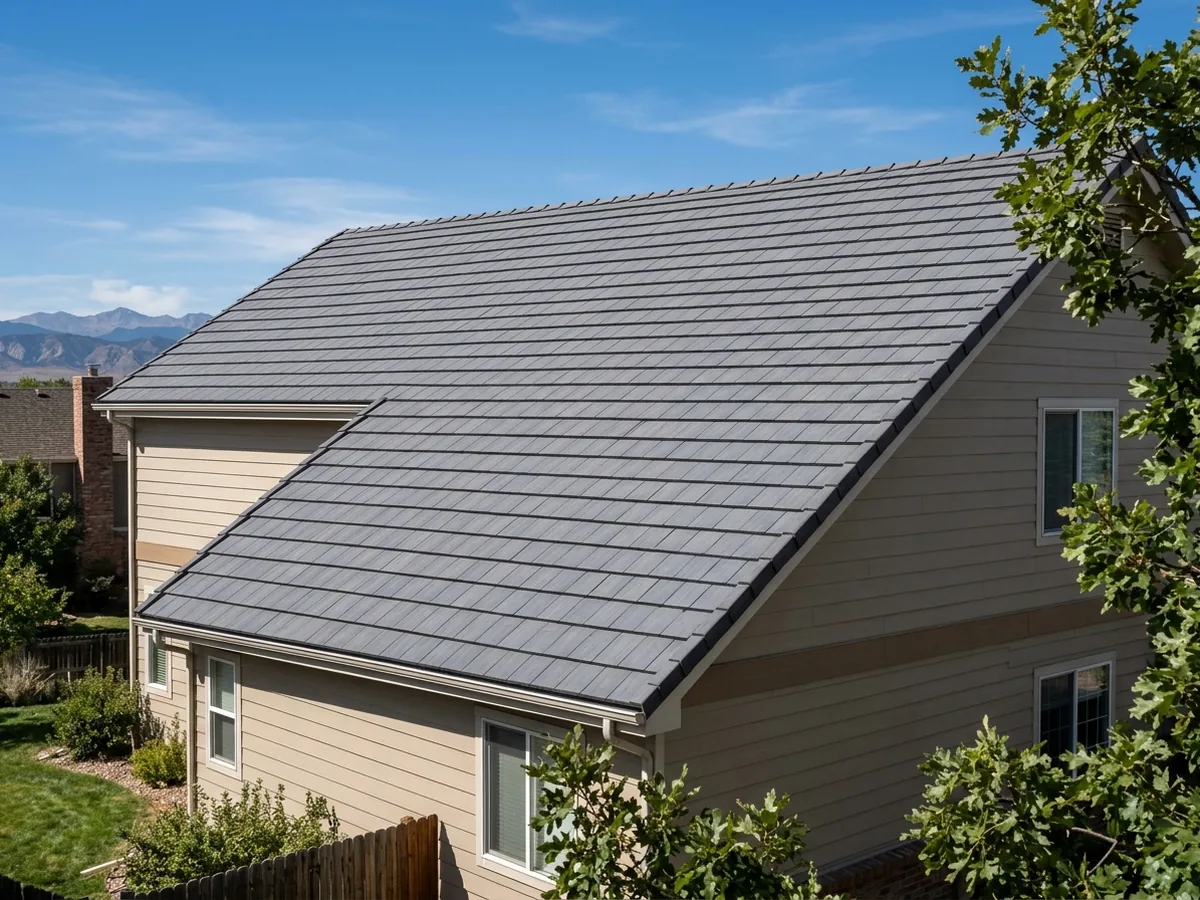
Flat concrete tile is cast with a plain or textured face and is often made to look like slate or wood shake. Each piece is a plain rectangle that laps the course below. Concrete tile has to meet ASTM C1492 under the 2024 IRC. It is heavy, at roughly 9 1/2 to 12 pounds a square foot for standard-weight tile, several times the 2 1/2 to 4 pounds of an asphalt shingle roof. Lightweight versions run about 5 1/2 to 7 pounds. Color is the weak point: the pigment runs through the concrete but still fades over the years, so new tiles can stand out against faded old ones.
S-Profile Concrete Tile
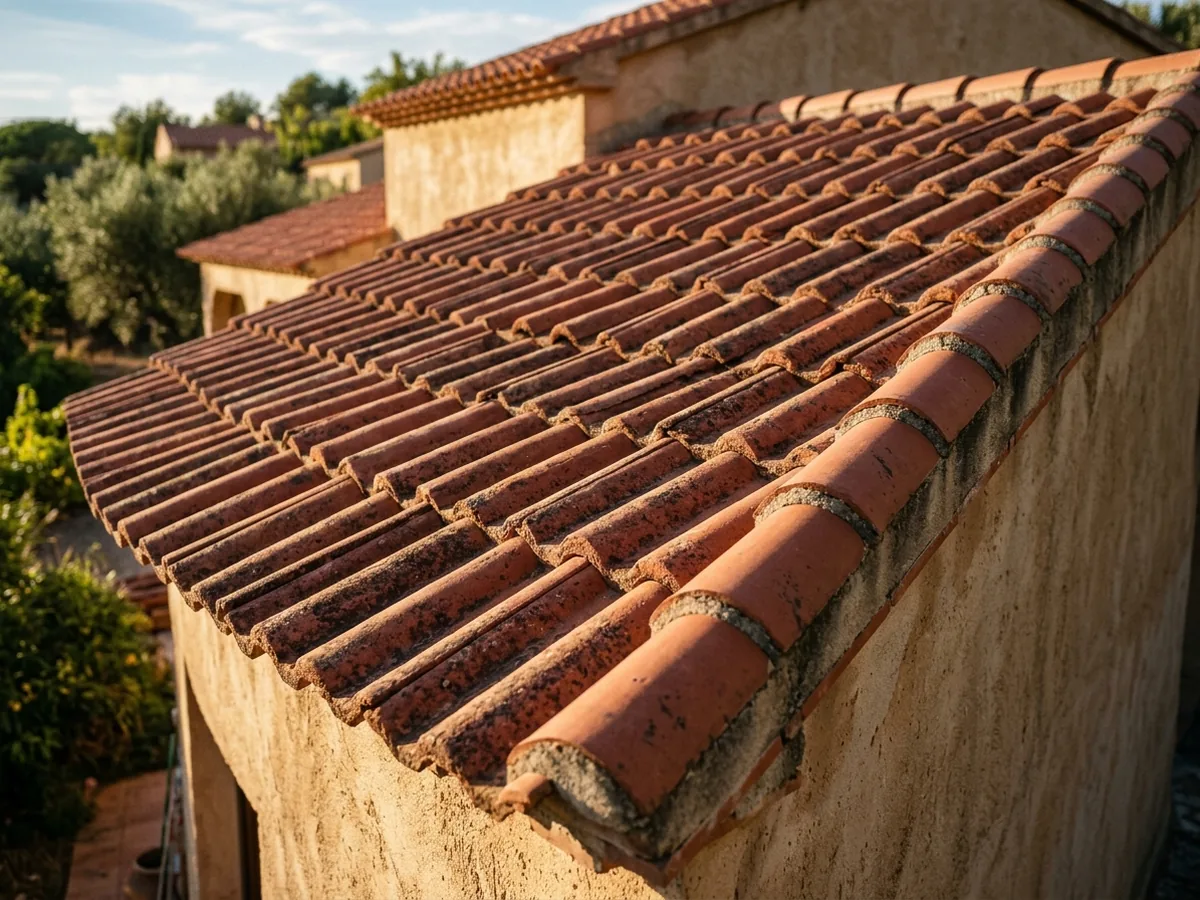
The S tile, also called mission or Spanish S, rolls in one high curve and one low one, so each piece reads as two rows of a barrel roof. Villa tile is the low-profile version of the same double-S shape. The tiles interlock along the sides. Rakes, hips and ridges are trimmed with half-round barrel pieces, each nailed or set in place. The high curves leave voids at the eaves, so a good installation closes them with an eave closure or bird stop. Walking an S-tile roof takes care. One trade guide advises stepping on the headlap, where one tile rests on the course below, with your foot spanning the tops of two tiles.
Clay Barrel Tile
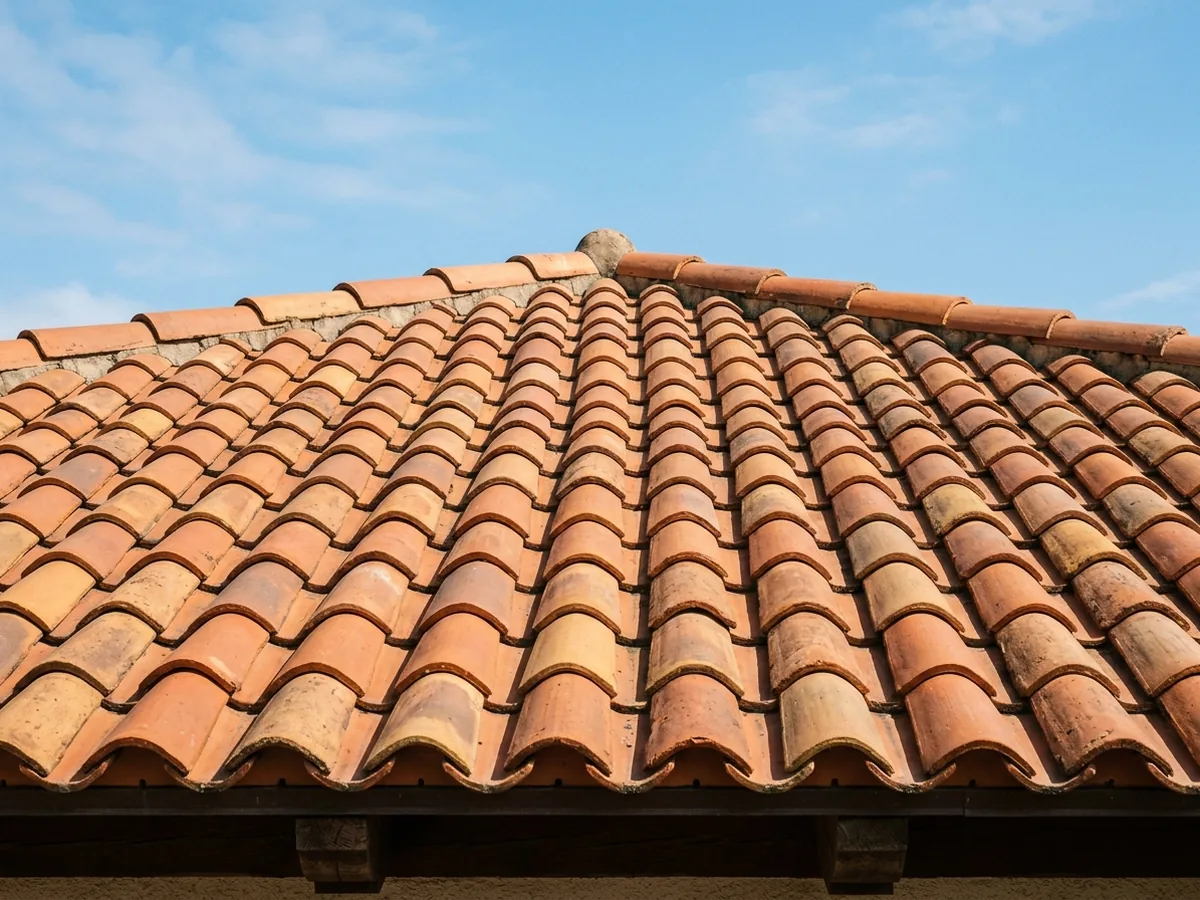
Two-piece clay barrel tile lays a concave pan and a convex cover in alternating rows. Fired clay must meet ASTM C1167 under the 2024 IRC. Where concrete fades, clay holds its color, because weather doesn't change fired clay. It costs more than concrete and is more brittle under a dropped tool or a careless step. Matching is easier, though, since old clay tile looks much like new. In snow country the 2024 IRC calls for at least two fasteners per tile, so a clay roof here should be wired or nailed through every piece, not just laid on battens.
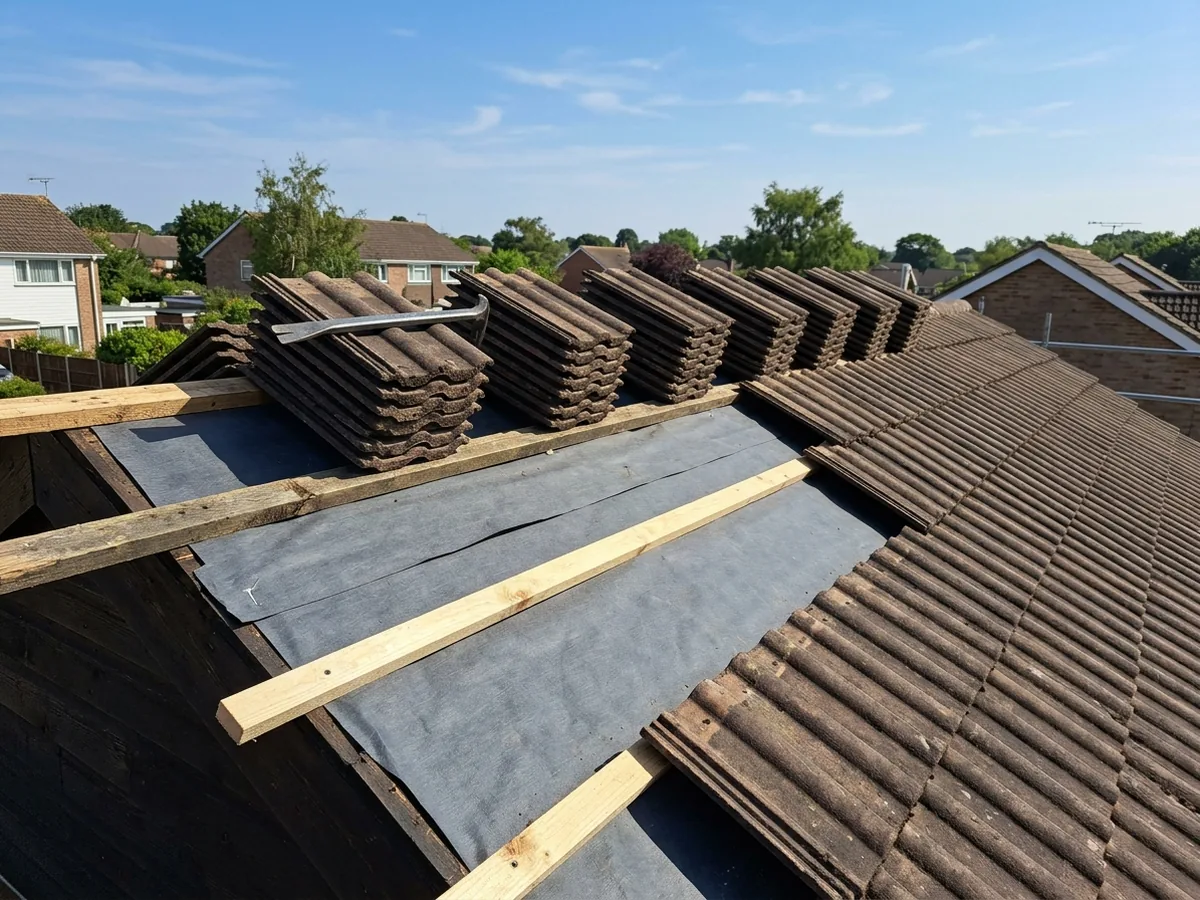
Tile Underlayment Lift-and-Relay
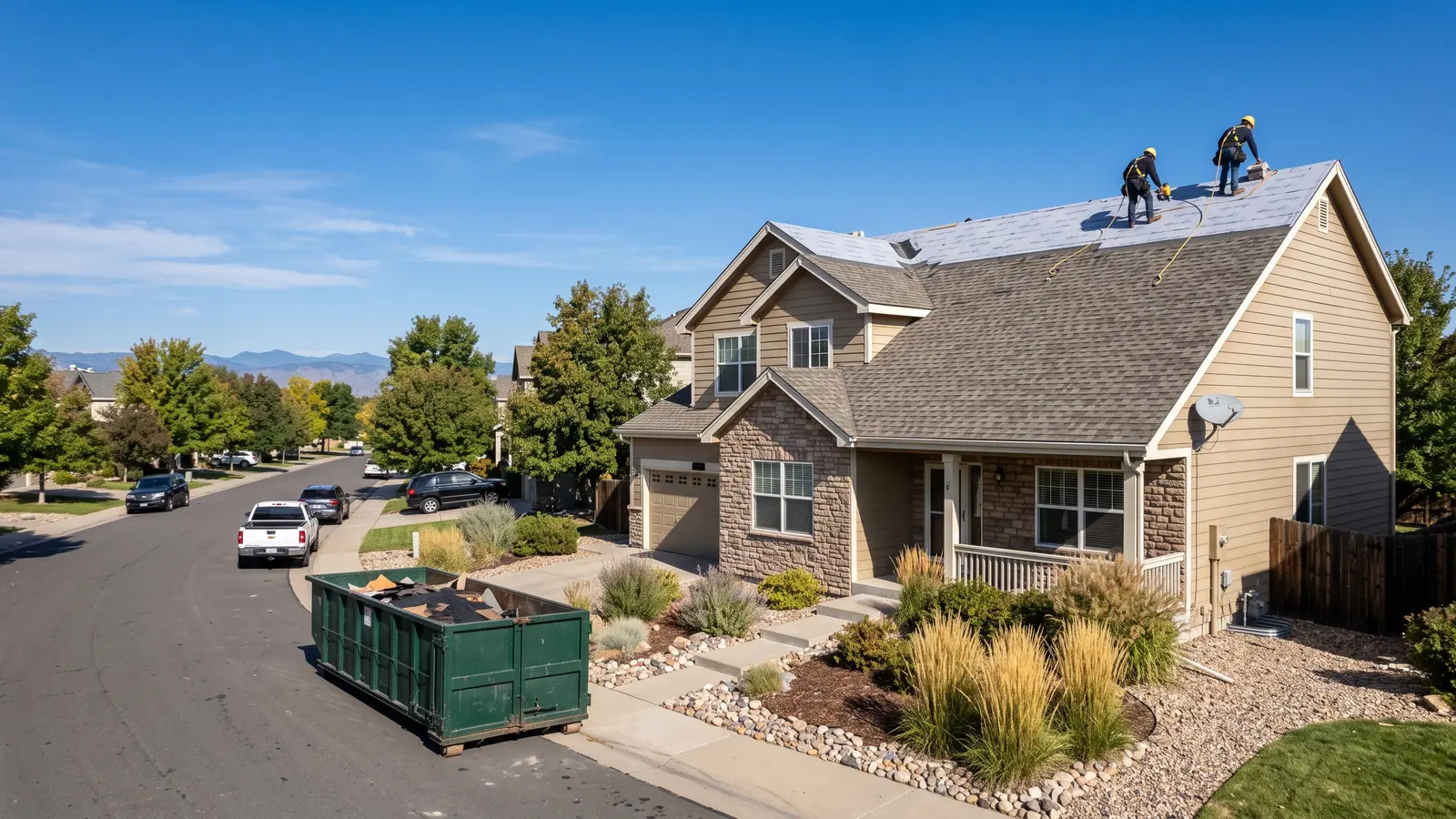
Lift-and-relay is the big repair on an older tile roof. The tiles come off slope by slope and are stacked on the roof or the ground. Underlayment, battens and worn flashings are replaced, and the same tiles go back on. Under the 2024 IRC, cracked or broken tile can't be reinstalled, and rusted or damaged flashings, edge metal and vents have to be replaced. Expect a count of broken tiles on the estimate and a plan for sourcing matches. On a roof between 2 1/2:12 and 4:12, the code calls for two layers of underlayment, which affects both material and labor.
Why Thornton homeowners call Thornton Expert Roofing
- Free written estimate, no obligation
- One independent local contractor per request, not a call list
- A written contract with the price and materials before any work, as Colorado law requires
- Nothing charged to homeowners for the referral
Tile Roofing Cost Ranges in Colorado
HomeGuide's installed prices, published estimates rather than quotes:
Concrete tile
$7 to $19 a square foot.Clay tile
$8 to $25 a square foot.Removing an old heavy roof
of tile or slate: $2 to $5 or more a square foot.New or reinforced trusses
, where a roof must carry heavier material: $5 to $14 a square foot.
Labor is a large share of it. HomeGuide puts labor for premium materials like tile at up to $4 to $17 a square foot, against $1.50 to $3 for shingles. A lift-and-relay saves most of the material cost, since the old tiles go back on. You pay for the careful removal, new underlayment, battens and flashing, and replacements for the broken pieces.
The tile is the long-lived part: InterNACHI gives clay and concrete a century or more. Underlayment and flashing don't last nearly that long, which is why a tile roof can leak long before the tiles themselves give out. The roof replacement page compares lifespans across materials.
Tile Roof Weight, Slope and Snow Loads
Tile is a structural decision before it's a color decision. A house framed for asphalt shingles is being asked to carry several times the weight. One trade guide's advice is plain: if you aren't sure the framing can carry it, have an engineer check before the tile is ordered. Lightweight concrete tile is one compromise. The roof still has to carry winter snow on top of the tile. Thornton's design ground snow load is on the metal roofing page.
The 2024 IRC adds its own limits:
- Tile needs a slope of at least 2 1/2:12, laid over structural panels or solid lumber sheathing.
- Between 2 1/2:12 and 4:12, two layers of underlayment are required.
- Where snow falls, at least two fasteners go into every tile.
Battens, where used, are usually 1x2 strips with gaps between their ends so trapped water can drain. A low porch roof below the tile minimum gets a membrane instead (see flat roofing).
Tile Roof Repair, Re-Lay or Replacement
Most tile calls come down to one of three jobs.
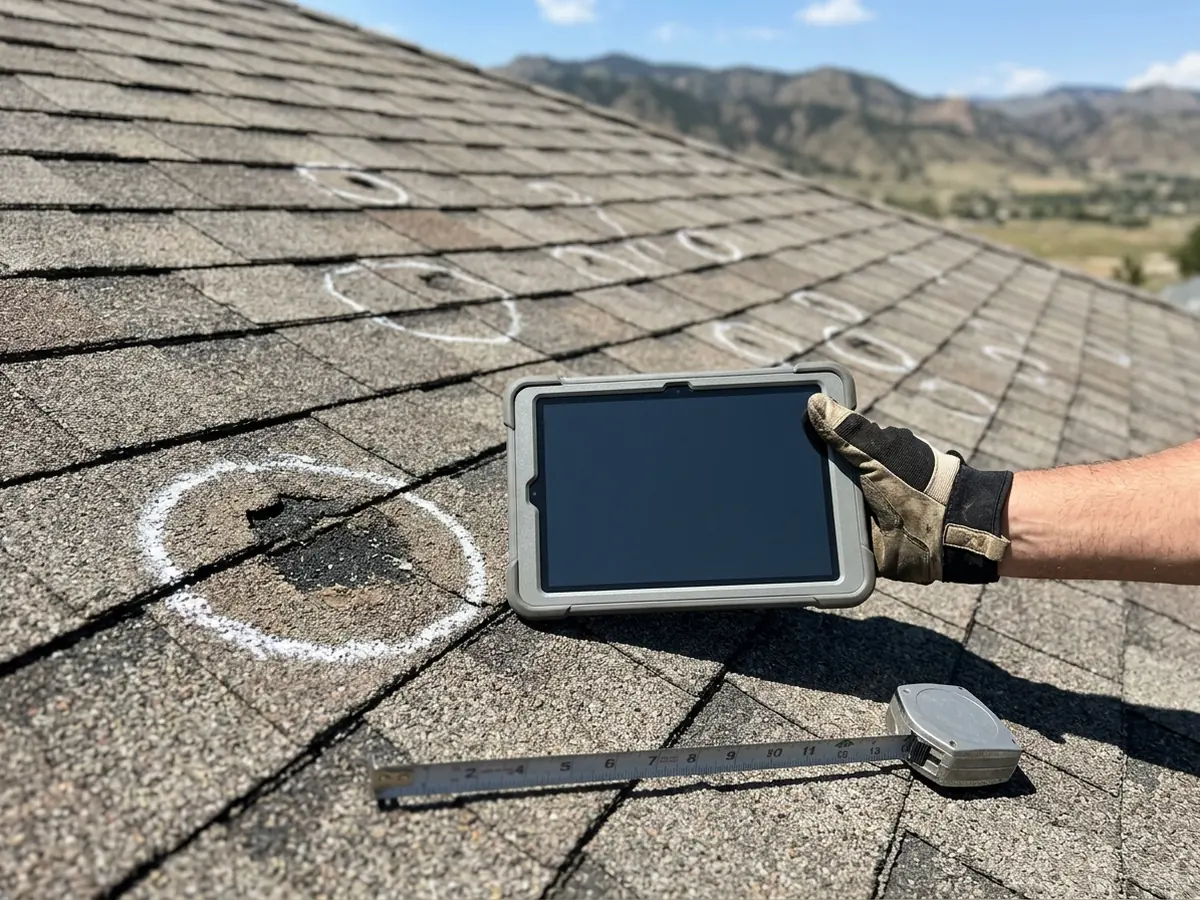
Spot repair. A few tiles cracked by hail or a dropped tool, a slipped piece, a loose ridge. The fix is to lift the course above, pull the broken tile and its nail, and slide in a match. Ask how they'll walk the roof: every step off the headlap risks another crack. After a hailstorm, hail damage roof repair covers the claim side.
Lift-and-relay. Stains on the ceiling, leaks at valleys and walls, or underlayment that has turned brittle while the tile looks fine. This is the job described above, and it avoids buying a whole roof of new tile.
Full replacement. Many tiles broken, a discontinued profile, or a change to a lighter material. Removing old tile is priced separately, and stone-coated steel in a barrel-tile profile is one way to keep the look without the weight.
Ask the roofer to put the count of broken and salvaged tiles in writing, and to say where replacement tile will come from before the first piece comes off.