
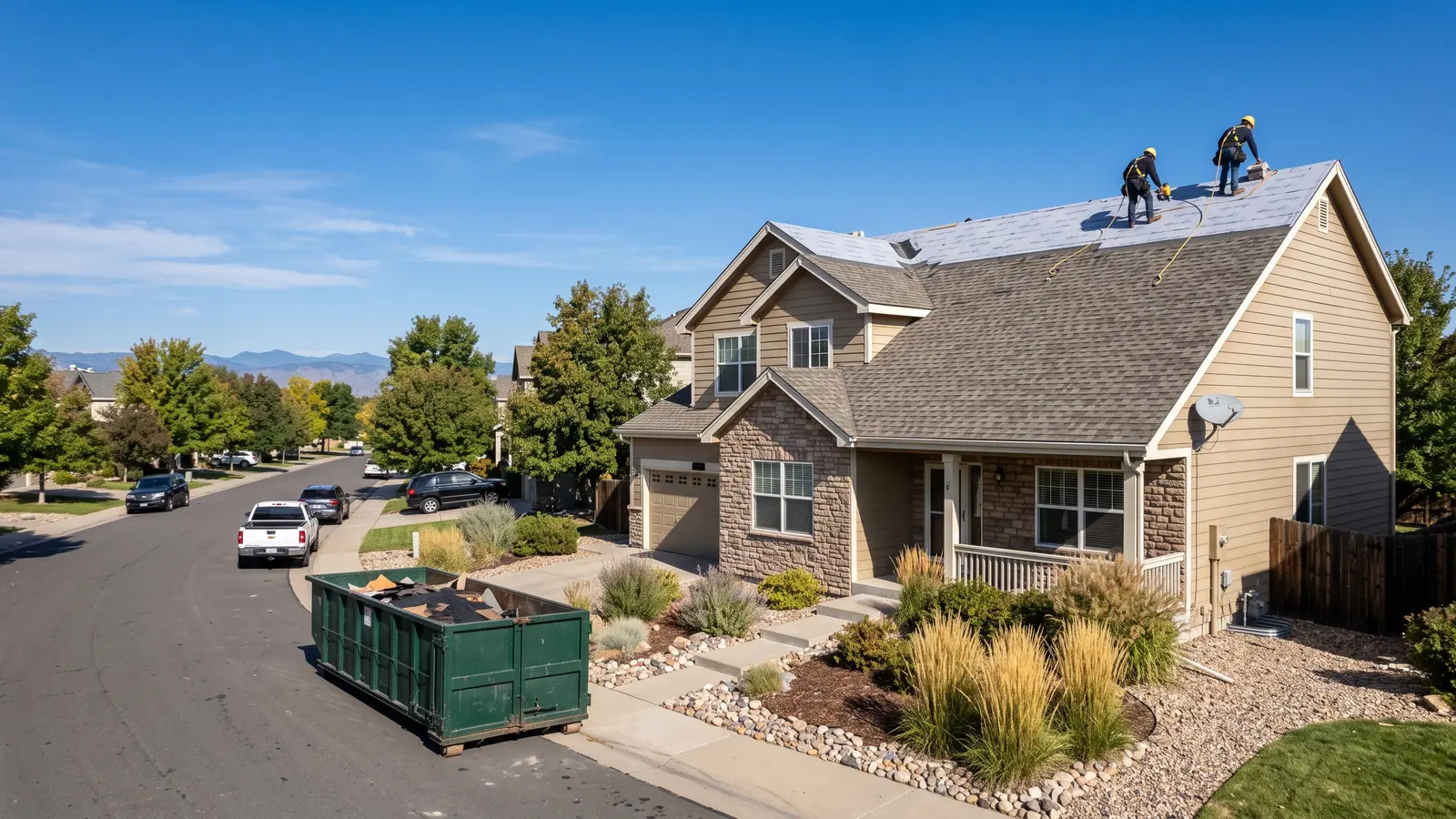
Roof Replacement With Solar Panels: Four Kinds of Job
Which of these you're facing depends on whether the panels are already up and how much life the roof has left.
Detach and Reset of Rooftop Panels
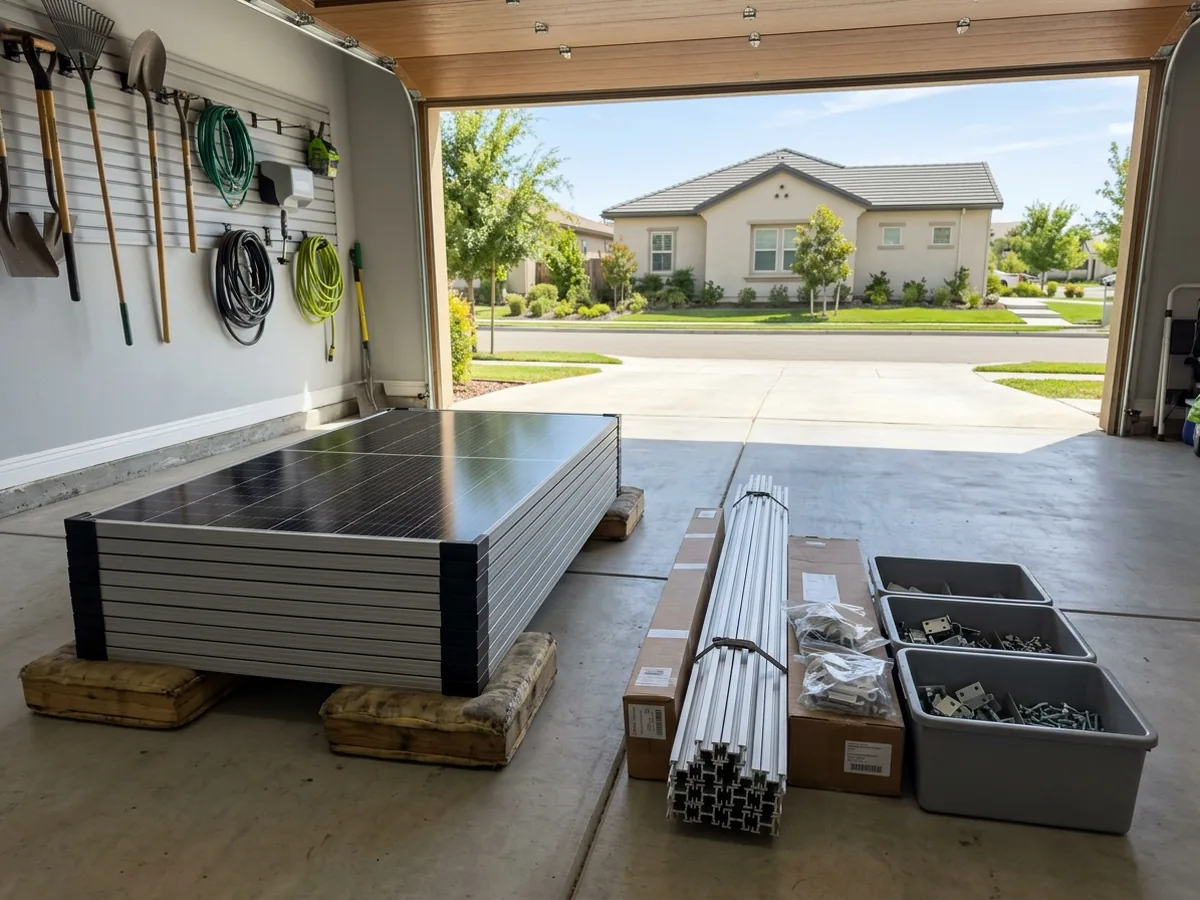
When the roof under an existing array wears out, the modules come off, the roof is replaced, and the same array goes back on. The order matters: a solar company or electrician shuts the system down, disconnects and removes the panels and rails, and stores them; the roofer tears off and re-roofs, including new flashing at every mount location; then the solar crew re-installs and recommissions the system. Thornton's permit list says reinstalling an existing solar PV system doesn't need its own permit, though the re-roof still does. Ask whether the roofer coordinates with your solar company or whether you'll be booking both. Also ask who is responsible if a panel is damaged in storage.
Re-Roofing Before New Solar
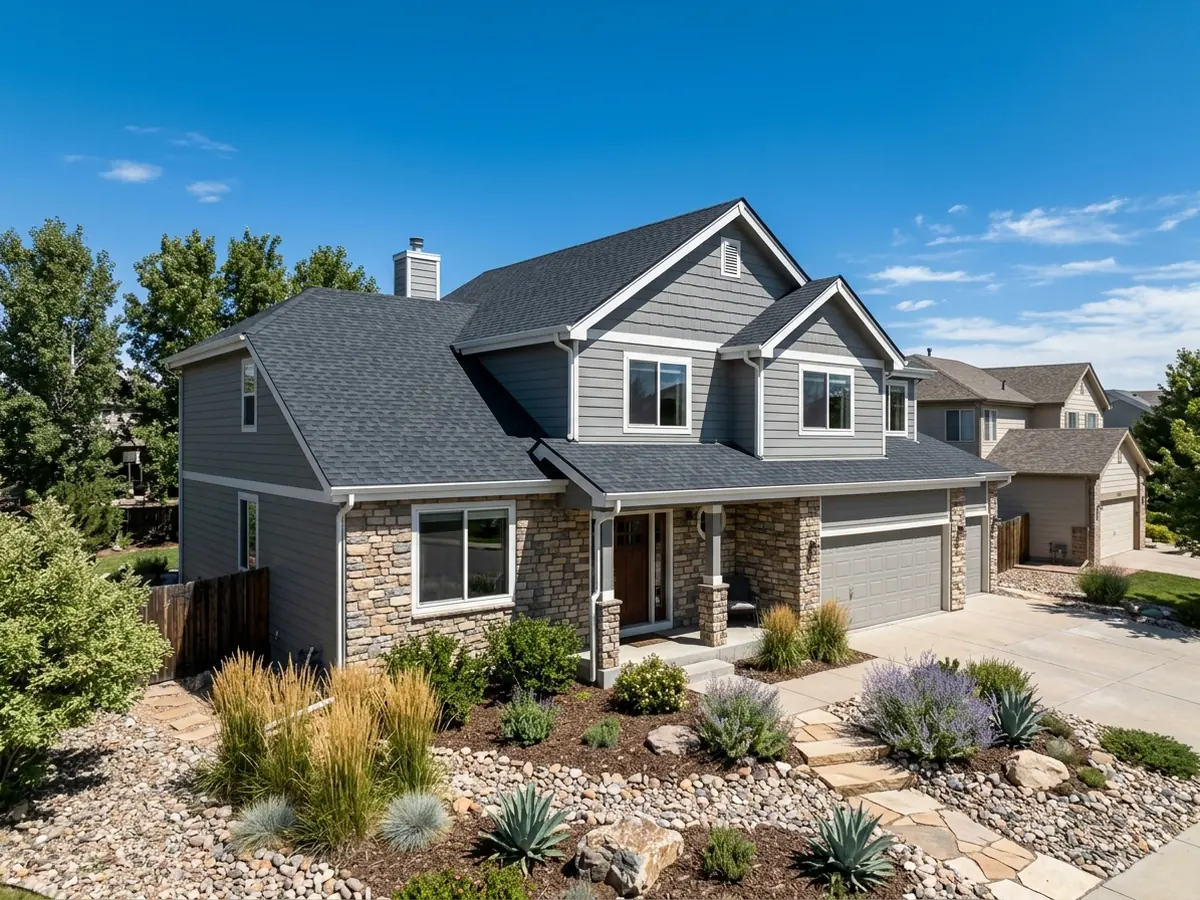
If panels aren't up yet and the roof is mid-life or older, replacing it first saves paying for a detach and reset later. Put panels on a roof with only a few years left, and that extra step comes due sooner than the panels do. Compare the roof's remaining life with how long you expect to keep the panels; lifespan by material is set out on roof replacement. Doing the roof first also lets the roofer and the solar designer agree on where the array will sit, so mount locations can land on rafters and avoid valleys and vents.

Flashed Standoff Mounts
A rooftop array stands on rows of lag-bolted feet, and each one is a hole in the roof. The 2024 IRC says those penetrations must be flashed and sealed to the roofing chapter's rules, and that mounting systems must be listed to UL 2703 and installed to the maker's instructions. The good version is a flashing plate that slides up under the shingle course above, with the foot fastened through it into a rafter, not a foot screwed onto the shingles with a blob of sealant. Thornton's solar submittal guide asks for cut sheets showing how the mounting feet will be flashed. Ask to see that detail before the panels go back on.
Integrated Solar Shingles
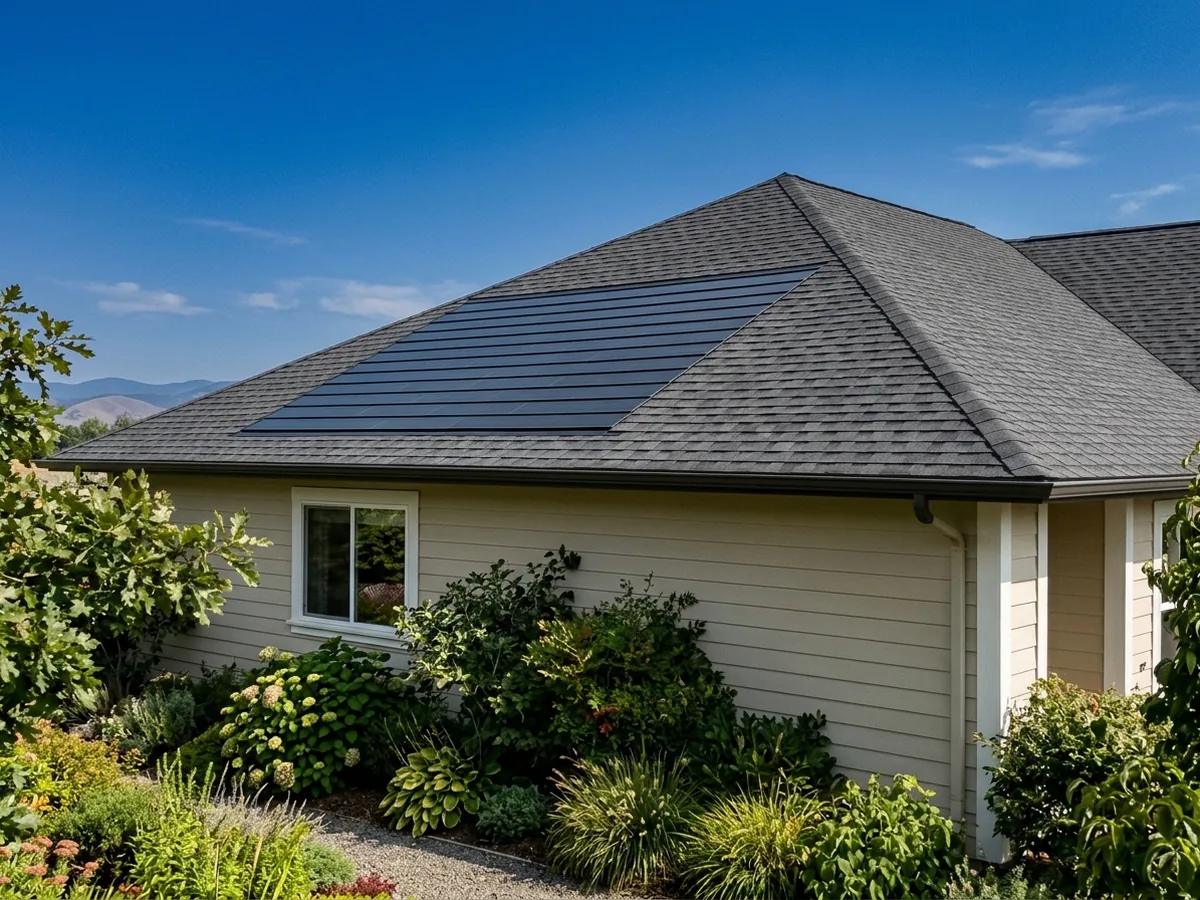
Building-integrated photovoltaic (BIPV) shingles replace part of the roof covering with solar cells, so there's no separate array or racking. The 2024 IRC requires them to be listed and labeled to UL 7103, limits them to slopes of 2 in 12 or steeper, and puts them under NFPA 70, the electrical code. Where hidden wiring under the covering creates places a firefighter shouldn't set a ladder, the code calls for reflective markings visible from the ground. Because the shingles are both roof and power system, ask how a leak or a damaged shingle gets fixed later, and by whom: the roofer, the solar installer or the manufacturer's network.
Why Thornton homeowners call Thornton Expert Roofing
- Free written estimate, no obligation
- One independent local contractor per request, not a call list
- A written contract with the price and materials before any work, as Colorado law requires
- Nothing charged to homeowners for the referral
Solar Re-Roof Permits and Inspections in Thornton
Two permits can be in play, and they follow different rules:
The roof
Replacing more than one square of roofing needs a roofing permit, with the city's sheathing, mid-roof and final inspections, the same as any re-roof (see roof inspection for those steps).New solar
A new solar PV system or battery needs its own permit. Thornton's submittal guide asks for a structural analysis by a Colorado-licensed engineer showing the roof can carry the added weight and wind uplift, plus plans showing where the mounting feet go and what fasteners hold them. Solar installs are among the homeowner projects eligible for the city's rapid review, which aims to finish reviews within one business day.Reinstalling the same array
Not on the city's permit list, as noted above.
All roof and solar PV inspections in Thornton are done virtually, by video call, so the on-site contact needs a phone with a good signal on the roof.
Solar Array Pathways and Ridge Setbacks
The fire-access rules in the 2024 IRC (Section R329.6) shape where panels can go on a new roof:
Pathways
At least two pathways, each at least 36 inches wide, from the lowest roof edge to the ridge, on separate roof planes, with at least one on the street or driveway side. Each plane with panels needs a 36-inch path on that plane or next to it.Ridge setbacks
An 18-inch clear strip on both sides of a horizontal ridge if panels cover no more than 33% of the roof in plan view, 36 inches if they cover more. A house with sprinklers gets more room.Egress windows
No panels on the roof below an emergency escape window, with a 36-inch path to it.
A re-roof is a good moment to check the old layout against these numbers before the same array goes back up. For the snow and wind loads the roof and racking have to carry, see metal roofing, which sets out the city's design values.
Solar Re-Roof Timing and Who Does What
Book the solar company first. Its detach date sets the schedule, and the roof can't start until the panels are down. Hail season matters too: a roof stripped bare under a removed array is exposed, so ask the roofer how the deck will be covered overnight and if a storm rolls in mid-job. Then line up the roofer for the days in between, with the reset booked right behind. In the estimate, look for line items on mount-point flashing, any new decking under the array, and whether the roofer will be on site at reset to check the flashing as the feet go back down. Keep the two contracts separate and clear: the roofer is responsible for the roof, and the electrical work stays with the solar contractor or a licensed electrician.