
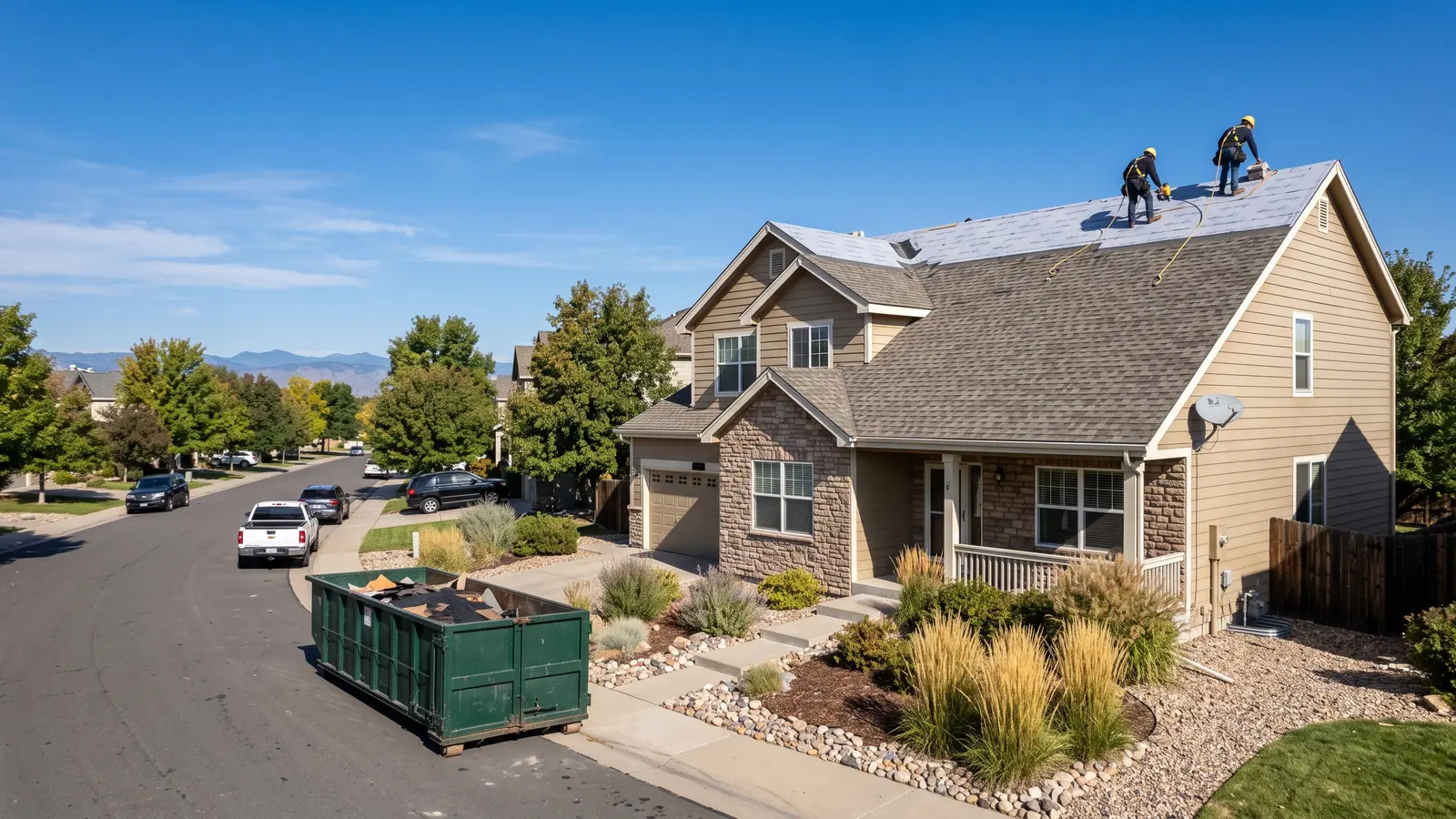
Emergency Roof Repair Work That Can't Wait
Storm damage comes in a few predictable shapes. Each needs a different temporary fix, and each should be photographed before anyone covers it.
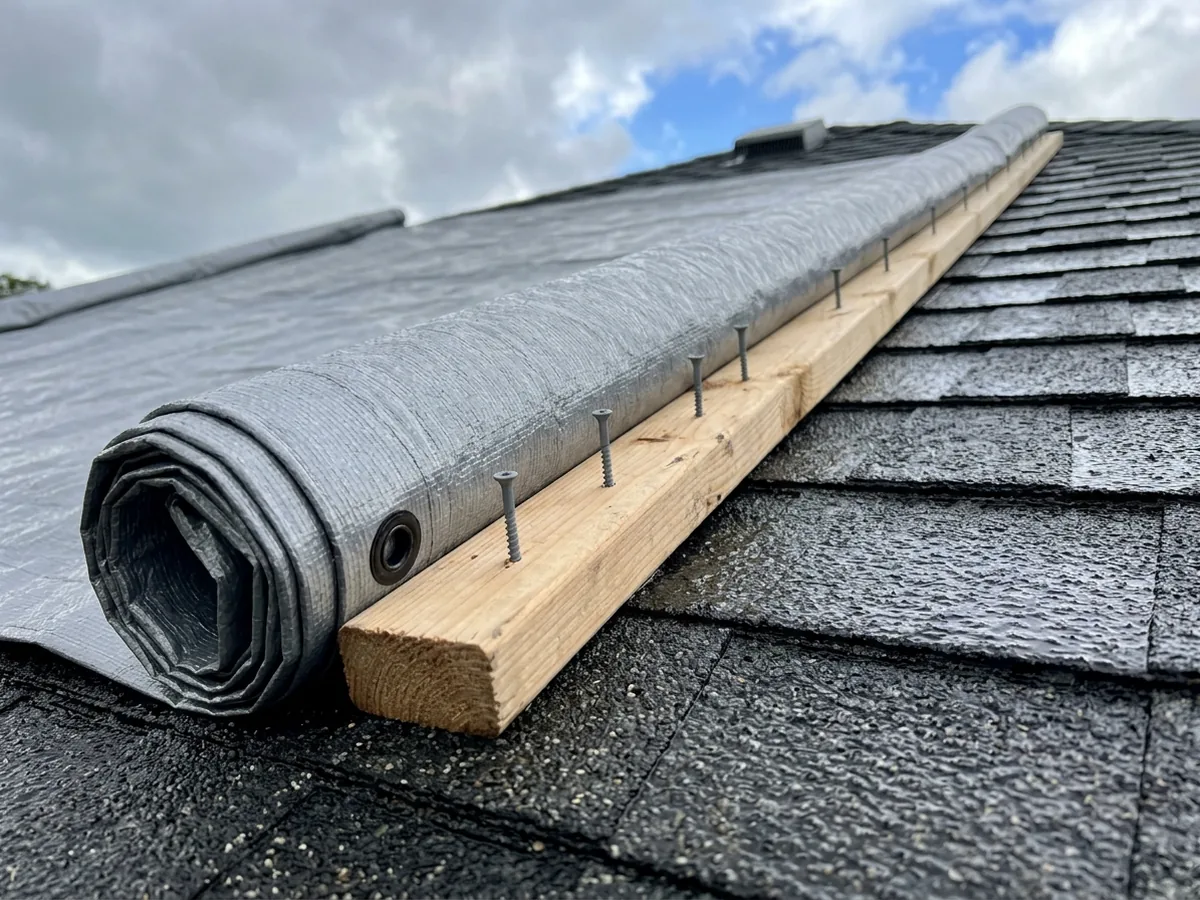
Storm Tarps Battened Over the Ridge
A good emergency tarp starts above the damage and runs up and over the ridge, so water landing on the top edge sheds onto the far slope instead of running underneath. The edges get rolled around 2x4 or furring-strip battens, and the battens are screwed down through the roof into the deck. That spreads the hold along a board instead of a few points, so wind can't rip the sheet loose at the fastener holes. The fewer holes punched in sound shingles, the better, and every one gets sealed when the tarp comes off. Sandbags and bricks slide off a pitched roof in the first gust. Plan for the tarp to come off once the permanent repair is booked, since sun breaks down the poly.
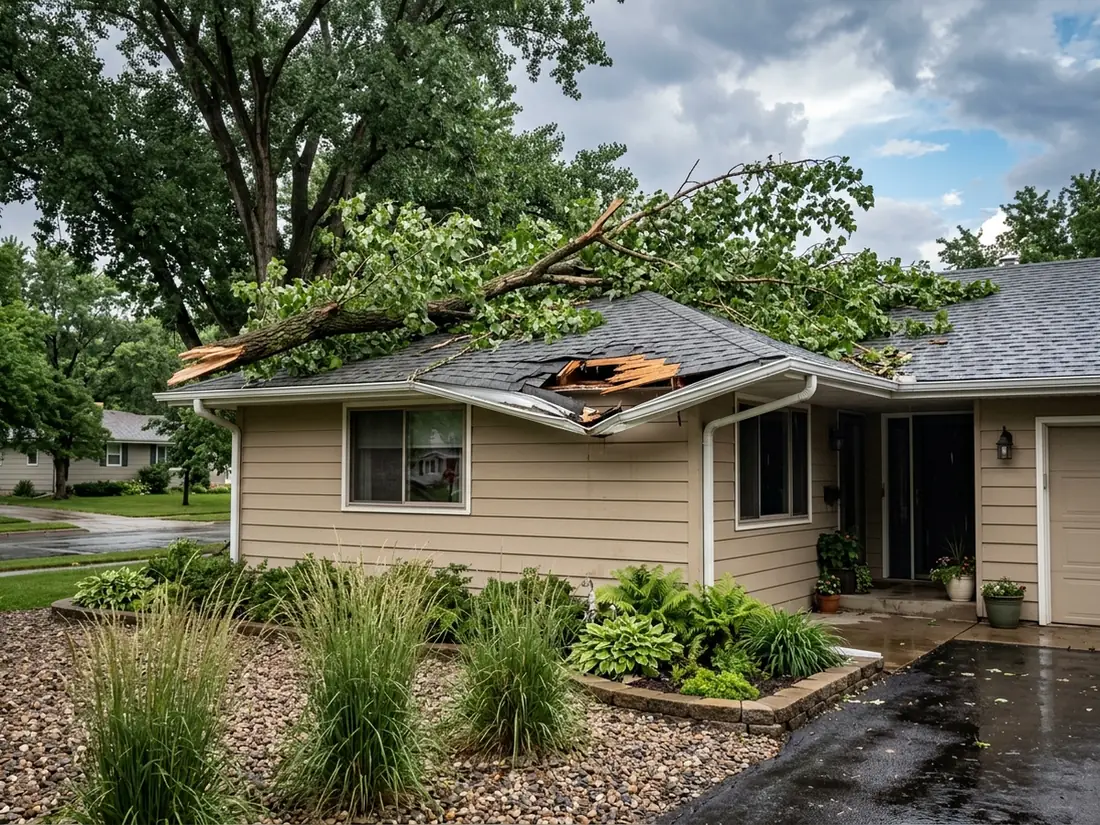
Fallen Limbs and Punctured Decking
A limb on a roof is two jobs. The first belongs to a tree service: cutting and lifting the wood off without dropping it again, which on a large limb can take a crane or rigging. Only then can a roofer see what's underneath. A crushed shingle field may just need a tarp, but a hole through the sheathing gets a plywood patch screwed to the rafters first, so the tarp has something solid to lie on. Look at the gutter, the fascia and any vents in the limb's path too. Before the wood moves, take wide and close photos from the ground: the limb on the roof, the house number, the damage inside.
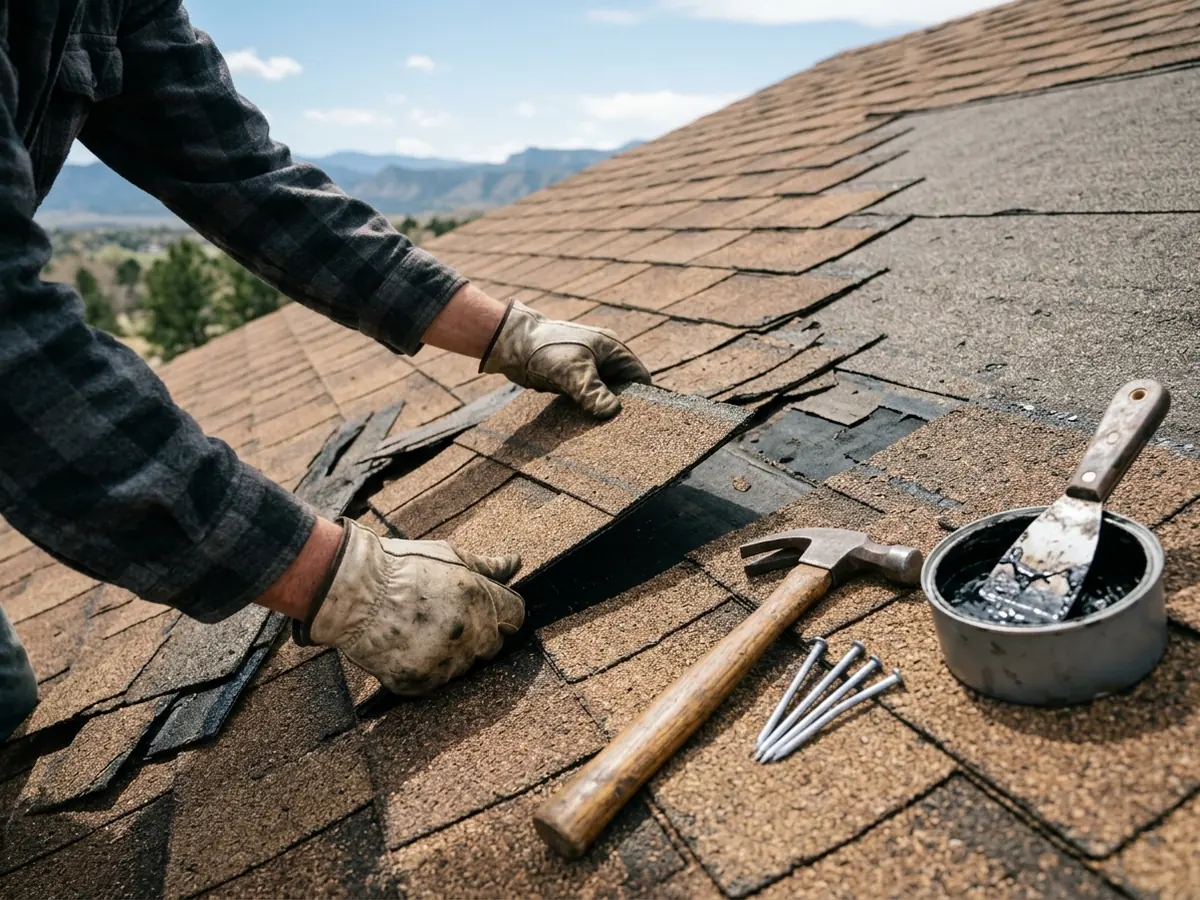
Temporary Shingle and Flashing Patches
Not every storm call needs a tarp. Wind can peel a few shingle tabs back or lift a strip of step flashing off a wall without tearing the deck. Those can often be closed up the same day: loose shingles nailed down and sealed with roofing cement under the tab, a lifted flashing piece bent back and fastened, a cracked vent cap swapped. A small patch like that may be all the roof needs. If the damage runs wider, ask the roofer to say clearly what's temporary and what's permanent, and to put the permanent work in a written scope.
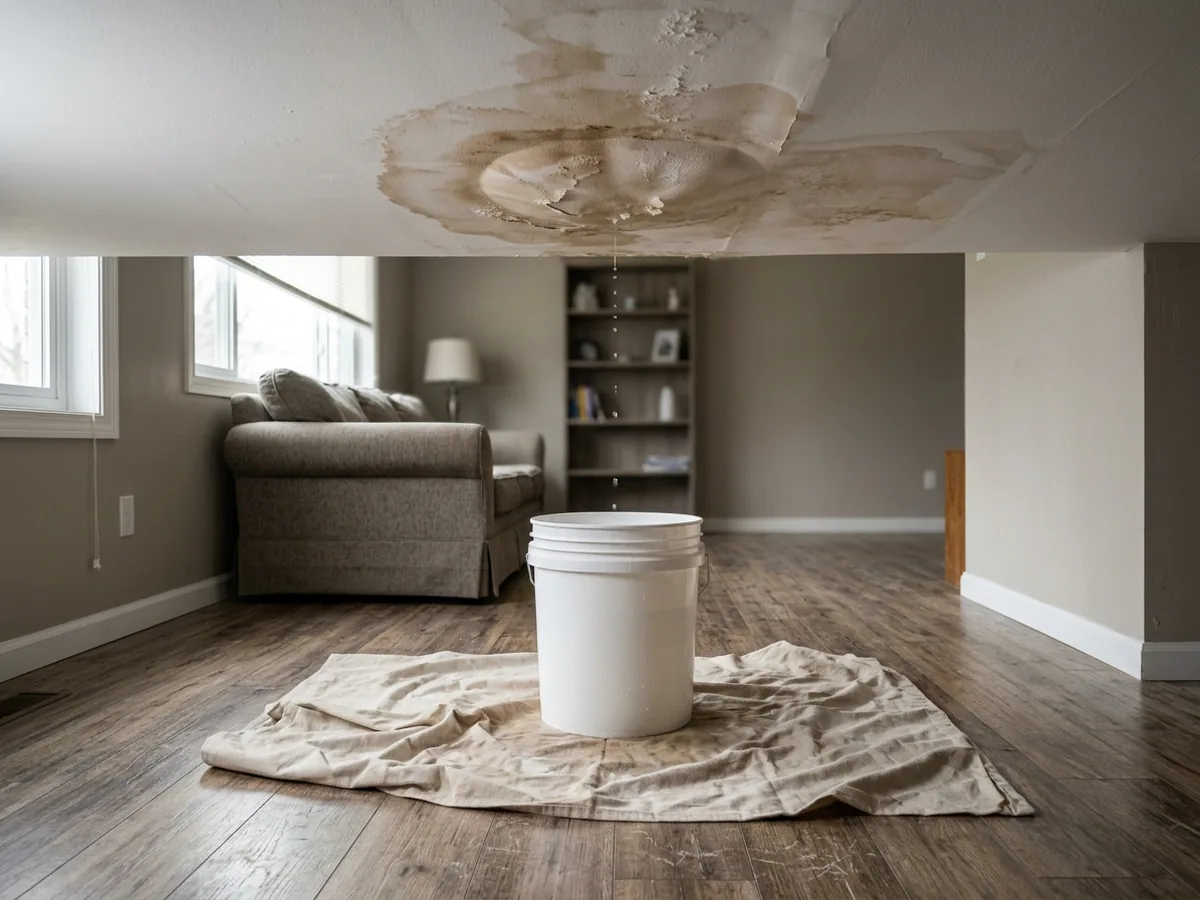
Ceiling Leaks Inside the House
Inside, the job is limiting what the water ruins. Move furniture, rugs and electronics out of the drip line and put a bucket on a drop cloth under it. If water is coming through a light fixture or near an outlet, switch that circuit off at the breaker. A ceiling that bulges is holding water; keep people out from under it, because drywall soaked through can come down at once. Photograph the ceiling, the wet floor and anything damaged before cleanup. Then, once the roof is covered, open up the wet area so the drywall and insulation can dry.
Why Thornton homeowners call Thornton Expert Roofing
- Free written estimate, no obligation
- One independent local contractor per request, not a call list
- A written contract with the price and materials before any work, as Colorado law requires
- Nothing charged to homeowners for the referral
Emergency Roof Repair and the Insurance Paperwork
State emergency managers (DHSEM) advise homeowners to cover roof holes so no more water gets in, and to keep receipts for what they spend to send to the insurer. That makes an emergency repair invoice a claim document. Ask for one that lists the date, what was done (tarp size, battens, plywood patch, sealant), and photos of the damage before it was covered. The state's other advice, on who should be on the roof after a storm and how deductibles and itemized settlements work, is set out on the hail damage roof repair page.
Keep your own photos too: the roof before and after the tarp went on, the attic, the ceilings. A file with dated pictures leaves less to argue about later.
Emergency Roof Repair, Then the Permanent Scope
Once the house is dry, the next step is an inspection that sorts the damage into a repair or a bigger job. In Thornton, a fix that stays within one square counts as a repair; past that a permit is needed and the city's whole-slope rule comes in, as explained under roof replacement. After a storm, a full roof inspection is the way to find damage the emergency visit didn't cover.
Smaller leaks that show up after the storm, at a vent or a wall joint, are covered under roof leak repair.
Emergency Roofing on Tile, Metal and Low-Slope Roofs
Tarping assumes nails or screws can go into the roof, and on some materials that isn't simple. The U.S. Army Corps of Engineers, which installs free temporary roof sheeting after federal disasters through Operation Blue Roof, says its contractors can't cover slate, asbestos or clay tile roofs and take metal roofs case by case. Its program also turns down homes with more than half the roof framing damaged, because the framing has to hold the sheeting. Those limits are a fair guide to what any emergency cover can do.
Concrete and clay tile
Tiles crack under foot, and fasteners through them leave broken tiles behind. Expect the roofer to lift or weight the tarp around the tile field rather than nail through it, and to set aside any loose tiles so they can be relaid.Metal panels
Screws through painted steel leave holes that need sealing later. Clamps on the seams or a tarp held at the eaves and ridge may be the better route.Low-slope membranes
A puncture in TPO or EPDM can often take a temporary patch of compatible tape. A tarp lying flat just holds ponding water.
If the house has one of these roofs, say so when you call. It changes the materials the roofer brings.