
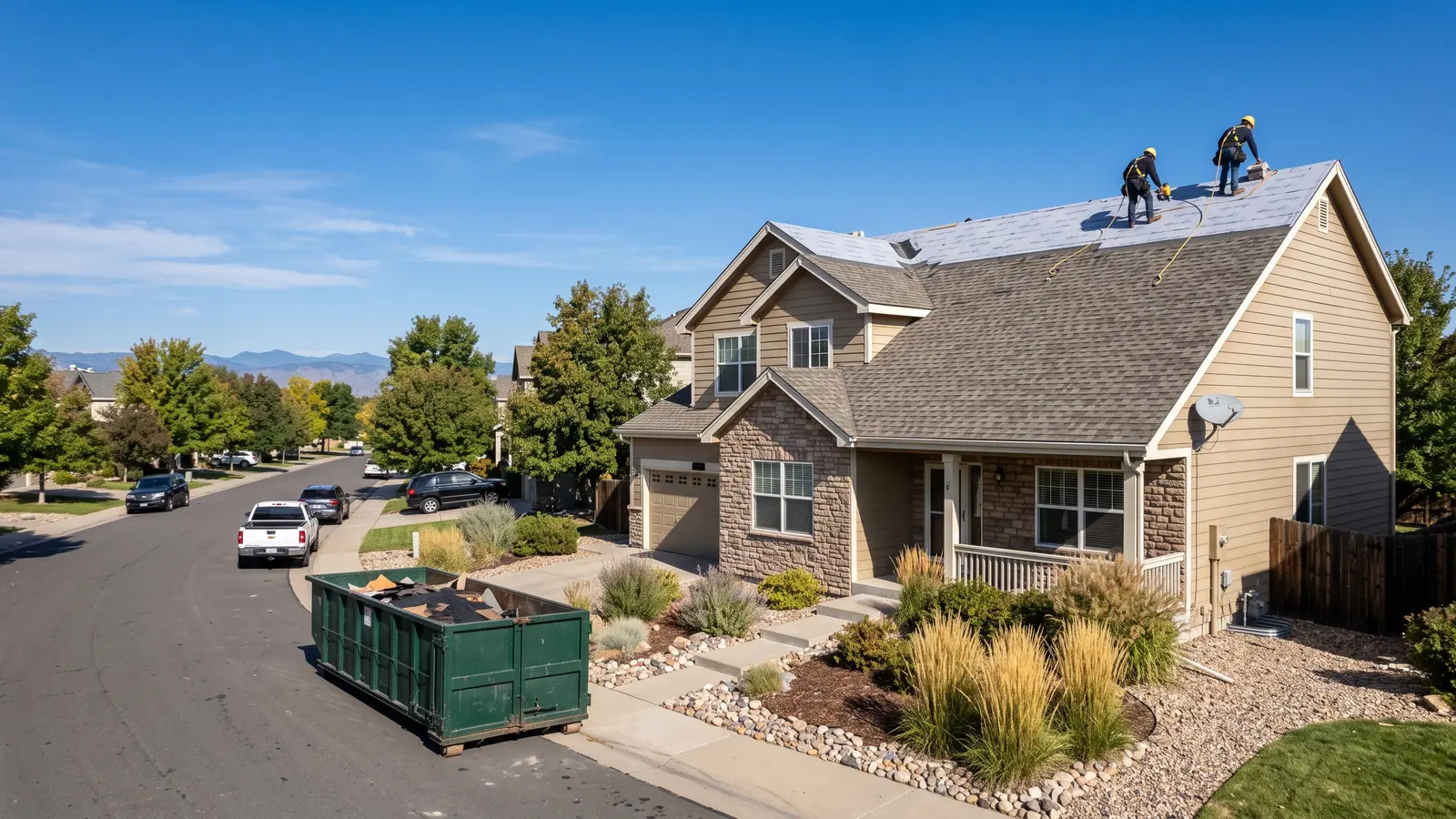
Flat Roofing Membranes and Coatings for Low-Slope Sections
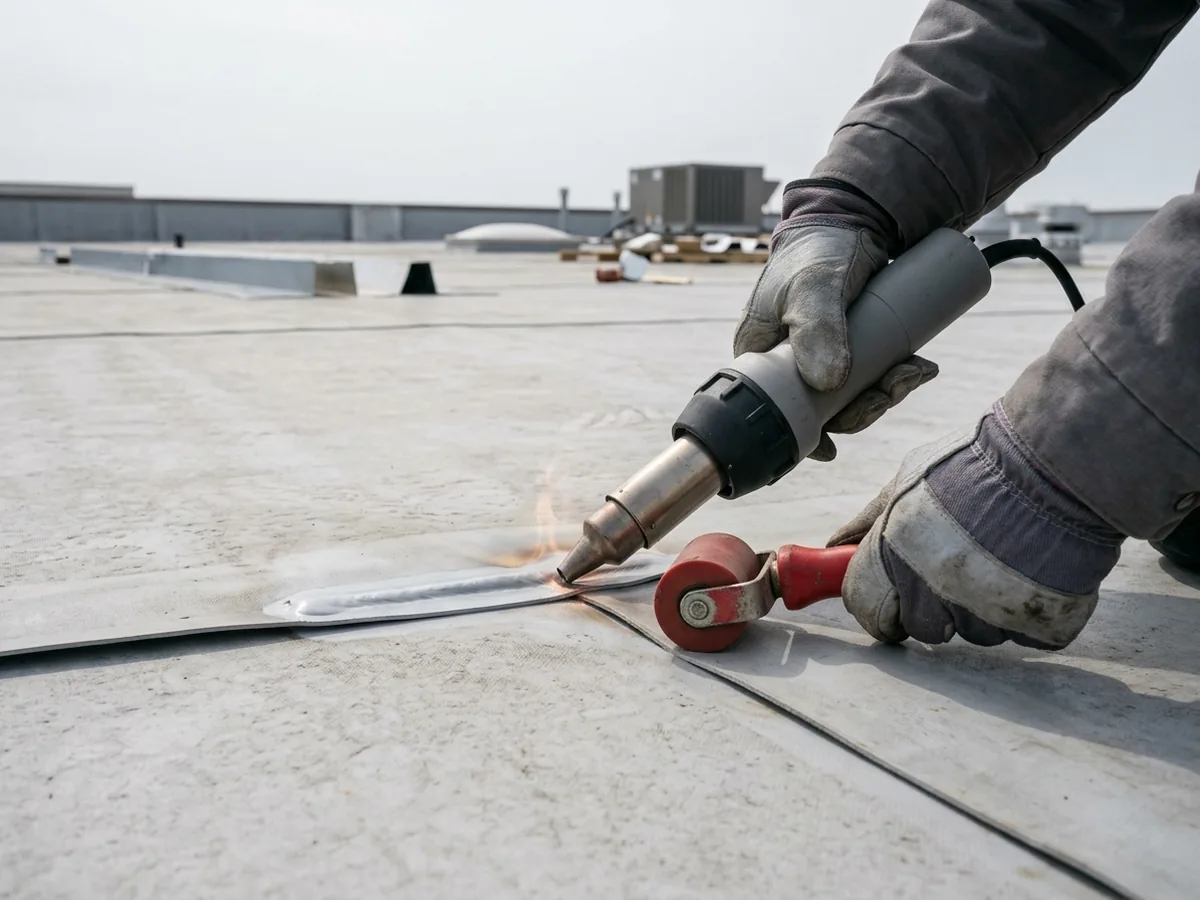
TPO Membrane With Welded Seams
TPO (thermoplastic polyolefin) comes in wide white or gray sheets, and the 2024 IRC requires it to meet ASTM D6878. Because it's a thermoplastic, two overlapped sheets are fused with a hot-air welder and pressed with a roller, so the seam becomes one piece of plastic rather than a glued joint. Ask whether every welded seam will be probed once it cools, which is how installers find gaps. InterNACHI gives TPO 7 to 20 years, the widest spread of the three membranes, so the product line and the welding both matter.
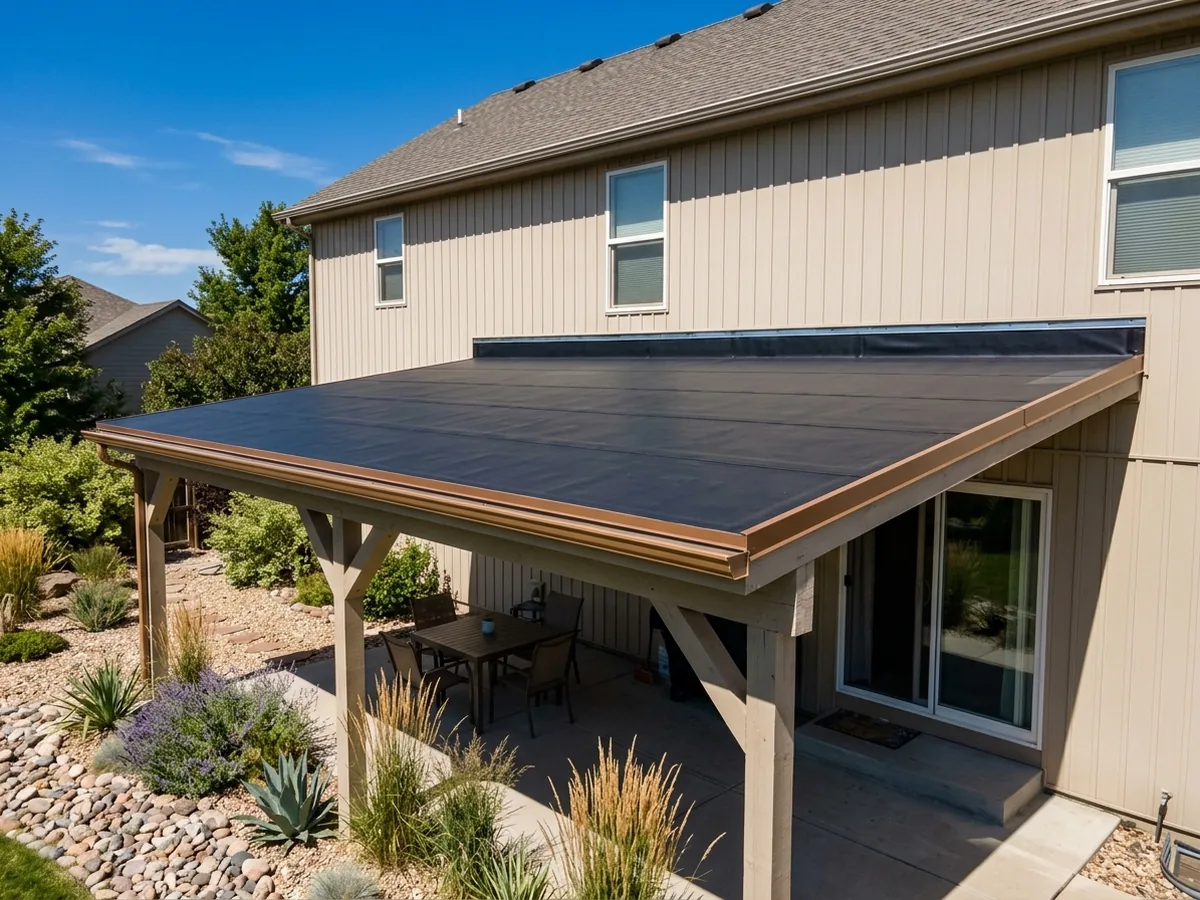
EPDM Rubber on Porches and Garages
EPDM is a black synthetic rubber, and the 2024 IRC standard for it is ASTM D4637. It can't be welded, so seams are primed and joined with seam tape or liquid adhesive. On a small porch or garage roof, one sheet can often cover the whole area with no field seams, which leaves only the edges and penetrations to detail. InterNACHI rates it at 15 to 25 years. The weak spots are lap seams that weren't primed properly and flashing at walls and pipes.
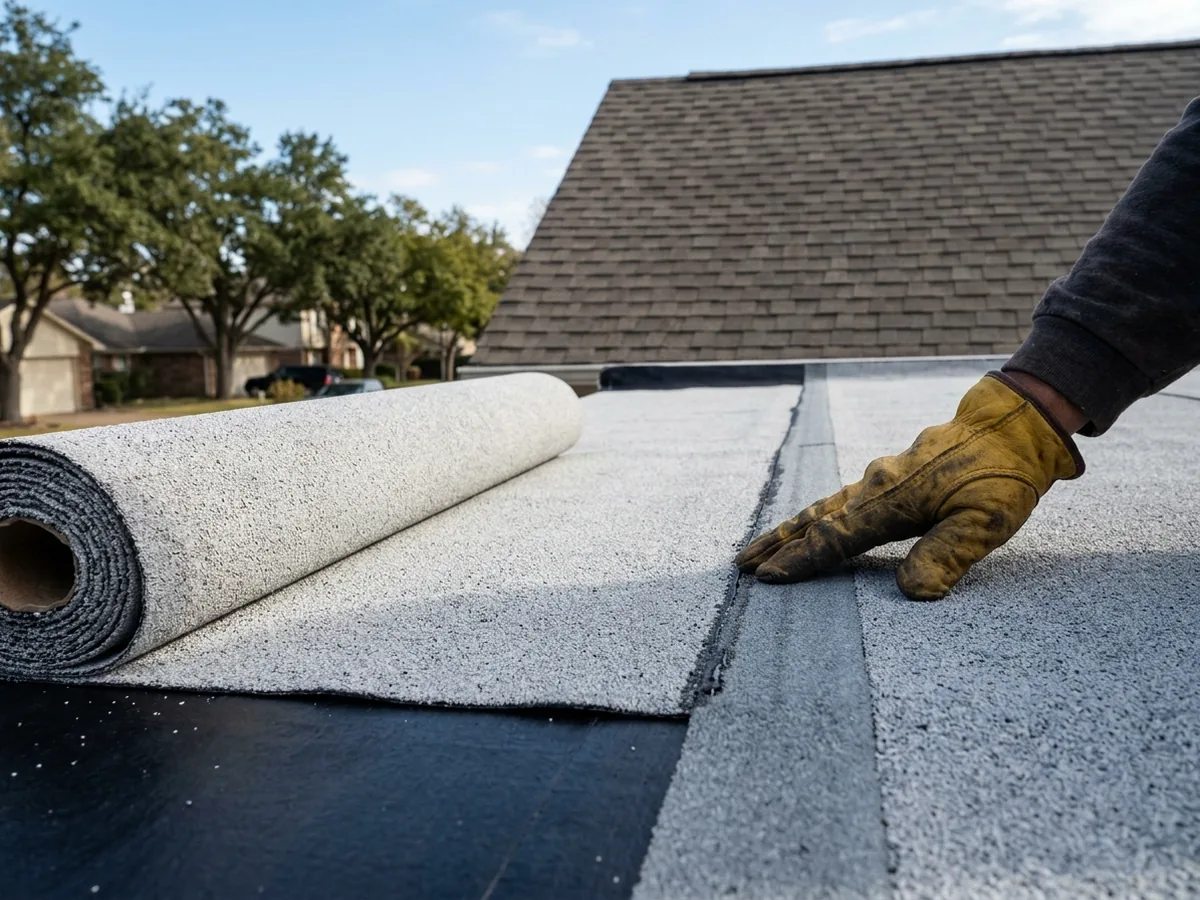
Modified Bitumen Cap Sheets
Modified bitumen is asphalt blended with rubbery or plastic polymers and reinforced with a fiberglass or polyester mat. It goes down in layers: a base sheet, then a granule-surfaced cap sheet. The cap is torched, mopped, cold-glued or self-adhered, depending on the product. Self-adhered sheets avoid an open flame next to a wood-framed house. The granules give it a surface you can walk on for maintenance and shield the asphalt from sun. InterNACHI gives modified bitumen about 20 years.
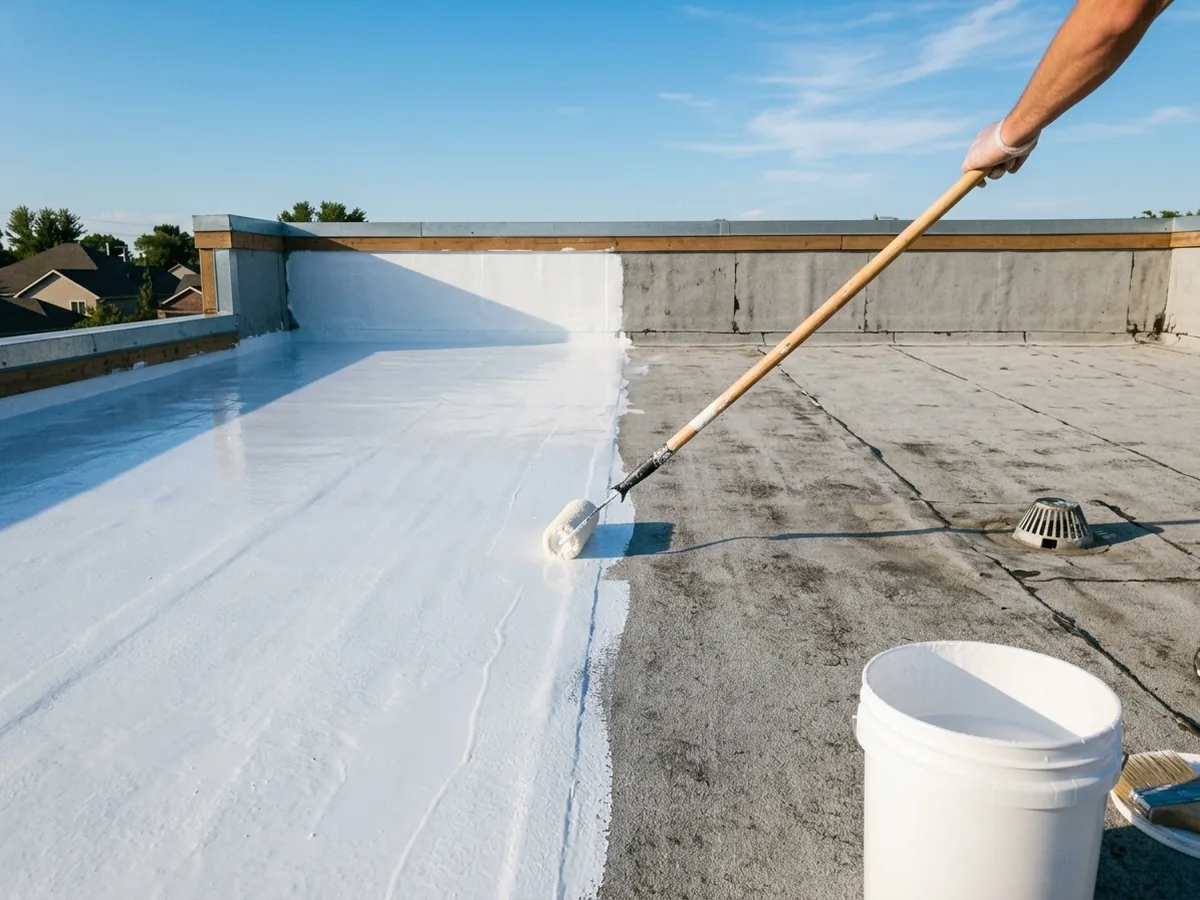
Silicone and Acrylic Roof Coatings
A coating is a liquid membrane rolled or sprayed over an existing roof that's still sound. The 2024 IRC has a section for roof coatings: acrylic must meet ASTM D6083 and silicone ASTM D6694, applied to the maker's instructions. The choice turns on water. GAF defines ponding as water still standing 48 hours after rain stops and warns that it hurts acrylic coatings over time. It allows its silicone in ponded areas. A coating won't fix wet insulation, open seams or rotted decking. For aluminum coating, InterNACHI expects only 3 to 7 years of service, so budget for recoats.
Why Thornton homeowners call Thornton Expert Roofing
- Free written estimate, no obligation
- One independent local contractor per request, not a call list
- A written contract with the price and materials before any work, as Colorado law requires
- Nothing charged to homeowners for the referral
Flat Roofing Slopes: Where Shingles Stop and Membranes Start
Most "flat" roofs aren't level, and the code expects them to drain. Under the 2024 IRC:
Asphalt shingles
go no lower than 2:12, and between 2:12 and 4:12 they need two layers of underlayment.Mineral-surfaced roll roofing
goes no lower than 1:12.Modified bitumen, single-ply membranes and liquid-applied roofs
need a design slope of at least 1/4:12 so water runs to an edge, gutter or drain.
On a re-roof, the code doesn't make an existing roof meet the 1/4:12 figure if it already drains. That's why ponding is the real test. Denver-area weather brings most of its rain from April through August. A low spot that still holds water two days after a storm counts as ponding by GAF's definition, and it rules out an acrylic coating there. Tapered insulation, a cricket behind a wall, or a new scupper can fix the fall before the new membrane goes on. Where a roof doesn't drain over its edge, the code calls for a drain at each low point.
The joint between a flat section and the house is a common leak point. Ask how the membrane will turn up the wall, how it ties under the siding or into counter flashing, and how it meets the shingles above. For leaks in that zone on an existing roof, see roof leak repair.
Flat Roofing Cost and Membrane Lifespans in Colorado
HomeGuide's published estimates for flat roofs run $3 to $11 a square foot installed, or $4,000 to $16,800 for an average job. By membrane:
| Membrane | Installed cost per sq. ft. (HomeGuide) | Typical life (InterNACHI) |
|---|---|---|
| EPDM | $3.50 to $10.00 | 15 to 25 years |
| TPO | $4.00 to $10.00 | 7 to 20 years |
| Modified bitumen | $4.00 to $7.50 | 20 years |
| PVC | $5.00 to $12.00 | no InterNACHI figure |
Rolled asphalt is the budget end of HomeGuide's list at $2 to $5 a square foot. It's mineral-surfaced roll roofing, which the code allows only at 1:12 or steeper, so it can't go on a truly low roof. HomeGuide puts a flat roof repair at $300 to $1,100. What moves the price more than the membrane: tearing off old layers, replacing wet insulation or decking, rebuilding the slope, and the flashing at walls, skylights and vents.
Flat Roof Repair, Coating or Replacement
Repair fits a puncture, a lifted seam, a failed pipe flashing or a split at the edge metal on a roof that's otherwise dry. For hail splits and punctures, the claim side is on hail damage roof repair.
Coating fits a membrane that's aged but still bonded and dry underneath, on a roof that drains. The 2024 IRC allows a new coating over an existing membrane, but it bars any recover where the old roof is water-soaked or already carries two coverings. Ask the roofer to check for wet insulation first, by cores or a moisture survey, because coating over trapped water seals it in.
Replacement fits a roof with soaked insulation, soft decking, many patched seams or chronic ponding. It's also the time to fix the slope and the wall flashing properly.
On a house, a low-slope section over 100 square feet usually goes through the same Thornton permit as the rest of the re-roof (see roof replacement), and the city's re-roof inspections expect the old covering off, as roof inspection explains. Flat roofs on stores, offices and apartment buildings follow the city's commercial plan-review rules instead, covered on commercial roofing.