

Gutter Guards Sorted by What They Stop
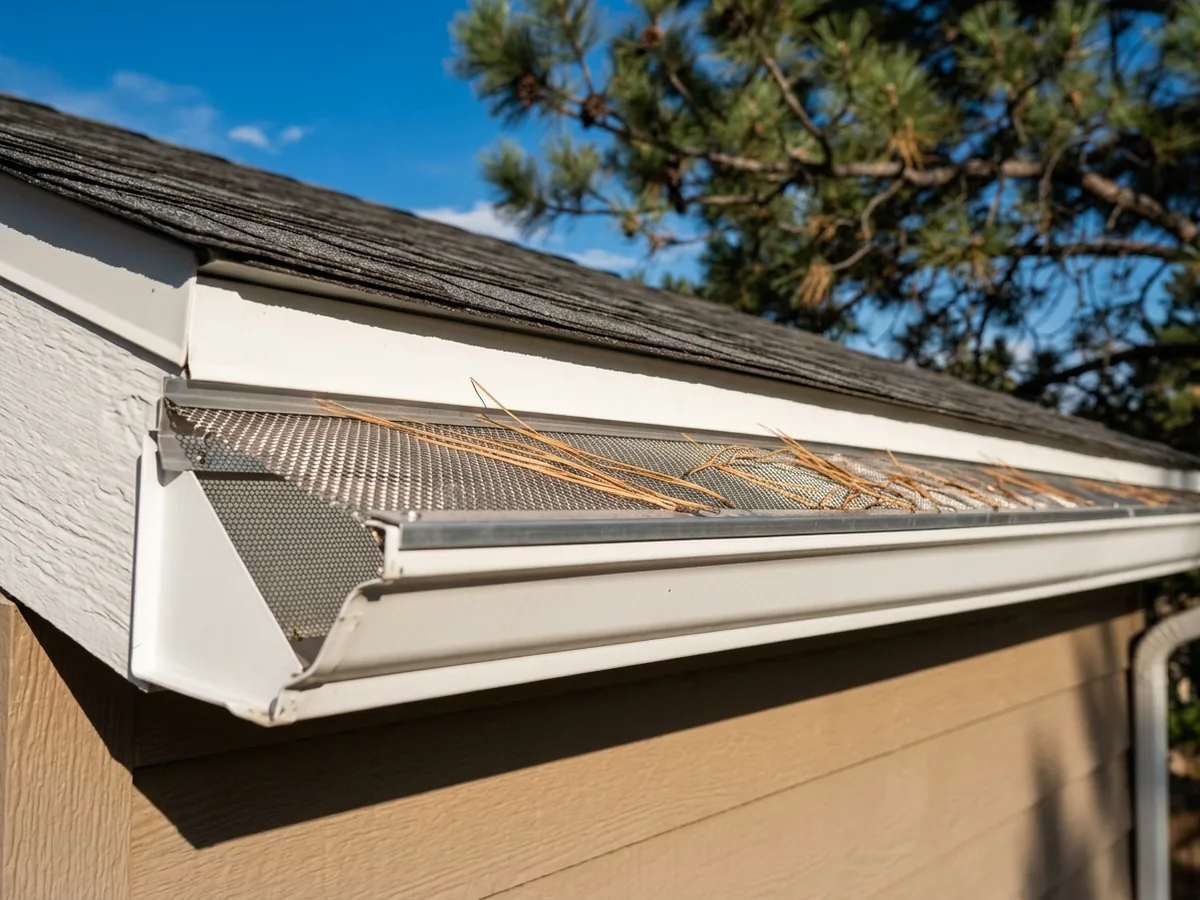
Stainless Micro-Mesh Guards
Micro-mesh is a fine stainless, aluminum or plastic mesh stretched over a rigid frame, with holes far smaller than an ordinary screen. It is the type built to stop pine needles and other small debris. HomeGuide prices the material at $2 to $5 a linear foot and gives it 3 to 10-plus years. The fine holes have a cost: HomeGuide notes micro-mesh is more prone to clogging than coarser guards. It also passes on customer reports that some fine-mesh guards let water from a hard downpour run off the front. Hail is the local test. InterNACHI's hail course says vinyl leaf guards show punctures or cracks after a storm, so ask for stainless mesh in a metal frame.
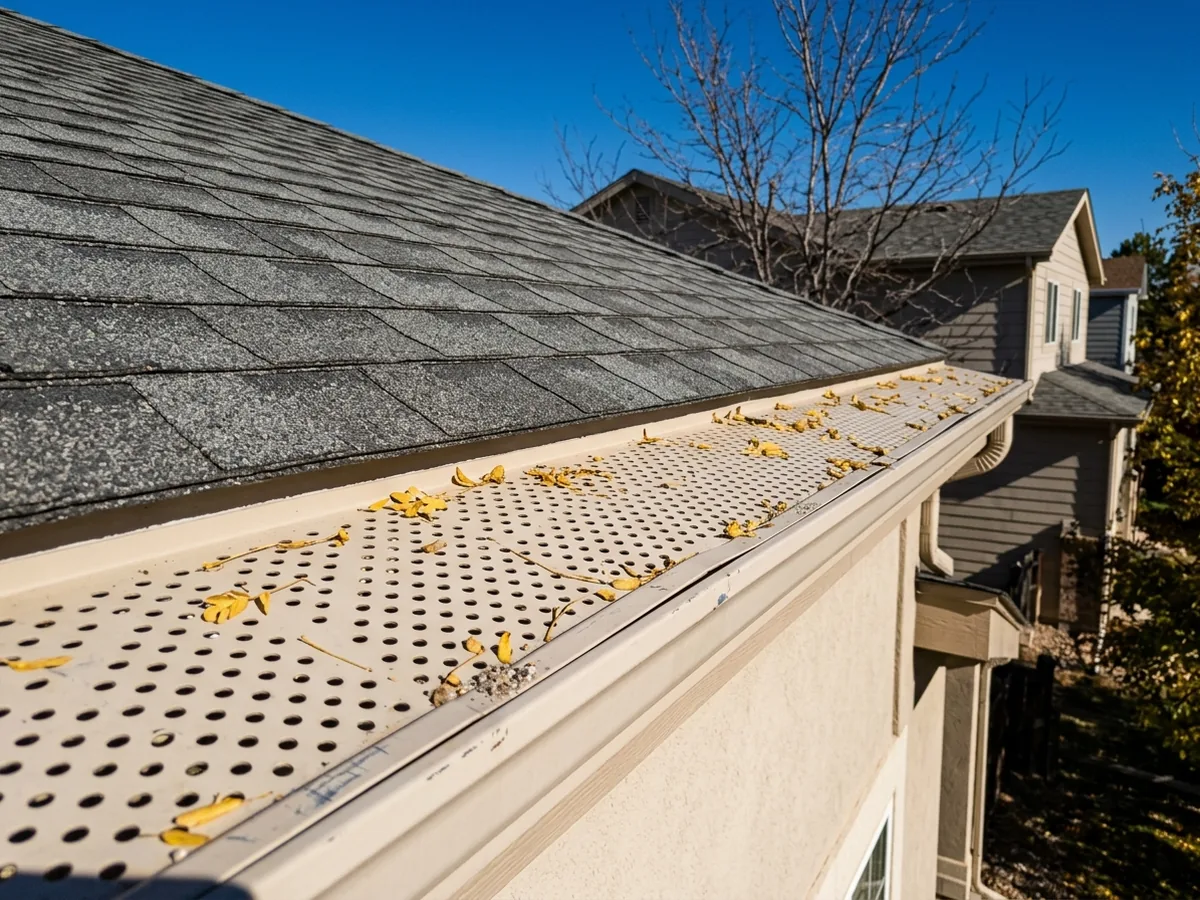
Perforated Aluminum Screens
A perforated screen is a flat or slightly crowned sheet of aluminum punched with rows of small holes, snapped onto the gutter lip or screwed to it. HomeGuide rates it for needles and leaves, and it is the cheapest long-lived type in its table: $0.50 to $2 a foot for material and 10 to 20-plus years of life, rated for all climates. Steel screens cost more ($1.50 to $5) and need a powder coat, or they rust. Plastic screens are the bargain bin at $0.50 to $1 and 3 to 6 years, and HomeGuide says they don't hold up well in extreme weather. For a typical tract house with young street trees and no pines nearby, perforated aluminum is the value pick.
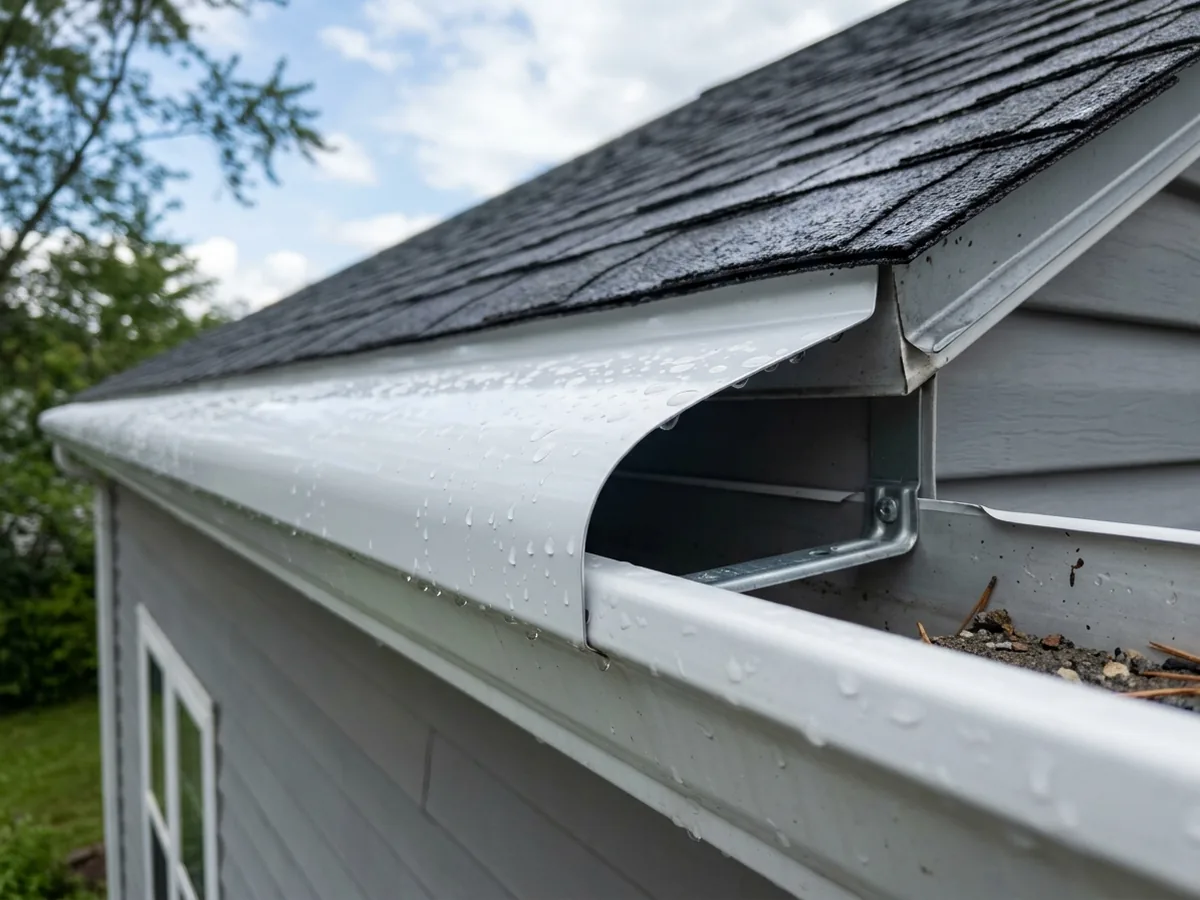
Reverse-Curve Hoods
A reverse-curve hood, also called a surface-tension guard, covers the whole gutter top with solid metal. Its front edge curls back toward the house. Water clings to the curve and follows it back into the gutter, while leaves and needles fall off the front onto the ground. HomeGuide puts the material at $3.50 to $10 a foot with 10 to 20-plus years of life, and says these usually need professional installation. They suit roofs with a mild to moderate slope. The same heavy-rain caveat applies as with fine mesh: fast water can shoot past the nose. Denver-area rain peaks in May and July, so ask how the hood performed in a summer cloudburst before you buy one.
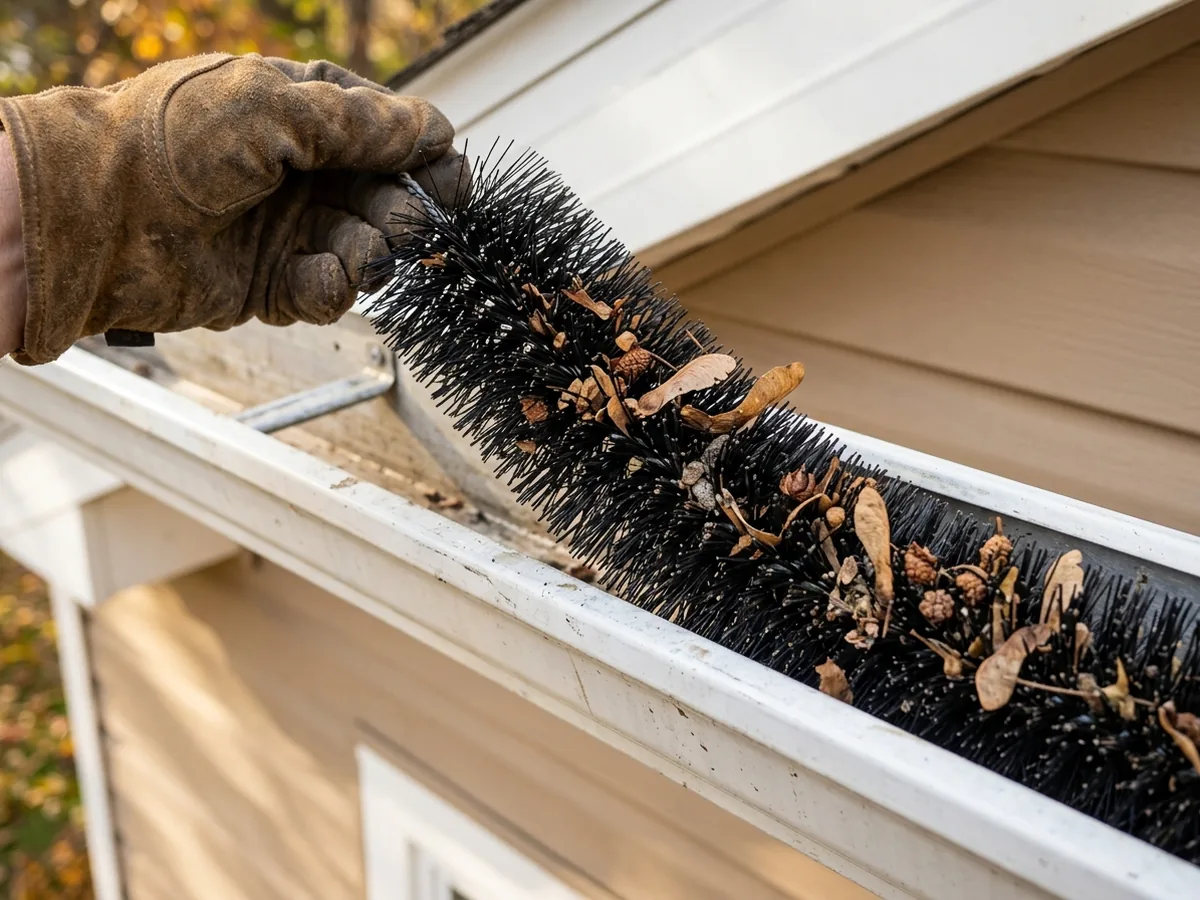
Brush and Foam Gutter Fillers
Inserts drop into the trough with no fasteners. A brush guard is a long, heavy brush of plastic bristles; a foam guard is a porous strip that fills the trough. Both are cheap: $2 to $4 a foot for brush and $1.50 to $3.50 for foam, on HomeGuide's numbers. Brush lasts 10 to 20 years, but small debris such as needles and seed pods lodges in the bristles and has to be pulled out. Foam lasts only 2 to 5 years. HomeGuide warns it can grow mold, and seeds can root in it and become a fire hazard. These work as a stopgap under big-leaf trees. On a roof that drops needles or seeds, expect to pull and rinse them every season.
Why Thornton homeowners call Thornton Expert Roofing
- Free written estimate, no obligation
- One independent local contractor per request, not a call list
- A written contract with the price and materials before any work, as Colorado law requires
- Nothing charged to homeowners for the referral
Gutter Guard Costs, Installed and Off the Shelf
HomeGuide's figures for a 200-foot gutter system:
Professionally installed
$15 to $45 a linear foot, or $3,000 to $9,000 in total.Do-it-yourself
$1 to $5 a foot, or $200 to $1,000 in materials.Labor on its own
$3 to $20 or more a foot, depending on the guard and the house.
Who installs them matters more for some types than others. HomeGuide calls snap-in guards the DIY-friendly ones and says reverse-curve systems are best left to a professional. It also warns that doing it yourself on a complex or two-storey house can be hard and dangerous. For most people with a two-storey house, that settles it.
Set that against cleaning. HomeGuide puts a professional gutter cleaning at $100 to $250 a visit. Guards cut the number of cleanings; they don't end them. Every type above still needs a brush-off or a rinse now and then, and micro-mesh and brush inserts are the two HomeGuide flags for clogging and trapped debris. If the house has one big tree over one run of gutter, guarding that run alone and cleaning the rest yourself may cost a fraction of a whole-house system. A written price should give the guard type and material, the linear footage, how the guard attaches, whether downspout outlets and corners are covered, and what the warranty actually covers, in writing, from the maker.
Gutter Guard Fit: Pitch, Gutter Condition and Trees
The reason to bother is what an overflowing gutter does below it. HomeGuide lists flooded crawlspaces and basements, foundation cracks, and ice dams that leave walkways and driveways slick. A guard won't fix a gutter that was already failing, though. It is only as good as the gutter under it. If the hangers have pulled loose, the corners drip or water pools at the wrong end, fix that first: gutter repair for a sound system, or gutter installation if the run is past saving, with guards priced on the same job. A new gutter and guard going up together is the cheapest time to do both.
Roof pitch narrows the choice. Reverse-curve hoods want a mild to moderate slope, so a steep two-storey roof is better served by mesh or screen.
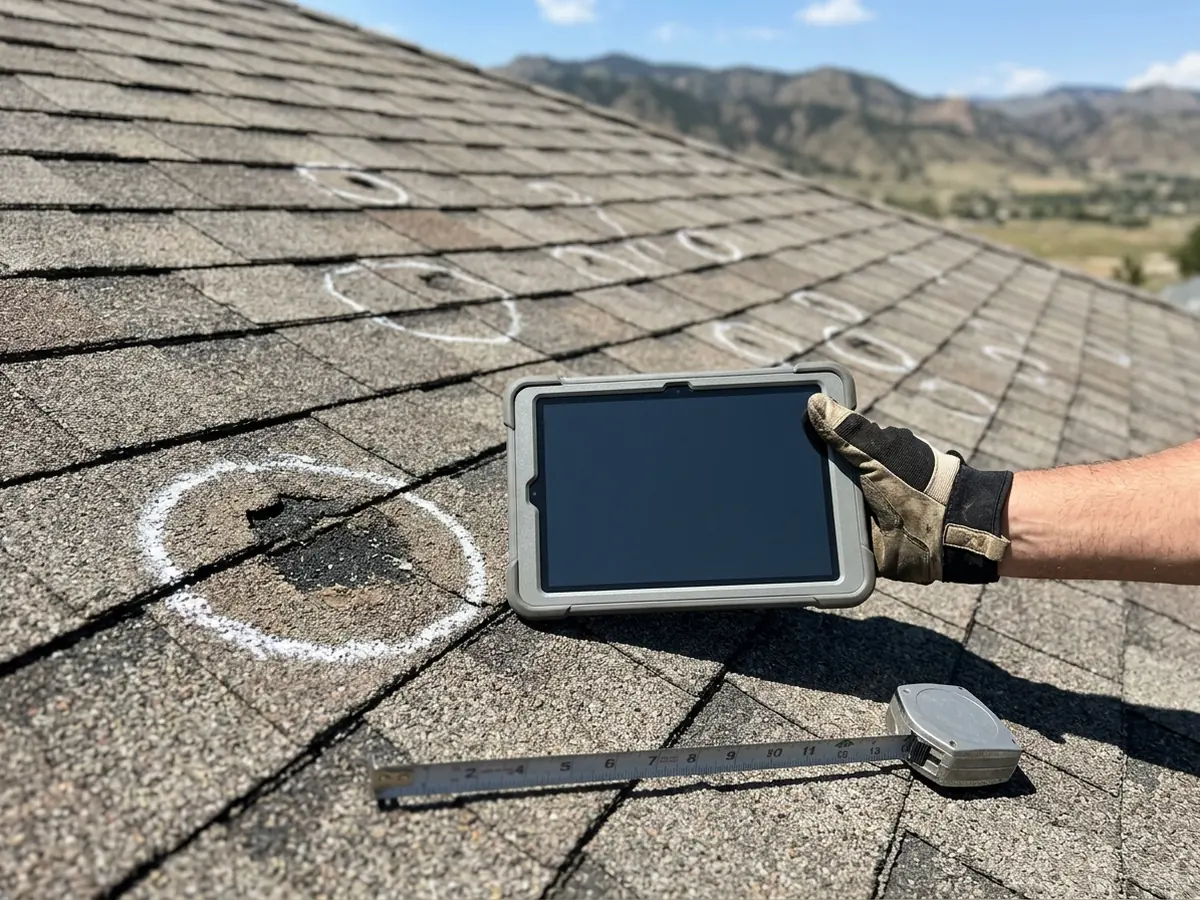
Then look up. Pines and spruces drop needles, which lodge in brush inserts; micro-mesh and perforated aluminum are the types HomeGuide rates for needles. Broadleaf street trees drop leaves, seeds and pods, which a perforated screen or a hood sheds well. After a hailstorm, check the guards with the gutters: a cracked vinyl guard or dented mesh frame goes on the same list as dented gutters and vents. The claim side, including the photos to take, is on the hail damage roof repair page.