
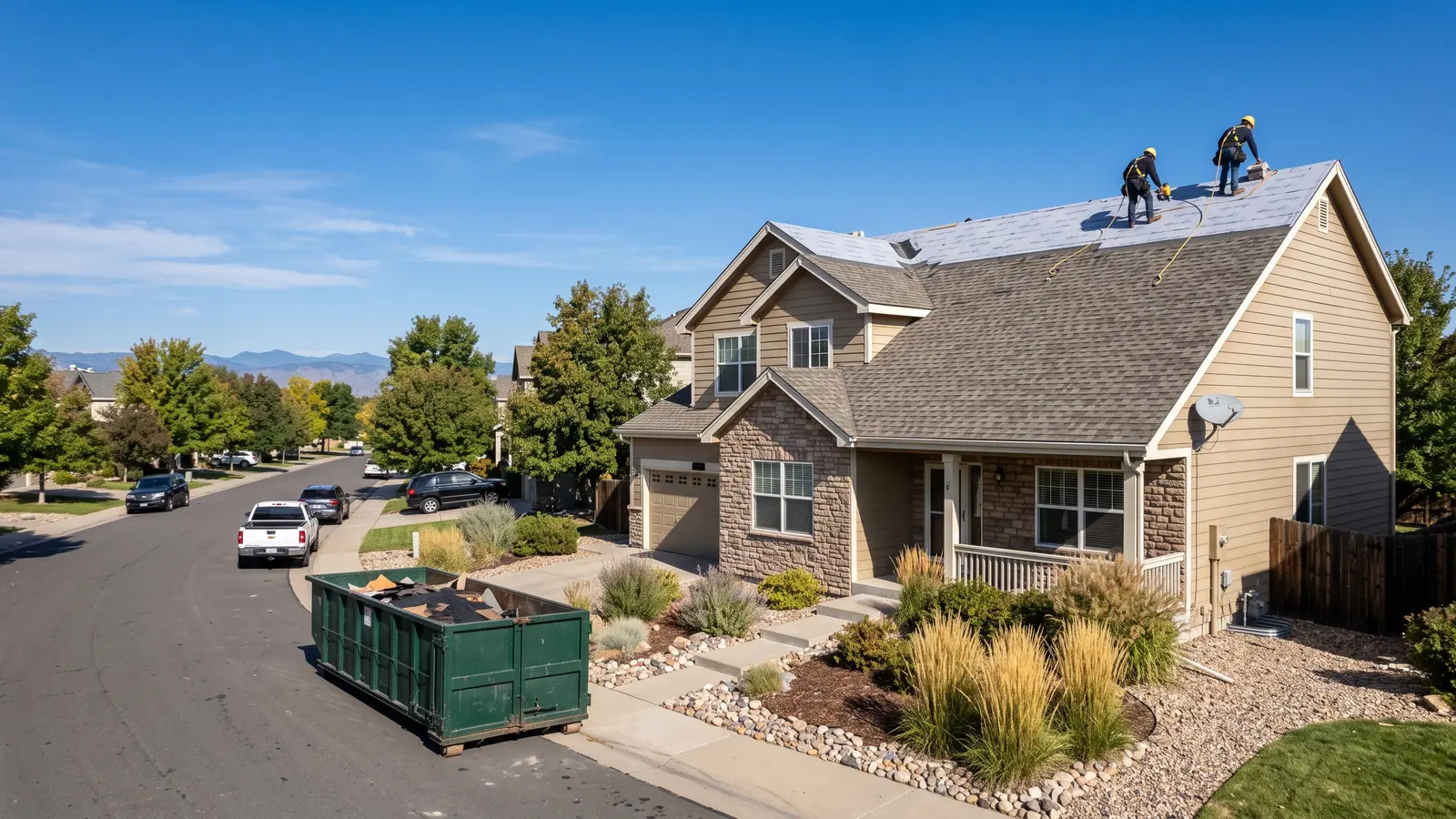
Soffit and Fascia Repair by Component
Aluminum-Wrapped Fascia
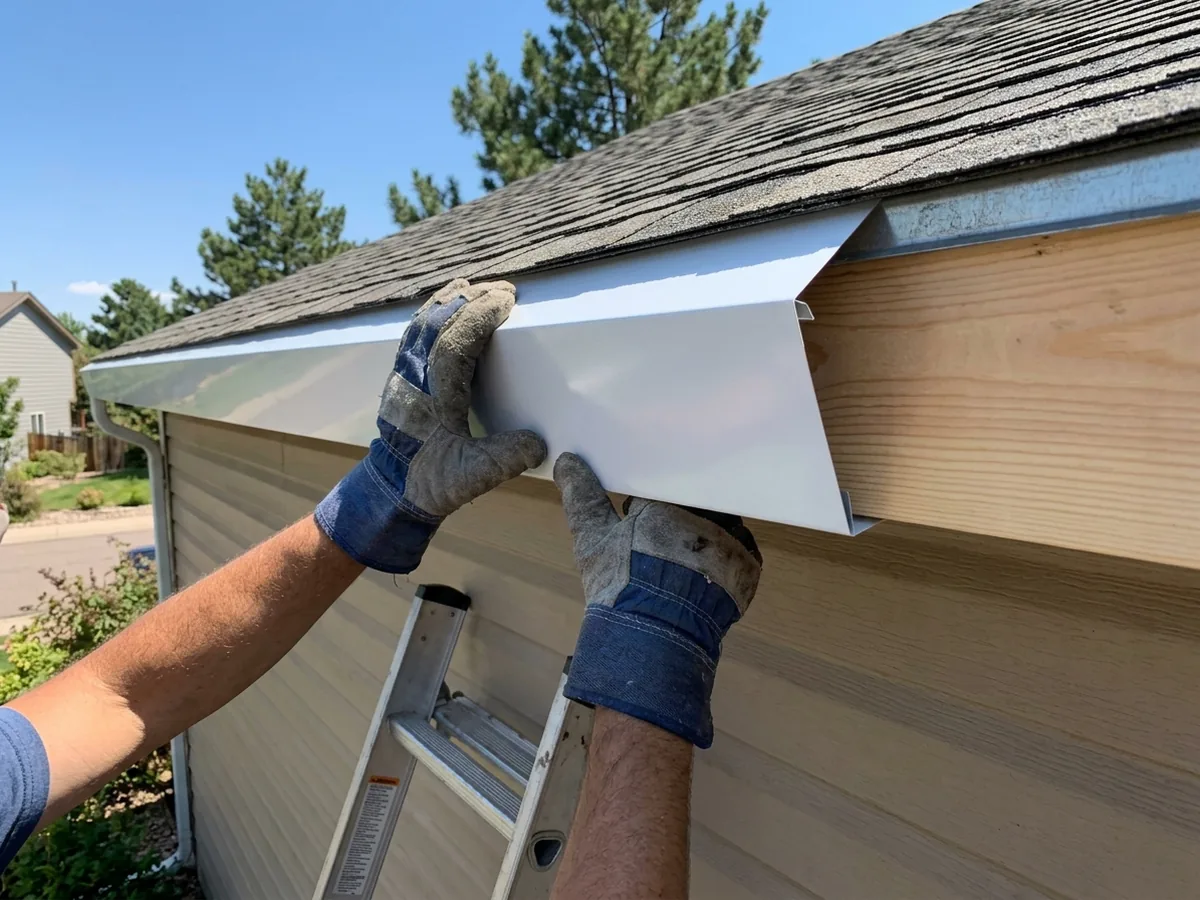
Wood is the most popular fascia, HomeGuide notes, but it resists water less well than vinyl, composite or fiber cement. Wrapping it in aluminum is the common fix. A roofer bends prefinished aluminum coil on a sheet-metal brake to the board's exact profile and fastens it over the wood, so there is no paint left to keep up. HomeGuide lists aluminum fascia material at $1.25 to $4 a foot, a little under wood at $2 to $5. Wrap only sound wood, though. Aluminum over a soft board only hides the rot, so ask the roofer to probe the fascia with an awl before any wrap goes on. If your HOA approves trim colors, get the coil color cleared first.
Replacing Rotted Wood Fascia Boards
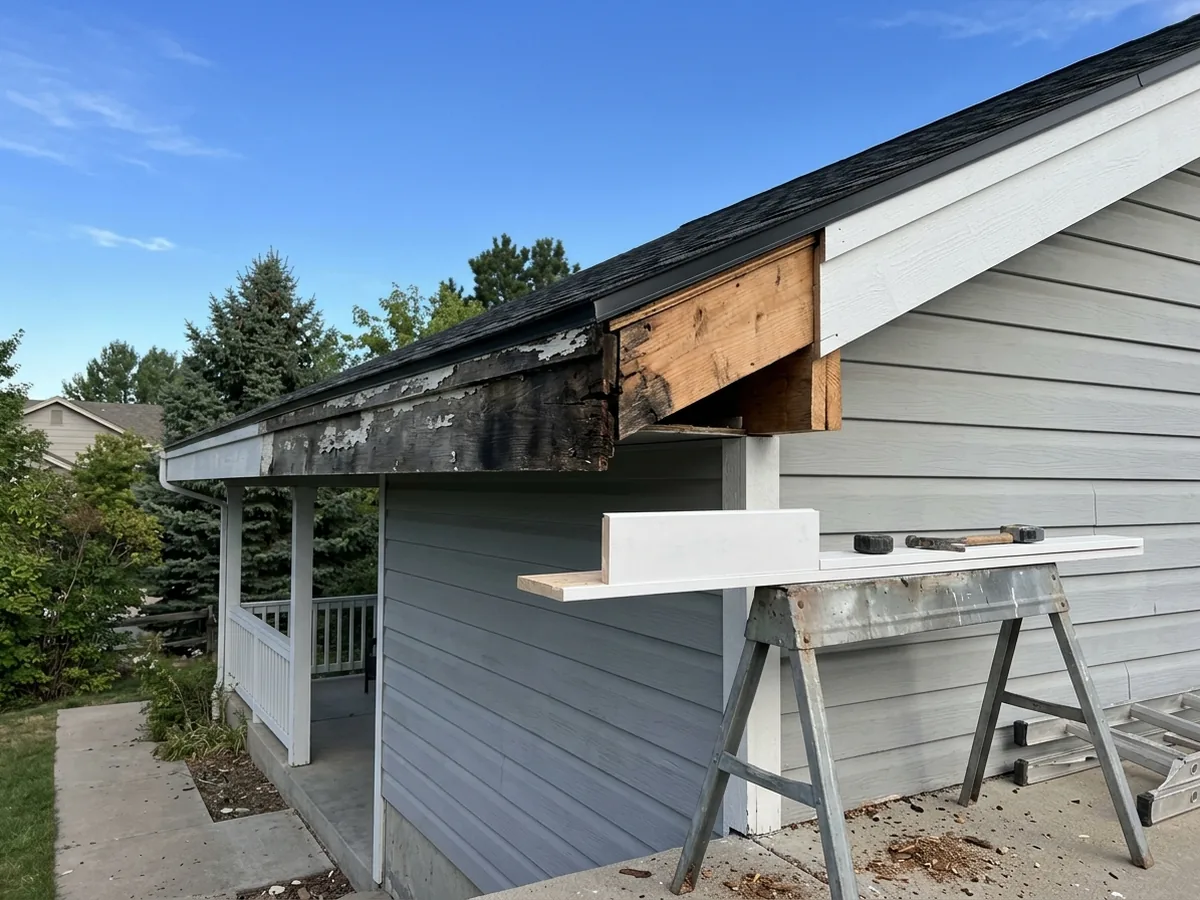
Rotted fascia usually shows as peeling paint, a split or warped board, or a gutter that won't stay level. HomeGuide lists all of those, along with leaks behind the gutters, as signs it's time to repair. A new board costs $5 to $12 a linear foot, or $500 to $2,400 for the job, on HomeGuide's numbers, and that price includes taking the gutter down and hanging it back up. When the rot has spread into the rafter tails behind the board, the work gets bigger: HomeGuide puts rafter-tail repair at $650 to $1,000 for one side of a house and $2,000 to $4,000 for a whole roofline. A good roofer will also find out why the board rotted, which often traces back to water getting behind the gutter. The gutter repair page covers that end of it.
Vented and Solid Soffit Panels
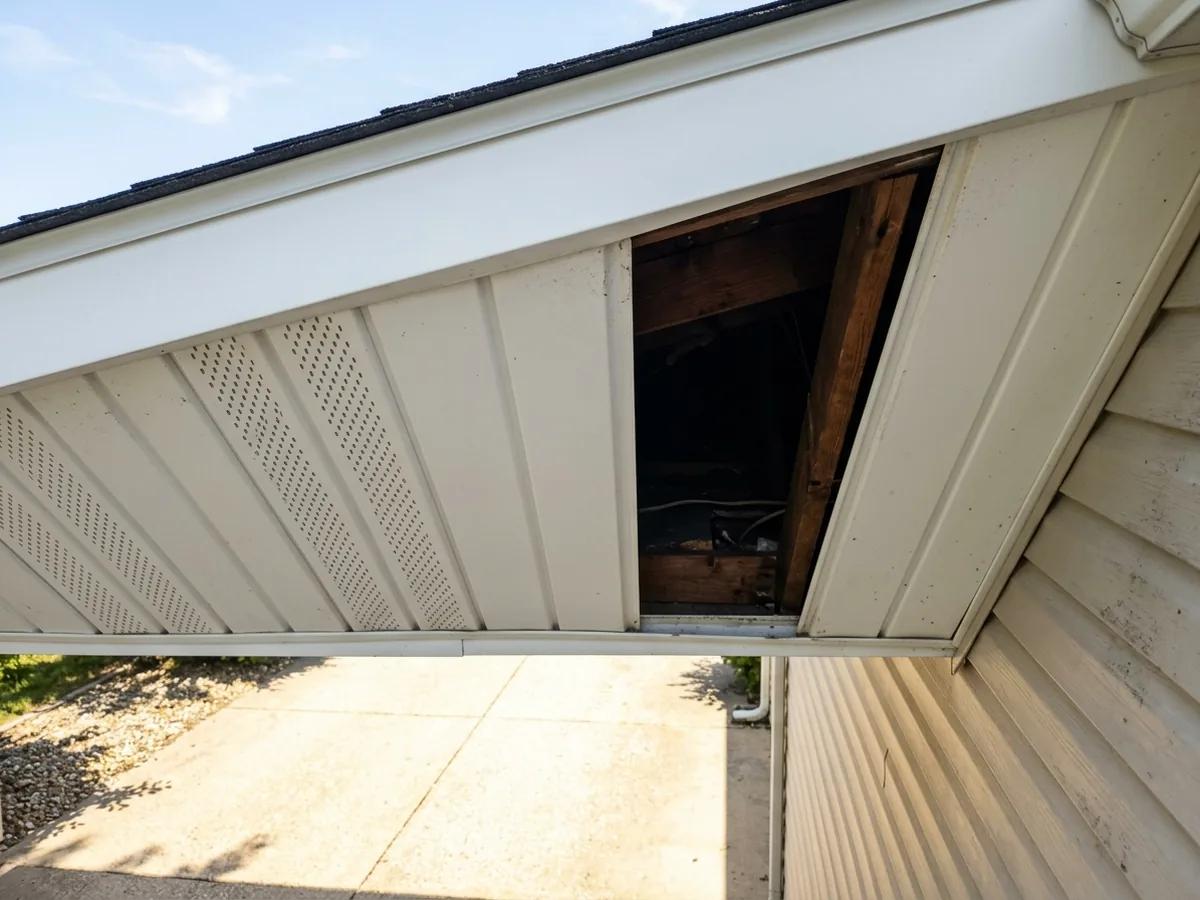
Soffit comes in panels 1 to 2 feet wide and 8 to 12 feet long, in vinyl, aluminum, wood or fiber cement. Vented panels are perforated with small holes along their length. Solid panels close off the overhang where no air is wanted. HomeGuide prices continuous vented aluminum or vinyl soffit at $0.50 to $2 a foot for material, and adding vents to an existing soffit at $15 to $30 each, or $2.50 to $4 a foot for a continuous strip. Those holes are the attic's air supply. Replacing vented soffit with solid panels, or painting over the perforations, starves the ridge vent above, so the vent side has to be part of the plan; see attic ventilation. A missing or chewed panel is also an open door for birds and wasps, and HomeGuide puts nest removal at $125 to $700.
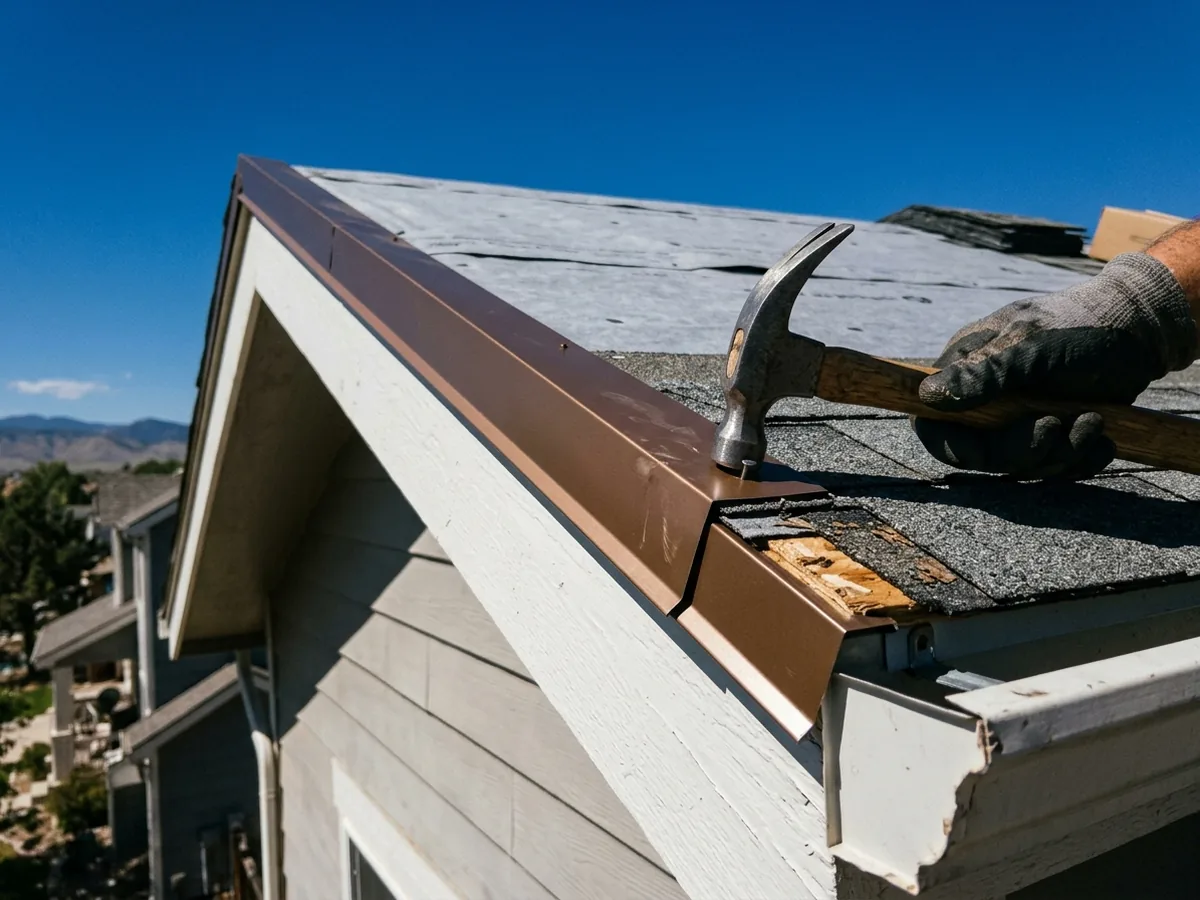
Drip Edge at Eaves and Rakes
Drip edge is the L- or T-shaped metal strip at the roof's edge that kicks water off the shingles and away from the fascia. Thornton's Roofing Standards require it at the eaves and along the rakes, extending over the plywood sheathing at the fascia. The 2024 International Residential Code, which Thornton now uses for new permits, adds the details: segments overlap at least 2 inches, the metal reaches at least 1/4 inch below the sheathing and 2 inches back onto the deck, fasteners go in no more than 12 inches apart, and underlayment laps over the drip edge at the eaves but under it on the rakes. HomeGuide prices drip edge at $1.50 to $3 a foot during a re-roof against $5 to $9 retrofitted, so add it while the roof is open. Aluminum or galvanized steel are the materials to ask for.
Why Thornton homeowners call Thornton Expert Roofing
- Free written estimate, no obligation
- One independent local contractor per request, not a call list
- A written contract with the price and materials before any work, as Colorado law requires
- Nothing charged to homeowners for the referral
Soffit and Fascia Repair Prices
HomeGuide's averages for work at the eaves, on a house that typically has 100 to 200 linear feet of them:
Typical repair
$500 to $2,600 for replacing rotted sections, fixing rafter tails or repainting.Small sections
$9 to $34 a linear foot for soffit and fascia together, $4 to $22 for soffit alone and $5 to $12 for fascia.Full replacement
$900 to $6,800 for a house's whole run of eaves.Painting only
$400 to $2,800 to paint soffit and fascia together.
Material moves the number less than you might think. HomeGuide's eave material prices per foot are close: wood $3.50 to $8.50, PVC $2.50 to $7.50 and aluminum $3.25 to $7.50. The bigger unknown is how much rot sits behind the trim, which is why a firm price often comes only after the roofer has pulled one section and looked behind it. Ask for the per-foot price for extra rotten board in writing, so a surprise doesn't become an argument.
Soffit and Fascia Damage: Causes and the Right Order of Repairs
When fascia rots, look for water arriving from behind or above it: a gutter that overflows or leaks at a seam, a missing or short drip edge that lets runoff curl under the shingles, or ice building up at the eave. HomeGuide lists frequent ice dams as one of the signs of eave damage. If the fascia keeps failing in the same corner, the cause is above it.
Lifespans give a sense of timing. InterNACHI rates aluminum soffit and fascia at 20 to 40 years or more and exterior trim at about 25. Many houses here went up in the 1990s and 2000s, so their original wood fascia is reaching that window, often at the same time as the first roof and gutters.
That makes the order of work matter. Rotted fascia gets replaced first, then the drip edge goes on with the roof, and the gutters go up last against sound wood and new metal. HomeGuide says the same about gutters: damaged fascia has to be fixed before new gutters are hung. If the gutters are due too, see gutter installation, and if the roof is, the slope rules are on roof replacement.