
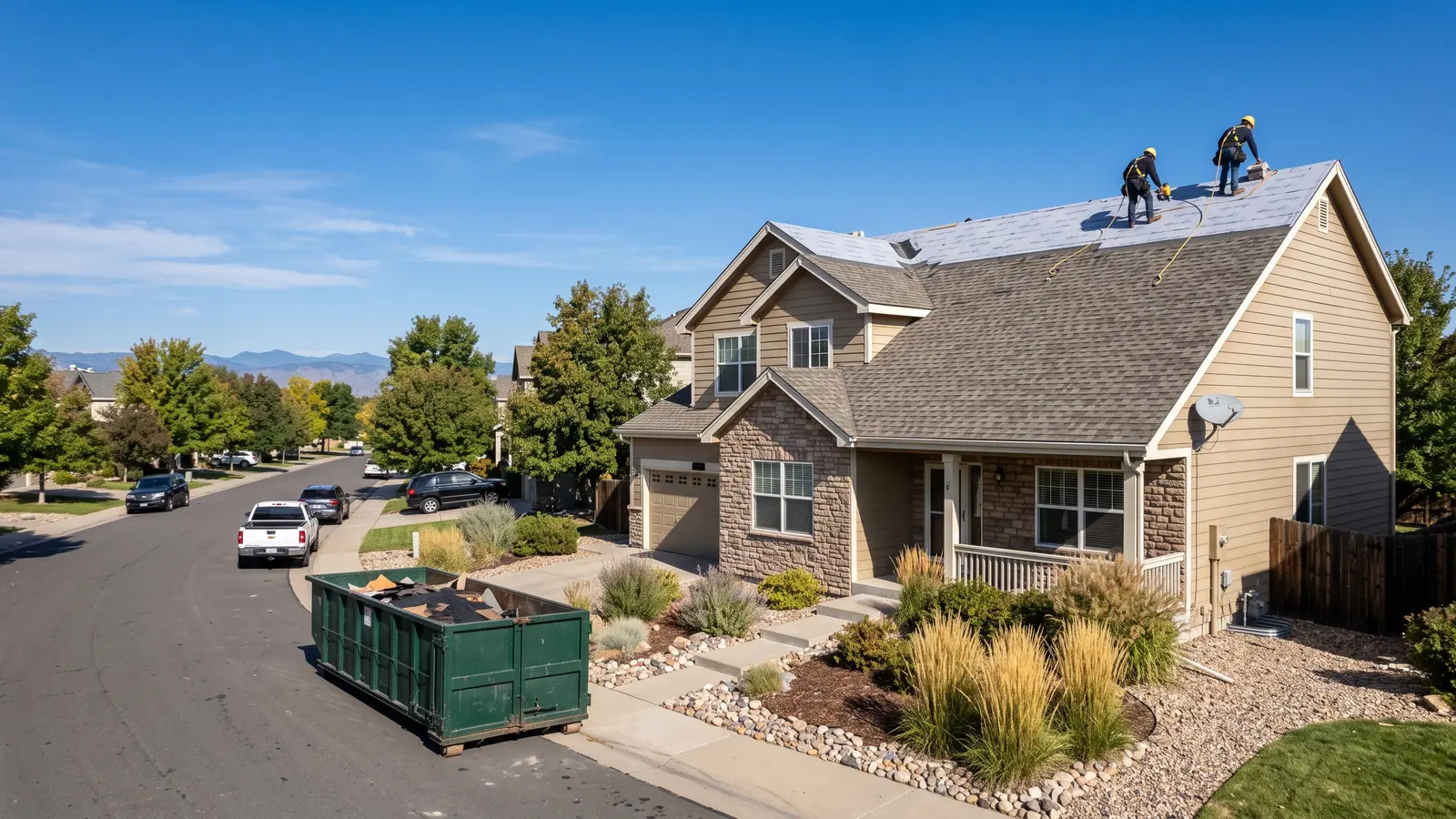
Roof Replacement Work, Layer by Layer
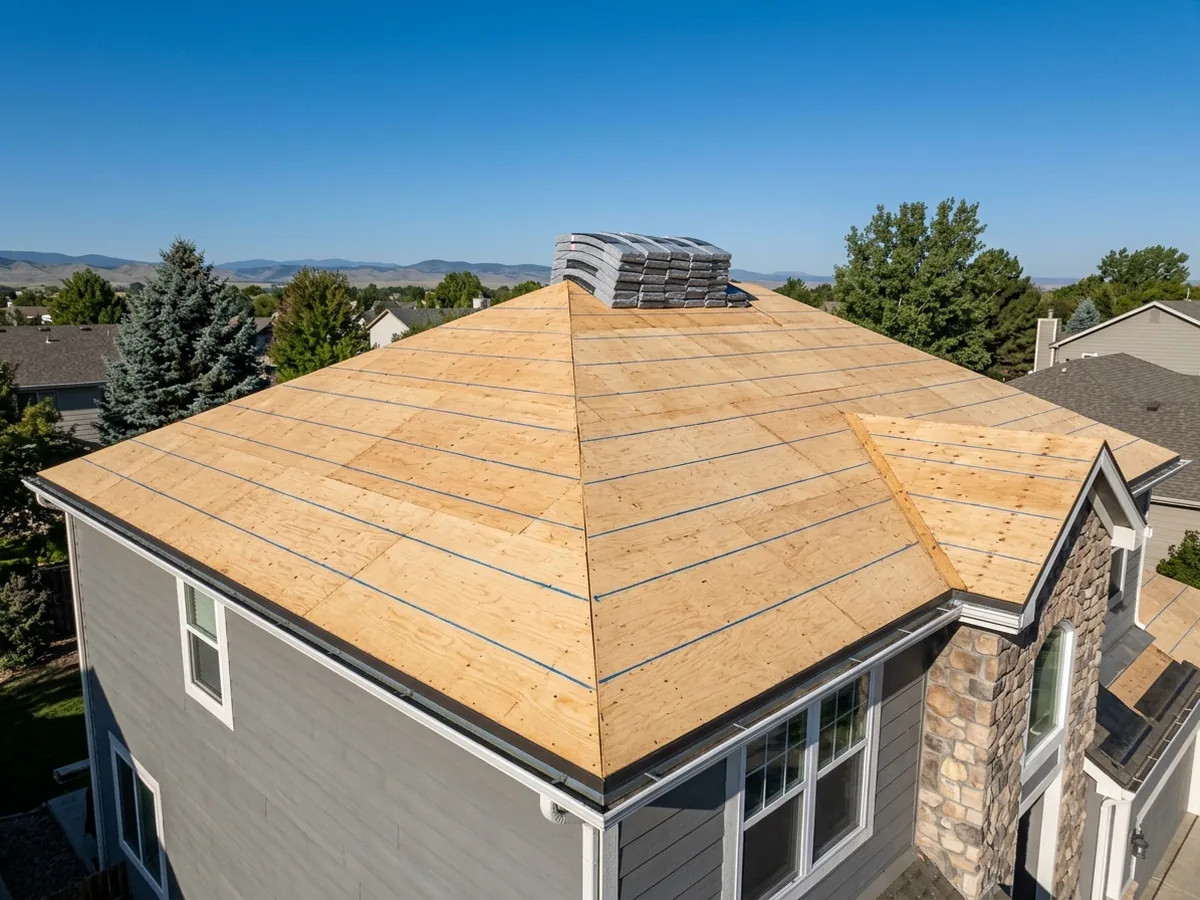
Full Tear-Off Shingle Re-Roof
A re-roof in Thornton is a tear-off. The city's mid-roof check expects the old covering gone entirely, so plan on a tear-off, not a second layer over the first (the roof inspection page covers each city visit). HomeGuide prices tear-off at $1 to $3 a square foot. What goes back is set by the 2024 International Residential Code: asphalt shingles must be nailed to wood structural panels or solid lumber, with galvanized, stainless, aluminum or copper roofing nails that have at least a 12-gage shank and a 3/8-inch head and reach 3/4 inch into the deck. Chalk lines snapped on the bare sheathing keep those nails in the shingle maker's nailing zone.
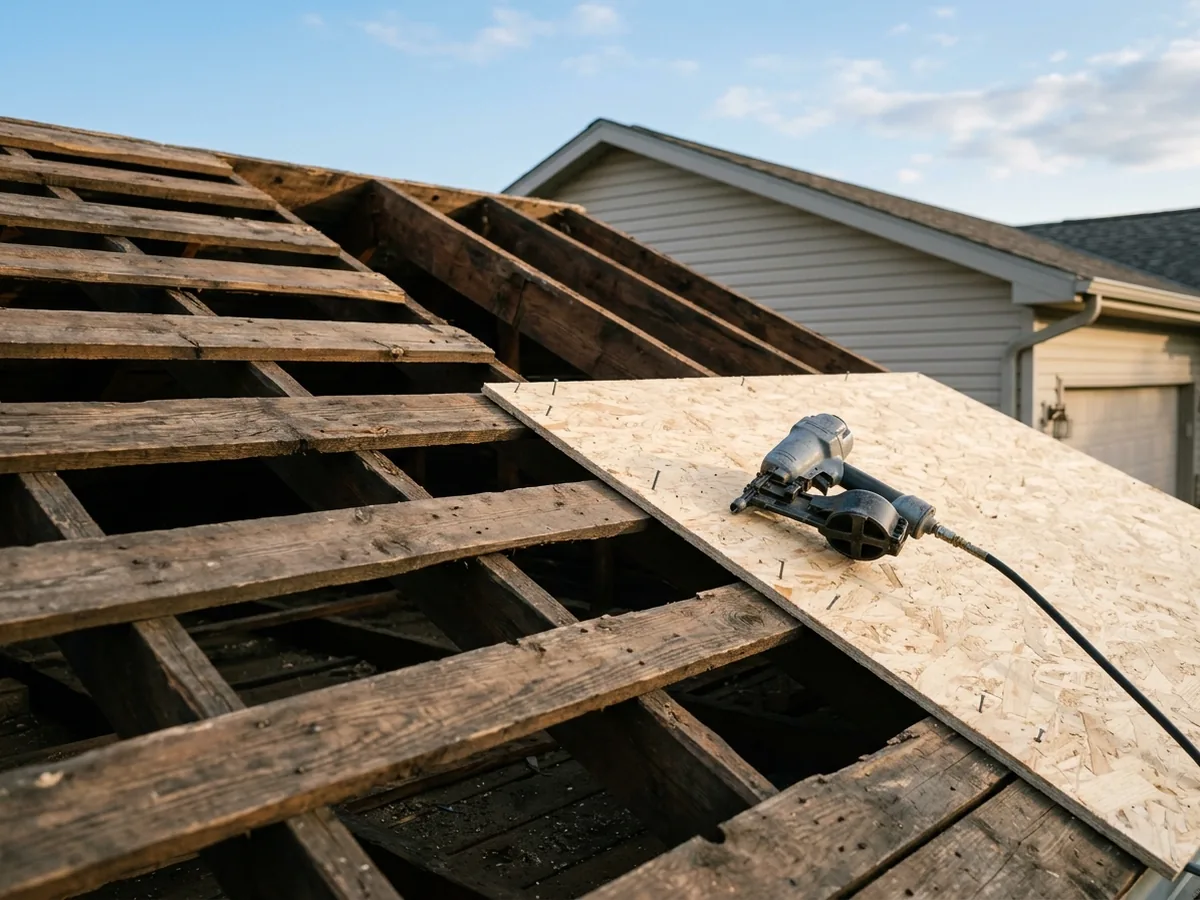
Skip-Sheathing and Soft-Deck Replacement
Spaced boards with gaps between them are legal under wood shakes, which the code lets roofers fasten to 1x4 boards. Shingles can't go on them. The code wants panels or solid lumber under asphalt, and Thornton's Roofing Standards send roofers to the shingle maker's instructions for the maximum sheathing spacing. A shake-to-shingle conversion therefore means sheathing the whole roof with plywood or OSB, either over the boards or after pulling them. On ordinary decks the issue is soft spots: delaminated plywood, rot along the eaves, OSB swollen where a pipe boot leaked for years. HomeGuide puts new decking at $2 to $5 a square foot, and nothing new can be laid until the city has inspected it.
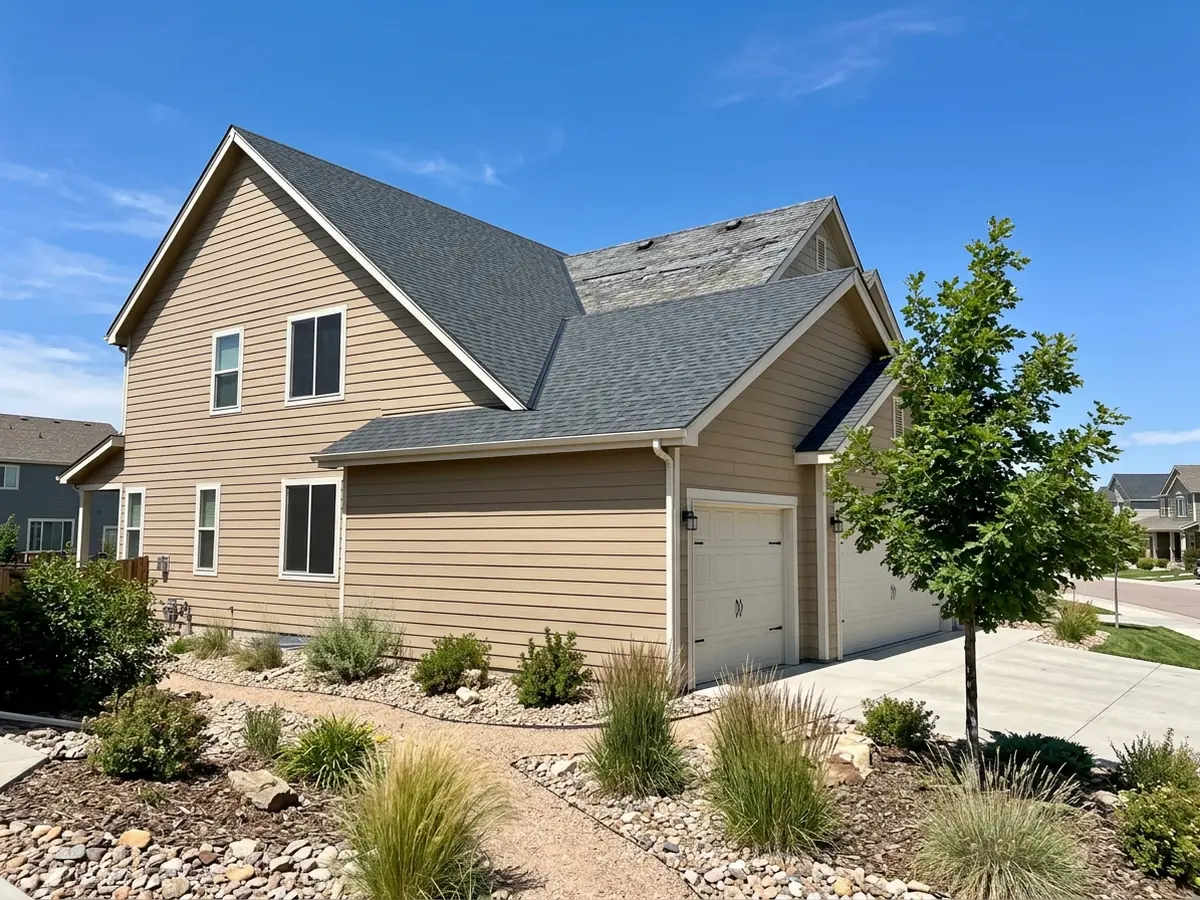
Whole-Slope Replacement After Hail
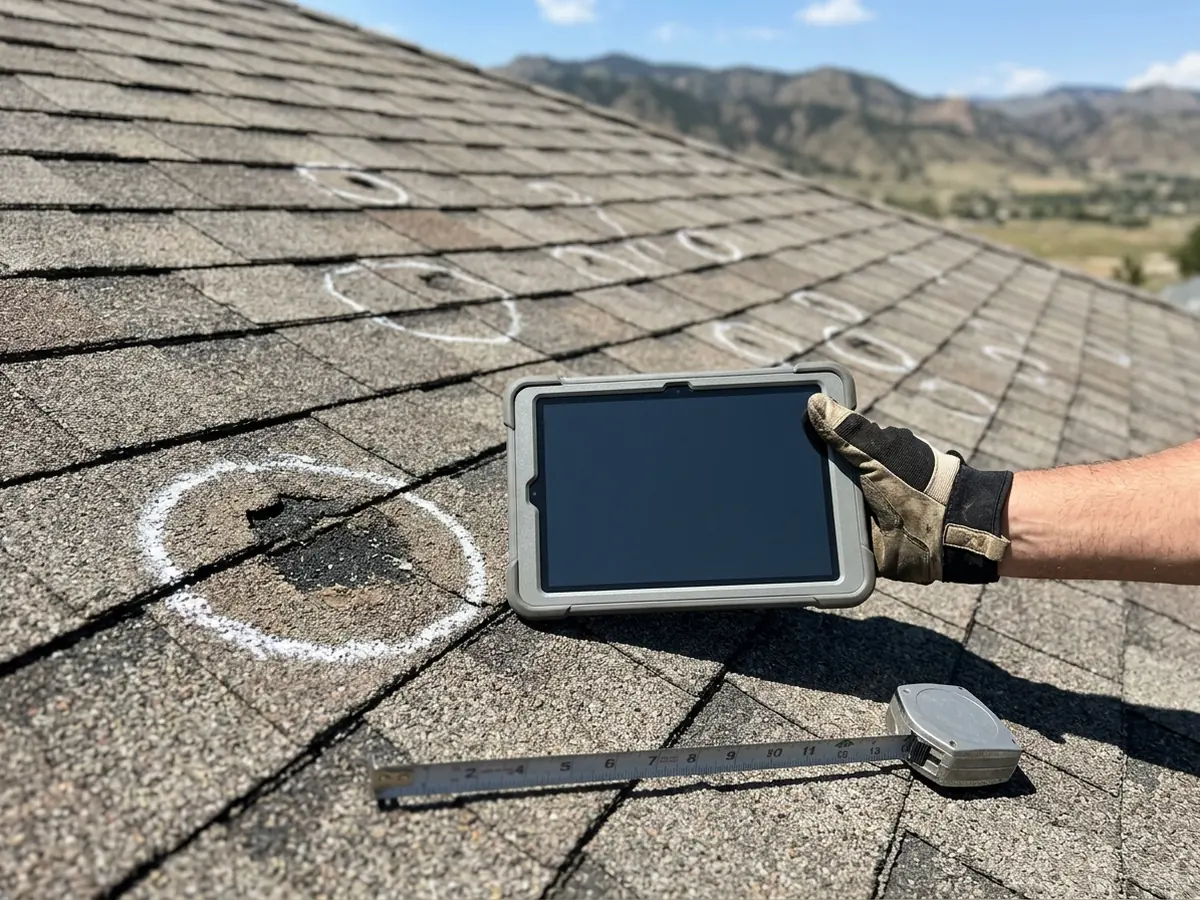
Thornton's Roofing Standards decide how much of a hail-damaged roof comes off. Once the job needs a permit, every slope that has damaged shingles on it is replaced in its entirety, and partial replacement on a single slope is not allowed. If hail cracked shingles on the two west-facing planes only, those two planes get redone completely and the rest can stay. The new and old shingles may meet only at a ridge, a hip or an open valley, so a roofer can't stop a row short of the peak. The insurance side of a hail job (deductibles, adjuster, supplements) is on the hail damage roof repair page.
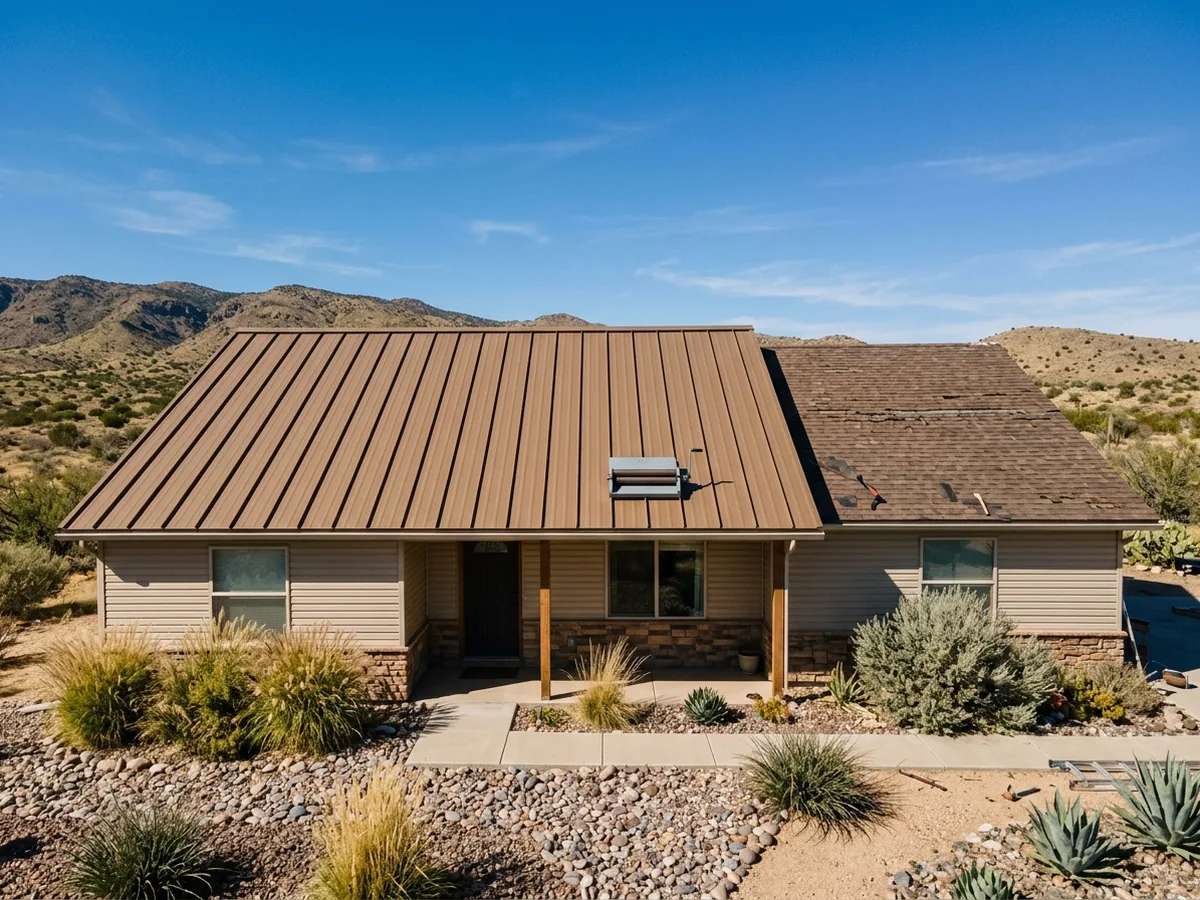
Material-Change Re-Roofs
Going from asphalt to steel, tile or synthetic slate changes more than the look. The same ridge-hip-valley rule applies, so a house can carry shingles on the main roof and metal roofing on a porch only where the two coverings meet at one of those lines. Slope matters next: the code lets standing seam go down to 1/4:12, while asphalt needs at least 2:12, which is why a shallow porch roof often gets the metal. Weight is the third check. HomeGuide notes that a heavier covering such as tile or slate can mean adding trusses, so ask for the framing to be looked at before you commit to concrete tile.
Underlayment, Valley Metal and Edge Details
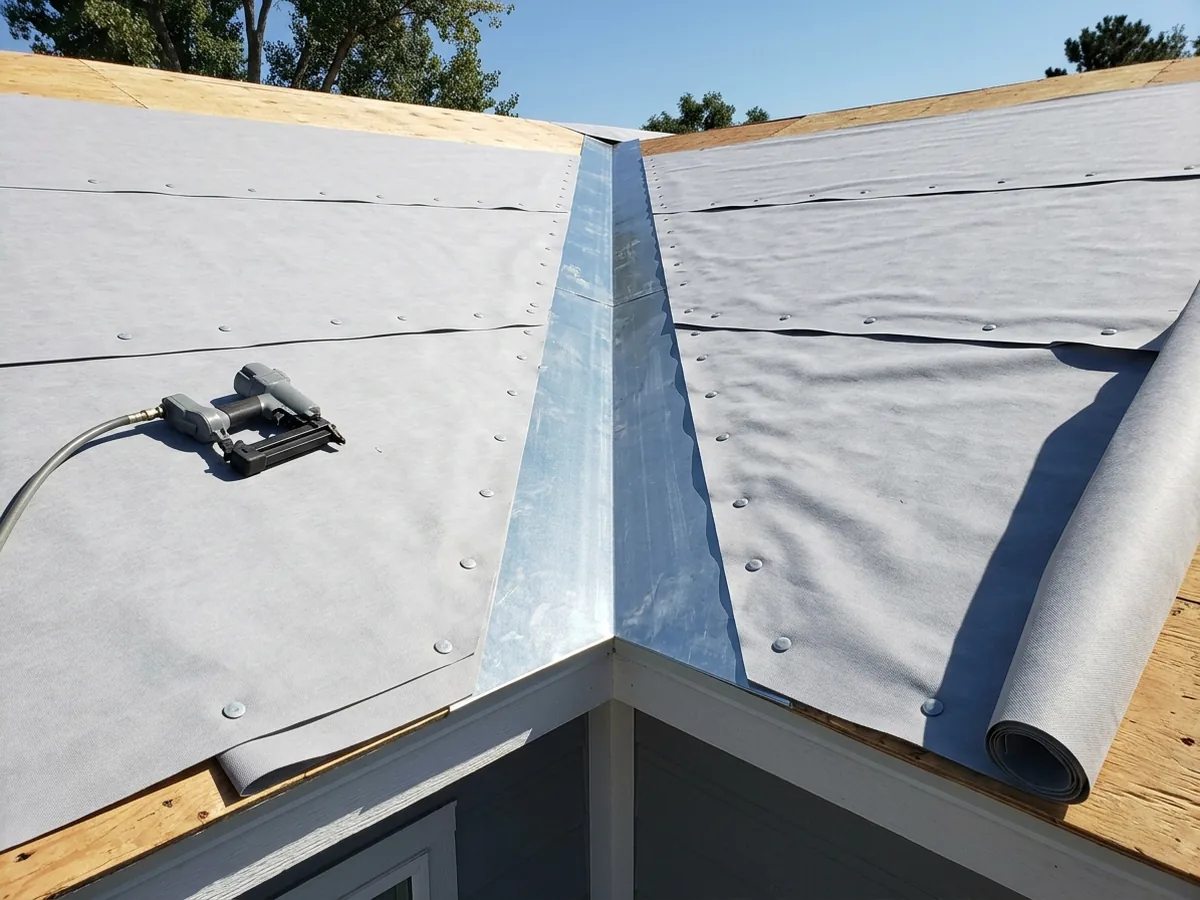
Under the shingles sits underlayment that has to carry an ASTM label: D226 felt, D4869, D6757, the self-adhering D1970 membrane, or D8257 synthetic. Roofs pitched between 2:12 and 4:12 need two layers. Valley lining goes in before any shingle. An open valley lined with metal must be at least 24 inches wide, for example 26-gage G90 galvanized steel, and a closed valley can use a 36-inch strip of smooth roll roofing or self-adhering membrane. Along walls, step flashing at least 4 inches by 4 inches turns water back onto the roof. Drip edge is a separate city requirement covered on soffit and fascia repair, and Thornton's position on ice and water shield is on attic ventilation.
Why Thornton homeowners call Thornton Expert Roofing
- Free written estimate, no obligation
- One independent local contractor per request, not a call list
- A written contract with the price and materials before any work, as Colorado law requires
- Nothing charged to homeowners for the referral
Roof Replacement Cost Ranges in Colorado
HomeGuide's published average for a Colorado roof replacement is $5,800 to $16,200, and its national figure works out to $300 to $600 for each square of roof, installed. Those are estimates, not quotes. Two Thornton houses with the same footprint can land far apart once pitch, layers and decking are counted.
The pieces worth seeing priced separately on any estimate:
Tear-off and disposal
$1 to $3 a square foot on HomeGuide's numbers.Decking
$2 to $5 a square foot. Since nobody knows how much is rotten until the shingles are off, ask for a per-sheet price in writing rather than a lump sum.Covering
The shingle, panel or membrane line by name, so you can check it against the city's approved list on shingle roofing.Flashing and vents
New step, counter and pipe flashing, not old metal bent back into place.Extra layers
HomeGuide notes removal cost depends on how many layers come off. If an older roof hides a second layer of shingles, the estimate should say what that adds.Ventilation
Ridge vent, box vents or fans, sized to the attic's intake at the soffits.Permit
The roofer pulls it, under their own city license.
A written estimate laid out like this lets you put two bids side by side. Colorado also sets rules for the contract that follows, including a 72-hour cancellation window; those are explained under hail damage roof repair, because they matter most on insurance jobs.
Thornton Re-Roof Permits and Who Issues Them
Thornton draws the line between repair and replacement at one square. A job that replaces one square (100 square feet) of covering or less is classed as a repair, with no permit. Anything more is permitted work, and the whole-slope rule above kicks in. The city's Building Inspection Division handles plan review, permits and inspections, and it expects the contractor, not the homeowner, to pull the permit. The license checks behind that are on roof repair.
In practice this rule decides a lot of borderline jobs. A wind-torn patch of a few dozen shingles stays a repair. Hail that bruised shingles across three slopes is a permit job, and all three slopes get new shingles from eave to ridge.
Roof Lifespans by Material, and When to Replace
InterNACHI's life-expectancy chart gives these typical spans:
| Covering | InterNACHI estimate |
|---|---|
| 3-tab asphalt shingles | about 20 years |
| Architectural asphalt shingles | about 30 years |
| Metal roofing | 40 to 80 years |
| Clay or concrete tile | 100 years or more |
| Simulated slate | 10 to 35 years |
| EPDM membrane | 15 to 25 years |
| Modified bitumen | about 20 years |
| TPO membrane | 7 to 20 years |
The same chart warns that roofs in severe-weather areas, hail included, can wear out sooner than these numbers. IBHS lab work from 2025 points the same way for asphalt. Shingles battered again and again by sub-inch hail, too small to count as severe, aged faster and coped worse with the next big hailstone.
Thornton's median house was built in 2000, according to the Census Bureau's 2024 survey. An original 3-tab roof on that house is now about 26 years old, well past InterNACHI's figure, and an original architectural roof is getting close to its own. If yours is one of them, start with an honest roof inspection and ask the roofer to show you photos of the worst slope before anyone talks price. A roof with cracked tabs, bare granule patches and soft decking at the eaves is done. One with a single bad pipe boot is a repair.