
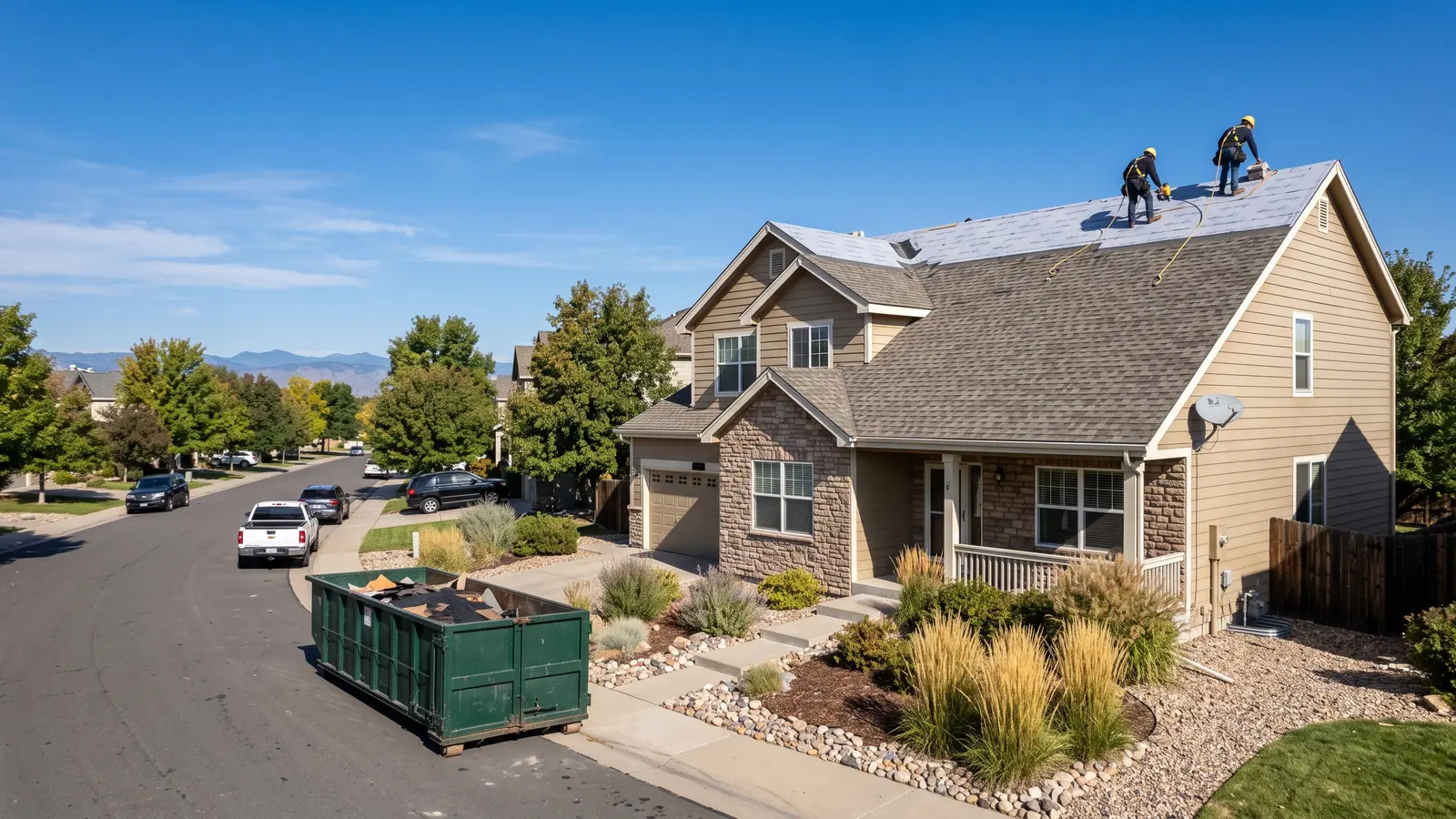
Roof Repair by Roof Component
Wind-Lifted and Missing Shingles
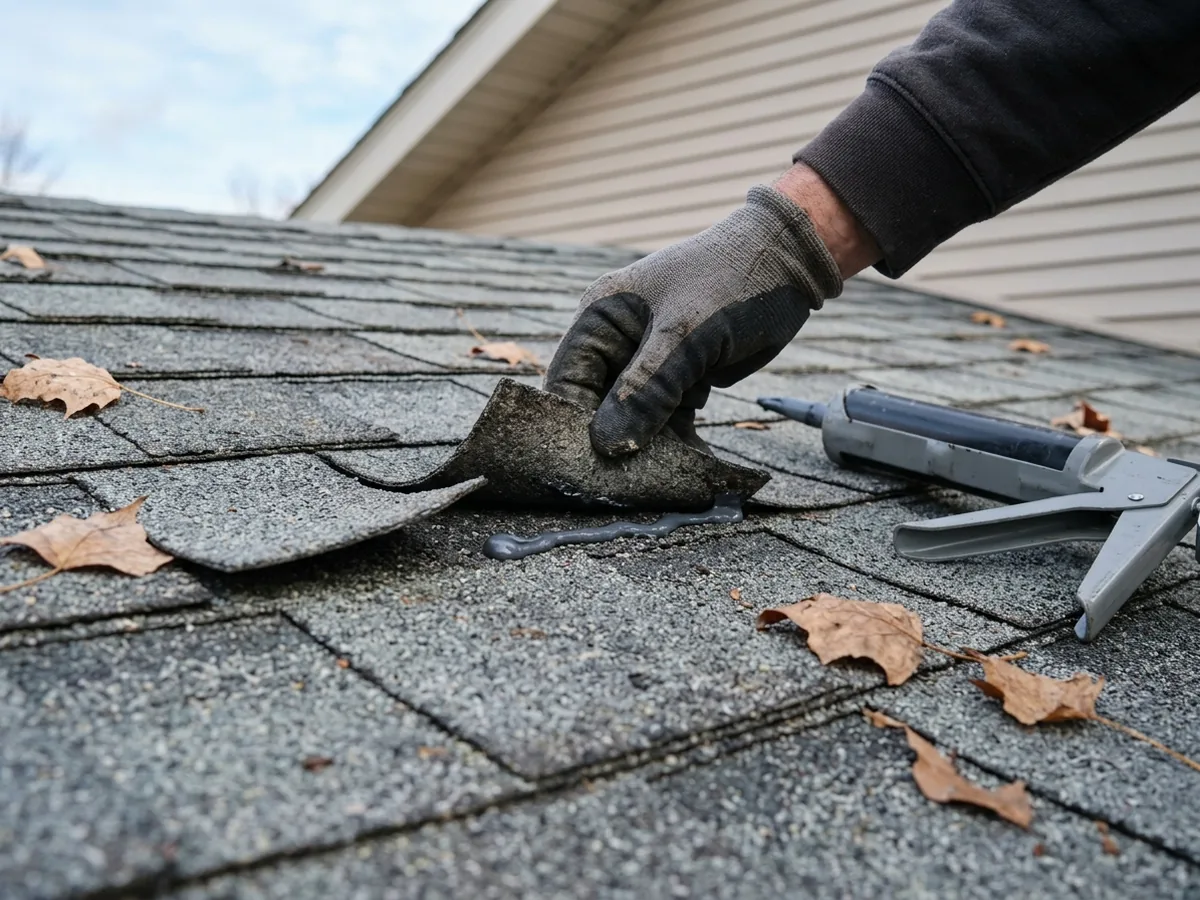
A shingle that has lifted in a gust usually broke its sealant strip first. Once the bond is gone, the tab flaps, the nails loosen and the next wind takes it. The fix is new shingles slid in under the course above, nailed at the shingle maker's count (never fewer than four per strip shingle under the 2024 code), and the lifted tabs around them glued back down. Timing matters here. HomeGuide notes that shingles turn brittle below 40°F and that the self-seal strip needs the sun's warmth to activate, so a winter repair is often hand-sealed with roofing cement. Thornton's design wind speed of 105 mph is explained on metal roofing.
Ridge and Hip Cap Repair
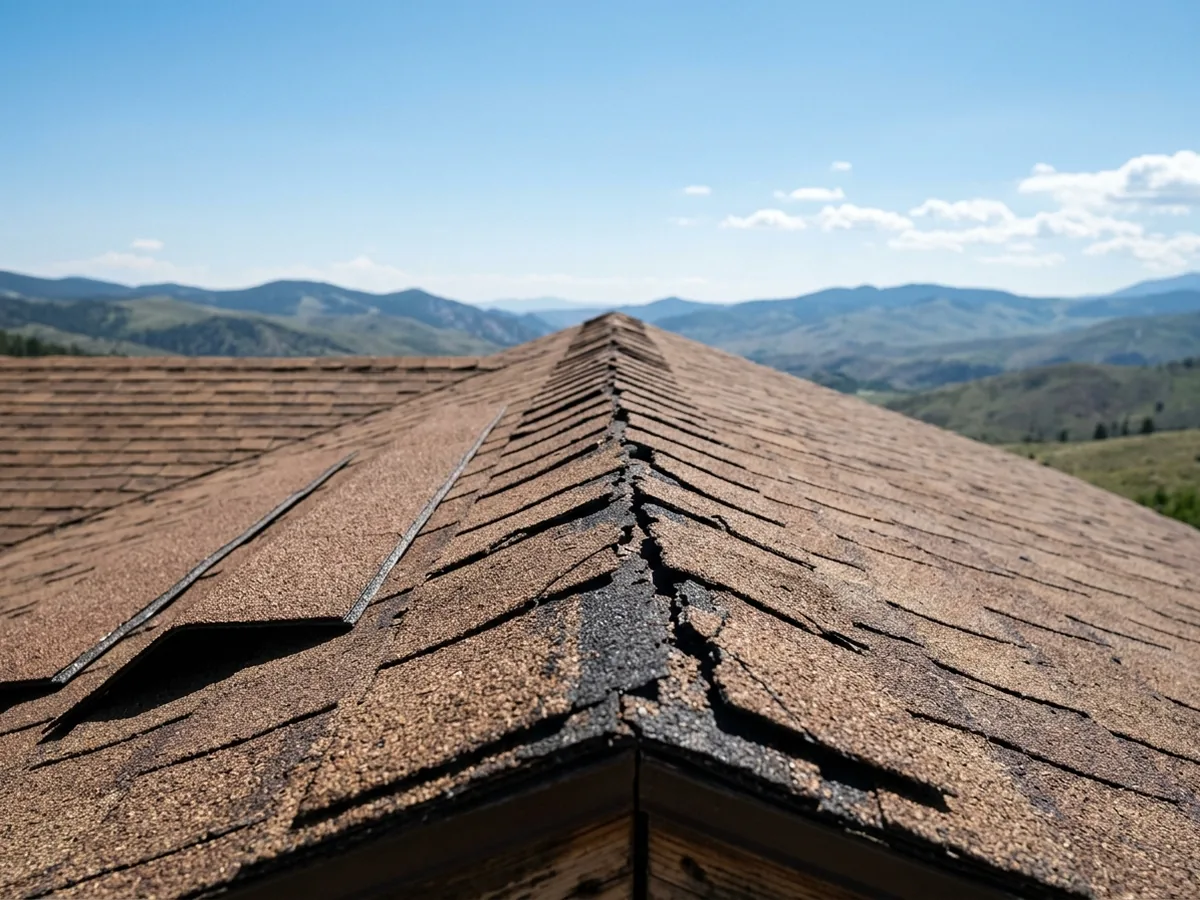
Caps take the worst of the weather because they sit highest and are bent over the peak. Caps cut from 3-tab shingles tend to crack along that fold. Each cap's nails are covered only by the lap of the next cap, so one split cap leaves nail heads open to the rain. The repair is a run of new hip and ridge shingles, made to bend without cracking, face-nailed and lapped in the direction away from the prevailing wind. If a ridge vent runs under the caps, the roofer should check it is intact and still clear before re-capping. More on vents is on attic ventilation.
Roof Valley Repair
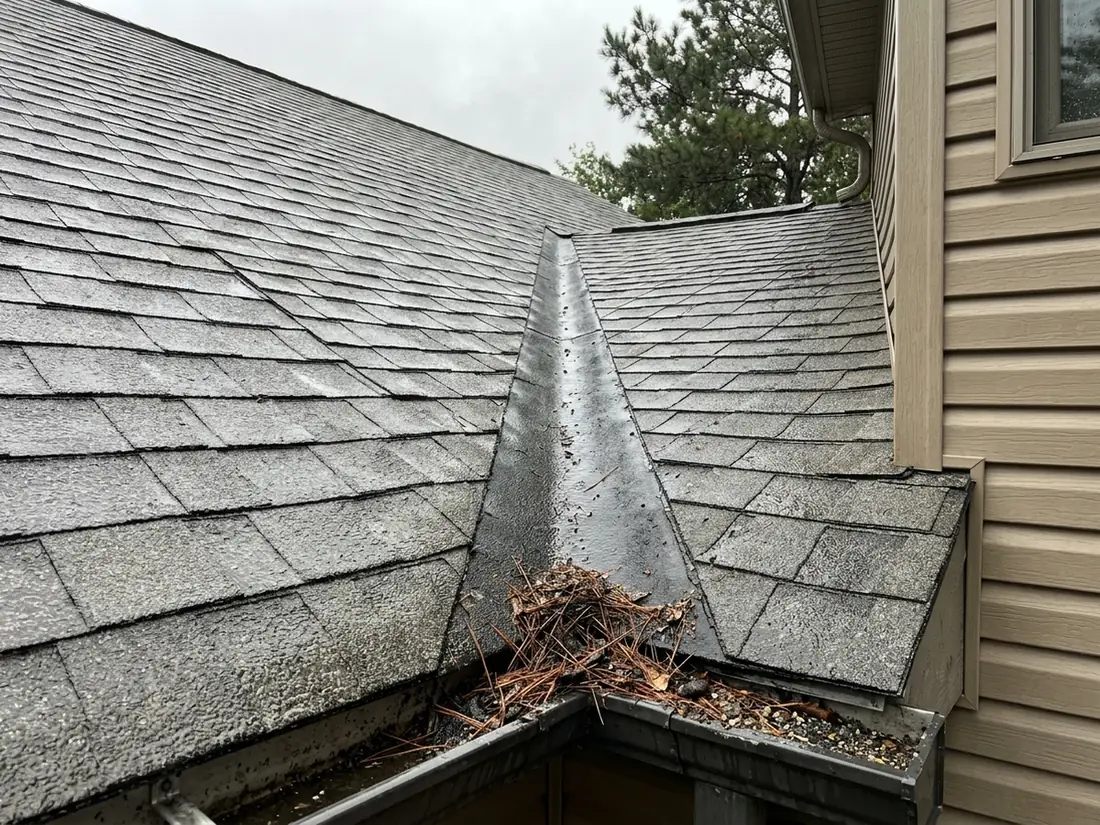
Two slopes empty into every valley, so it carries more water than any other part of the roof, and the granules wear off there first. On a closed-cut valley the shingles of one slope run across the center line and the other slope's are trimmed back along it. Under the 2024 code the lining below can be 36-inch smooth roll roofing or self-adhering membrane, and an open valley needs metal at least 24 inches wide. A good roofer will pull the shingles back far enough to see that lining before laying anything new over it. HomeGuide puts valley repair at $300 to $1,500.
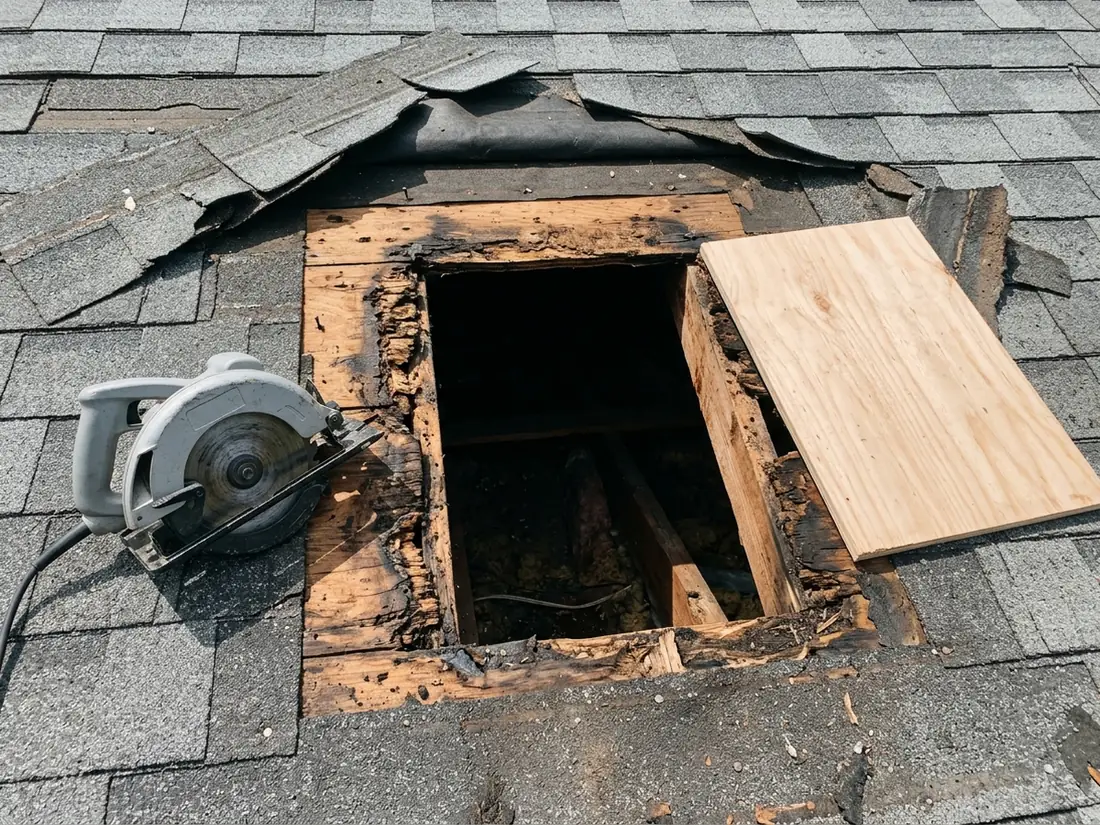
Soft Spots and Rotted Decking
A section that gives underfoot means the plywood or OSB below has been wet for a while. Common causes are a long-running leak at a pipe boot or wall, or poor attic ventilation rotting the deck from beneath. The roofer strips the shingles over the area, cuts the deck back to sound wood over the rafters, fits new sheathing, and rebuilds the underlayment and shingles. HomeGuide's estimate for decking is $200 to $500 per 100 square feet. A patch larger than one square becomes permit work under Thornton's rules, explained on roof replacement.
Why Thornton homeowners call Thornton Expert Roofing
- Free written estimate, no obligation
- One independent local contractor per request, not a call list
- A written contract with the price and materials before any work, as Colorado law requires
- Nothing charged to homeowners for the referral
Roof Repair Cost Ranges From Published Estimates
HomeGuide publishes the cost ranges below. They are national estimates, not quotes for a Thornton house:
| Repair | HomeGuide estimate |
|---|---|
| Minor to moderate roof repairs | $150 to $3,000 |
| Extensive damage | $3,000 to $6,000 |
| Leak repair | $150 to $1,000 or more |
| Asphalt shingle repair | $350 to $1,500 |
| Up to 25 shingles replaced and sealed | $100 to $300 |
| Re-shingling a section | $350 to $1,000 per square |
| Valley repair | $300 to $1,500 |
| Decking | $200 to $500 per 100 sq ft |
Two smaller points from the same guide: many roofers charge a minimum of $150 to $300 for any repair visit, and most repairs are finished within a day.
A repair estimate should be specific enough that you could check the work afterwards:
What is replaced
The number of shingles, caps or squares, and the product line, so the new pieces match the old in color and profile.What is underneath
A price per sheet of decking in case the wood below turns out to be soft, agreed before anyone starts cutting.Flashing and sealant
Whether flashing is being replaced or only resealed. Sealant over old metal is a stopgap.Photos
Before and after shots of the repaired area, since you probably won't climb up to look.
Colorado's roofing statute requires a written contract before any roofing work, repairs included; its terms are set out on hail damage roof repair. Flashing repair has its own figures on chimney flashing repair, and for drips that show up on a ceiling the roof leak repair page goes through where water actually gets in.
Roofer Licensing in Thornton: What to Check First
Colorado doesn't license roofers at the state level. The Colorado Roofing Association points out that licensing is left to each city, and Thornton runs its own. Before the city will issue a building permit, a roofer must hold a City of Thornton contractor license, which for roofing is a Class D Roofing License backed by proof of qualification, either a reciprocal license from another jurisdiction or an ICC certification. Homeowners doing work on their own primary residence are exempt.
That matters even for a repair. Small jobs under one square don't need a permit, but the roofer you hire for a patch is often the one you'd call for a replacement later. Questions to ask up front:
License
Can the company show its City of Thornton Class D roofing license, and the qualification behind it?The permit
Who pulls it if the job grows? The city warns homeowners to be wary of a contractor who asks them to pull it, since that contractor may not be licensed, and says the contractor should produce the permit and post the inspection card.Insurance
Colorado's emergency management office advises checking that roofers carry workers' compensation and liability coverage.Payment
The same state guidance says to hold the final payment until the work has been inspected and you're satisfied.
Repair or Replace: Reading the Roofer's Advice
HomeGuide's guide offers three signs that replacement is the better spend: a roof older than 20 years, a repair estimate above $3,000, or damage across more than a quarter of the roof. They're a rule of thumb, not a code. In Thornton the whole-slope rule changes the math, because a repair bigger than a square forces the whole slope anyway.
Age is the other half of it. InterNACHI's figures for asphalt, about 20 years for 3-tab and 30 for architectural, are on roof replacement with the rest of its chart. A repair on a roof well inside those numbers is usually money well spent. On one at or past them, we'd rather see the money go toward the replacement that's coming, unless the repair is small.
The best evidence is photos. Ask the roofer to show you the damaged area close up and a wide shot of the same slope, and to say whether the shingles around the repair are still flexible. If they crumble when lifted, a patch will be hard to blend in and won't last much longer than the rest of the roof.